
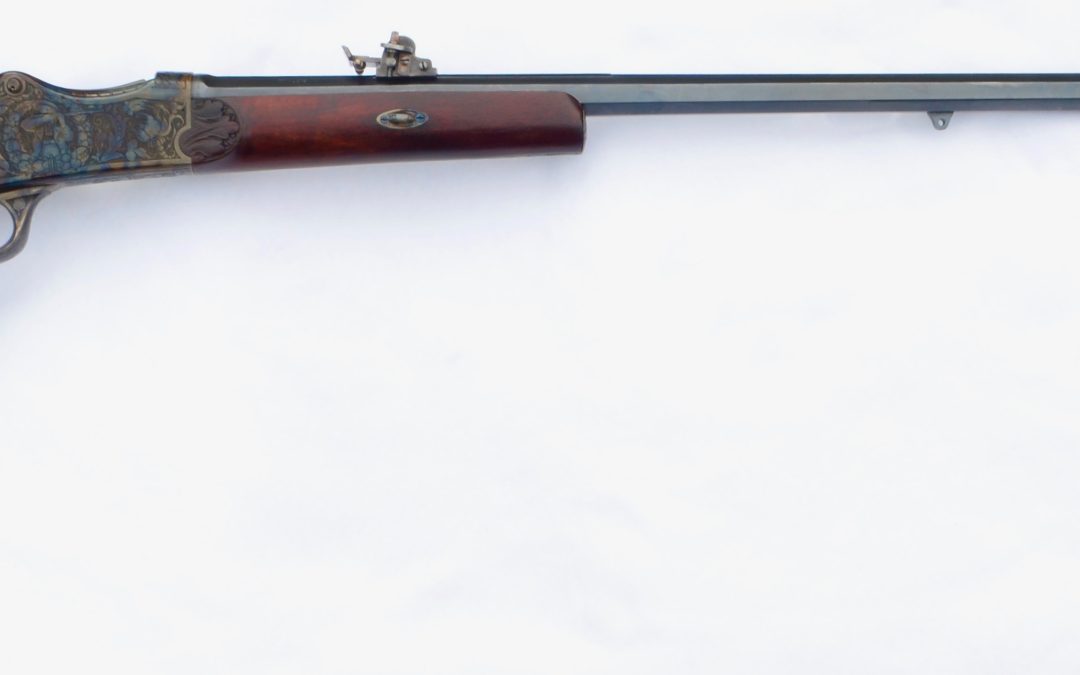
German Schützen rifle, circa 1912, built on a Martini action, in 8.15x46R.
By Terry Wieland
No one has pursued the goal of accuracy longer or with more determination than the Germans. Ancient shooting societies, still existing today, not only pre-date Germany as a country, but also the discovery of America and even the widespread use of gunpowder. They began with longbows in the 1300s, progressed to crossbows, then muskets, then rifles.
By the late 1800s, German Schützen clubs were developing match rifles and cartridges in parallel with those in the United States. While the goals were roughly similar, the approaches were sometimes quite different. Certainly, each knew what the other was doing. American marksmen often travelled to Germany to shoot in their matches. This allowed them to see what the Germans had, while German shooters could study the finest American rifles and cartridges.
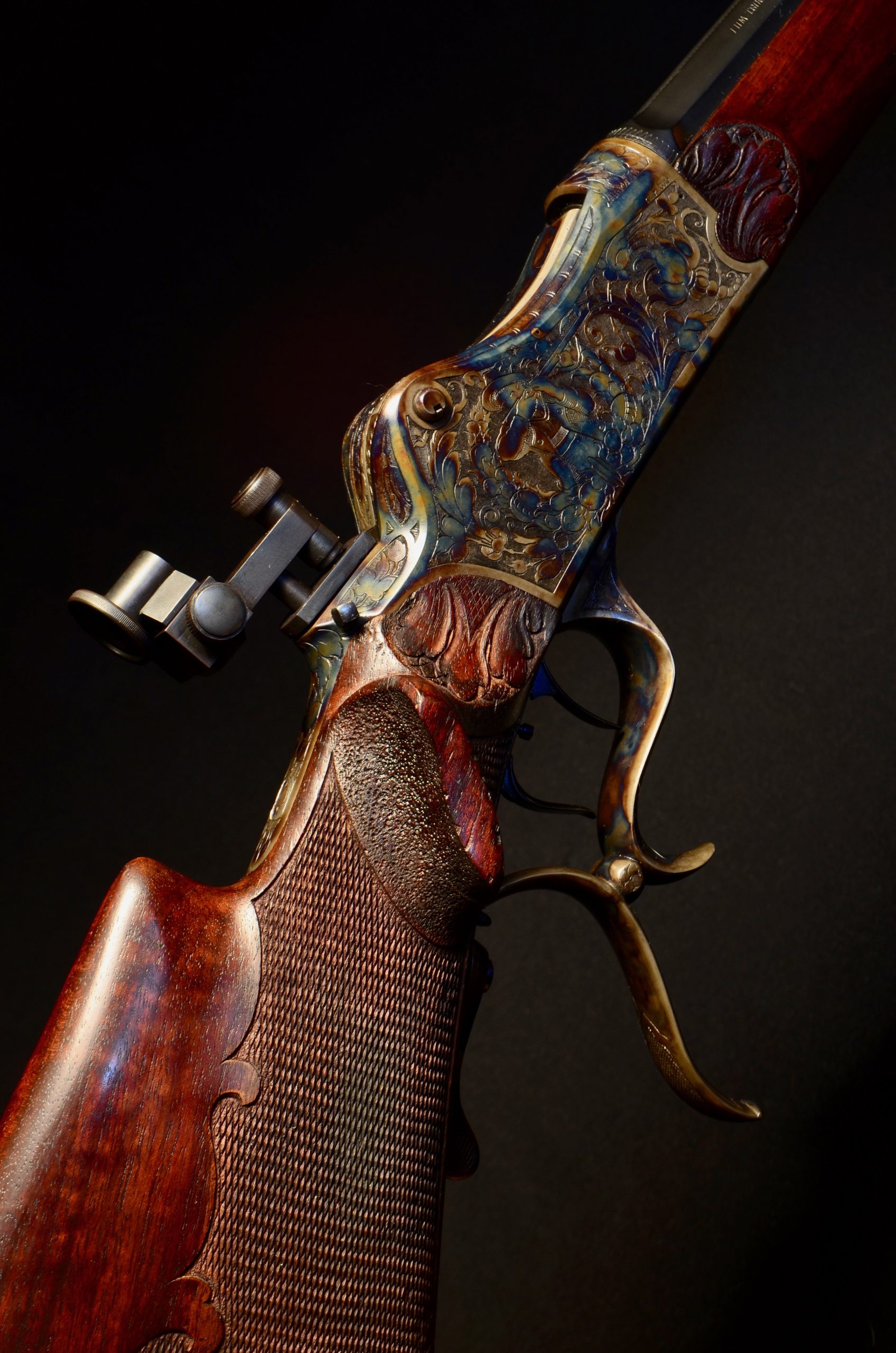
German shooters are extremely serious, not just about accuracy, but about making their target rifles timeless works of art. The name on the barrel, “G. Will, Zwickau,” is probably the retailer, not the actual maker.
In the 1890s, Germans and Americans had settled on remarkably similar cartridges for target shooting. We had the .32-40, while in Germany there was a wholesale switch to a new target cartridge, standardized in 1909 as the 8.15x46R. There the similarities ended.
American shooters developed methods of loading the .32-40 for best accuracy, including seating the bullet from the muzzle, or breech-seating it before inserting the case and powder. Some, like Harry Pope, designed two-diameter bullets that required both breech-seating and special throating. Virtually everyone loaded their ammunition on-site at matches, often loading and re-loading the same case. Pope had one .32-40 case that was reportedly reloaded and shot 40,000 times during his career.
German shooters followed a similar ritual, but with the 8.15x46R developed a totally different approach. First, the bullet. Although outwardly similar to a standard .32-40 bullet, it had a belt about midway, flanked on both sides by lubrication grooves. The bullet was pressed into the case until the belt contacted the case mouth. The most famous of these designs was the #16H, and it was offered by a number of bullet manufacturers. Initially cast, they soon developed a double-swage technique followed by rollers to imprint the lubrication grooves. These bullets were inexpensive, high quality, and readily available, and casting your own became rare.
The 8.15x46R was designed for smokeless or semi-smokeless (brown) powder. Instead of taking a powder measure to the range, however, German powder makers developed, first, a means of pressing the powder into solid blocks that fit into the case; later, they sold powder in tiny bags made of nitrated paper. Inserted intact, the paper was completely consumed by the combustion. Easy and convenient.
The 8.15x46R cases were made with an interior neck diameter large enough to allow the bullet to be seated with just finger pressure, yet snug enough to hold it. Instead of selling bullets already lubed, the shooter would smear grease into the grooves before seating the bullet with his fingers. Because of the belt on the bullet, seating depth was exact and consistent.
The rifle chamber was reamed without a lip. Obviously, any lip would have had to allow for the width of the bullet band. Instead, they simply tapered the chamber like a forcing cone. The belt on the bullet provided a good gas seal as well as gripping the rifling solidly, with no need of the “bump” provided by black-powder ignition.
One can look at this and suggest ways of improving it — ways to make the rifles more accurate and give the shooter a better chance of winning — but we have to keep other factors in mind. Turn-of-the-century competitors travelled many miles to big matches, and did so by train, tram, or on foot. Equipment weight was a consideration, as well as convenience.
German Schützen shooters were as serious and dedicated as any in the world, and the prizes and prestige were worth considerable effort. Obviously, the methods they developed worked well. The best American shooters, like W. Milton Farrow, went to Europe to compete, and did not dominate the field. No one ever arranged a head-to-head match pitting Germans and their methods against Americans and theirs. It would have been interesting to see who prevailed.
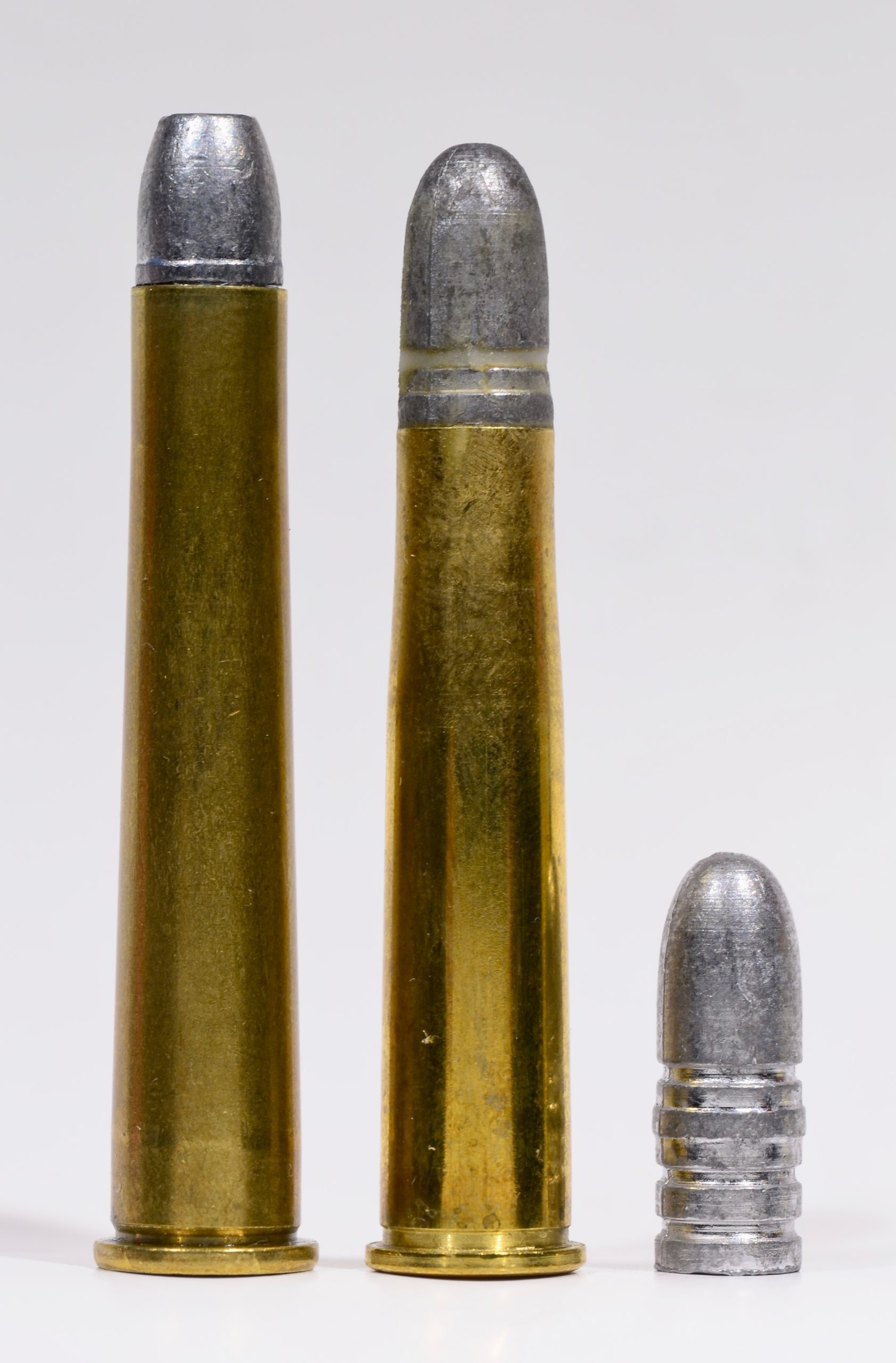
The 8.15x46R (right) was introduced in 1893, and its specifications standardized in 1909. It became the predominant Schützen cartridge. The bullet is the #16H pattern, as sold in swaged form by German bullet makers before 1914. This bullet was cast in a Lyman gang-mould. Note the belt.