
By Ken Moody
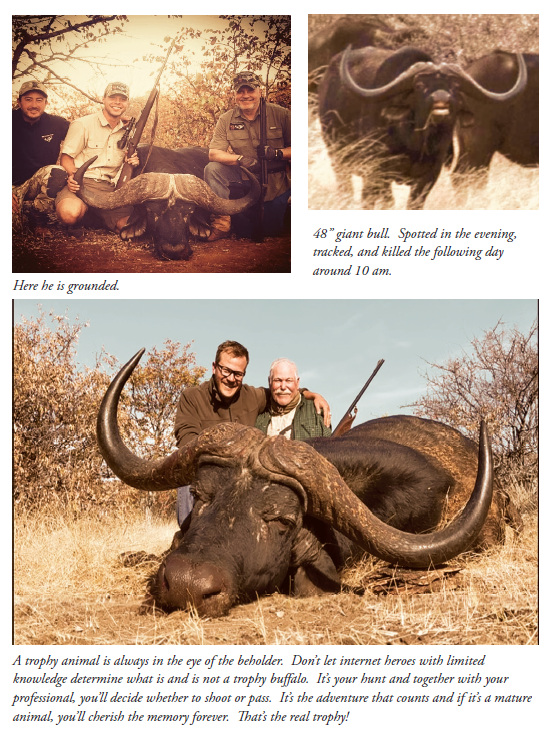
The subject of what constitutes a trophy Cape Buffalo is one that causes me great irritation. There is a contingent of hunters who firmly believe that for a buffalo to be considered a ‘trophy,’ it must be at least 15 years old, a day away from death, and sport a scrumcap on top of its head. These are the keyboard warriors who chastise, belittle, and criticize every photo posted that doesn’t depict a buff up to their nonsensical standards. These are also the very same hypocrites that will shoot a mature whitetail buck or elk in the rut, even though the animal is still of breeding age. These guys really don’t know what they’re talking about, but somewhere along the line, have listened to some disgruntled professional hunter who likely only hunts a handful of buffalo each season, bemoan and cry about all the breeding age buffalo bulls being killed. Trust me, these guys aren’t buffalo gurus, they simply like to appear to be.
The bottom line is this…the MAJORITY of Cape Buffalo killed on safaris will be mature bulls of eight-plus years in age, possess reasonably hard bosses, and likely still be capable of breeding. This is a fact and anyone stating otherwise doesn’t know buffalo hunting. Here’s another fact. There is absolutely nothing wrong with shooting a mature bull regardless of its age.
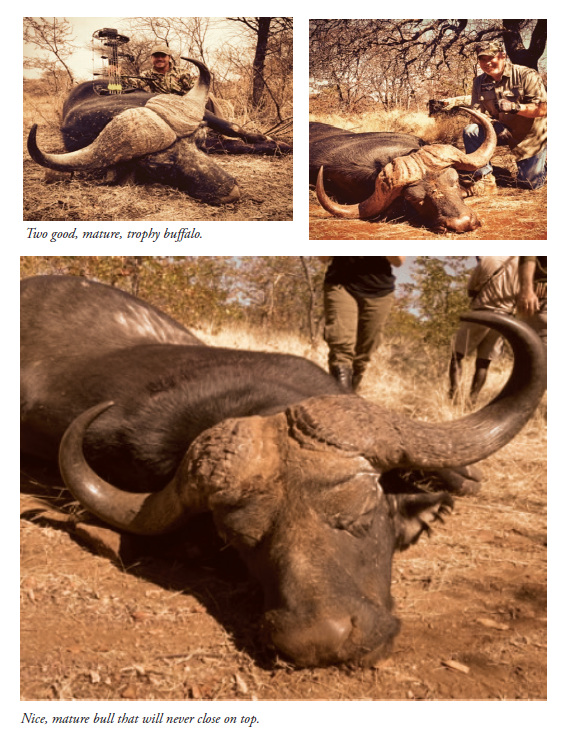
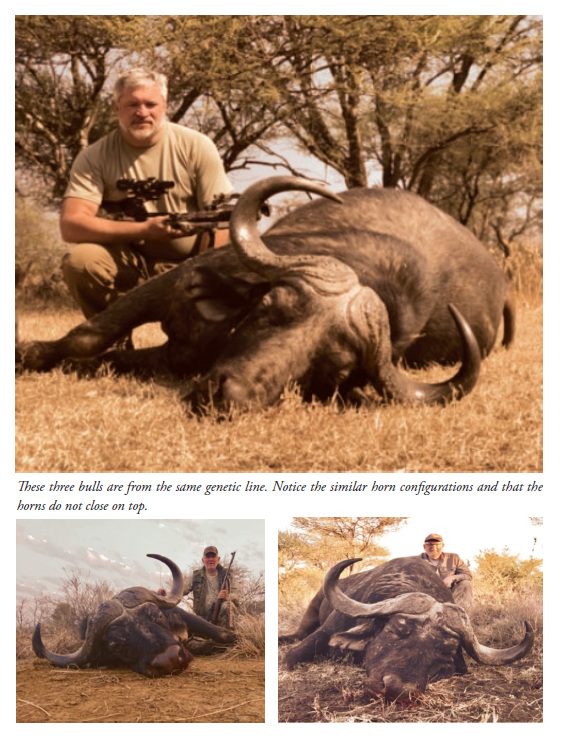
‘Hard bossed’ is another misnomer that is not fully understood by the uninitiated. Some mistakenly believe that a hard boss is one that is solid completely across the top of the buffalo’s head, with no gap or hairline present. While this horn configuration represents the ultimate in Cape Buffalo, horn density and growth are primarily a result of genetics, not age.
Many buffalo bulls and their offspring will never fully close on top of the horn and always have a gap between them, sometimes with a thin line of hair showing. These are not immature bulls, per se, but bulls genetically predisposed to grow horns the same way, generation after generation. Other considerations when discussing trophy buffalo are client preferences and likes. Some clients prefer to hunt the oldest buffalo that can be found regardless of horn size, while others insist on hunting for a bull with great drops and width. These are generally 10- to 12-year-old bulls that are fully mature and in their prime, but not yet past the point at which horn deterioration occurs. The professional guiding these clients is not there to satisfy his own ego, but to hunt for buffalo consistent with the wants of the client, though advising the client on area production, genetics, and what to expect is advisable. In my many years of operating a safari company, I’ve found that most clients just want a great hunt with a good buffalo bagged at the end of it. For me, that means a mature buffalo bull regardless of age
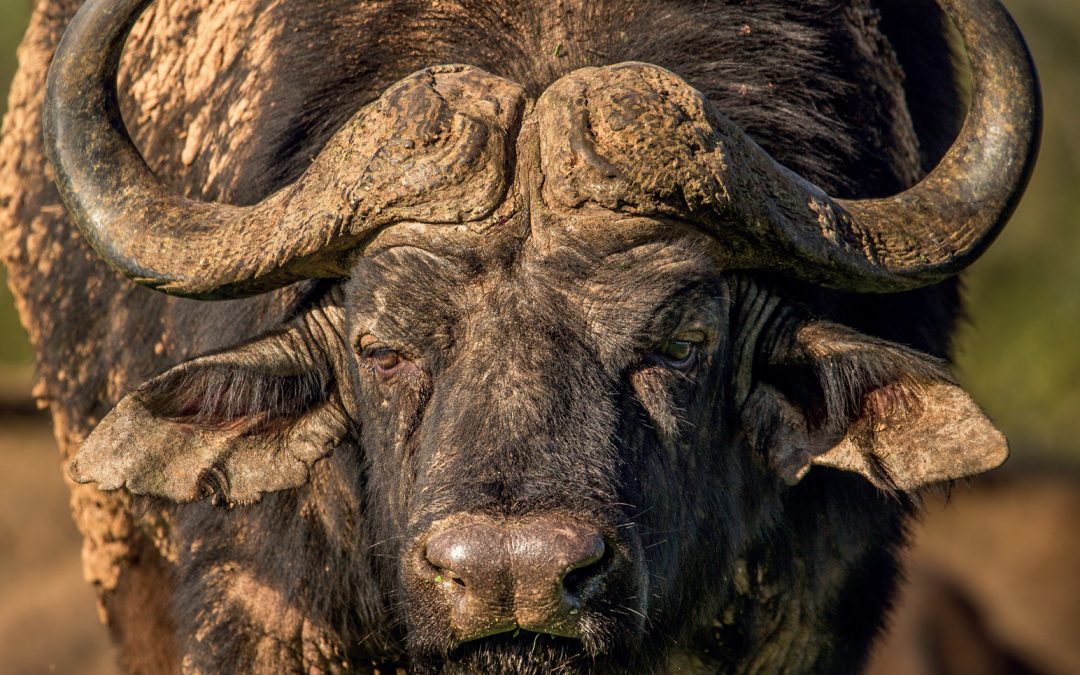
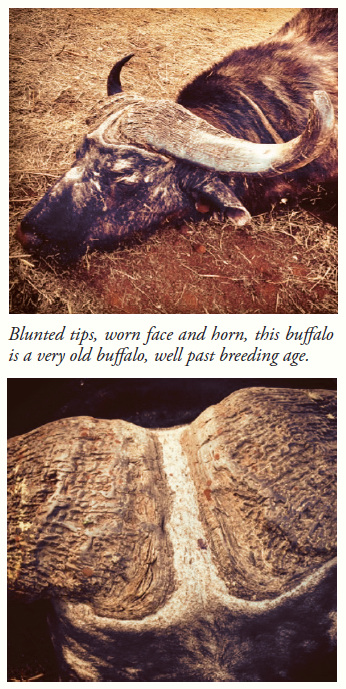
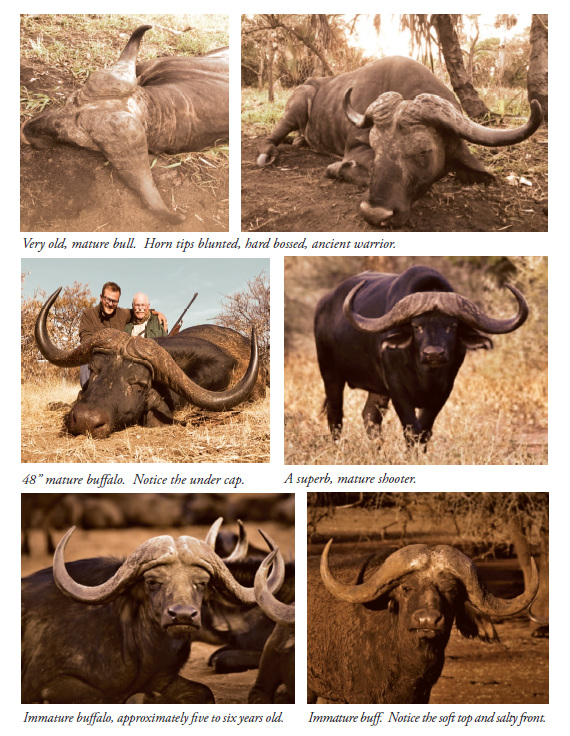
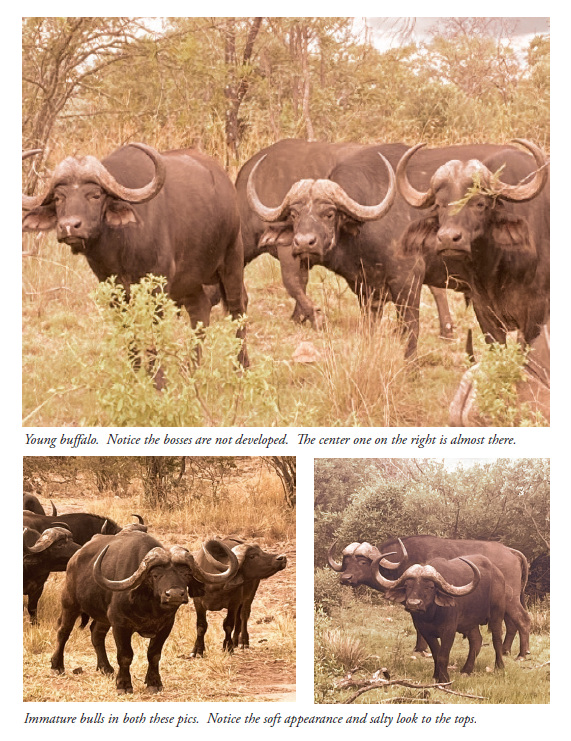
It generally takes eight to nine years for a buffalo bull to grow a hard boss. A hard boss can be defined as horns that are solid in the front and on top, with or without a gap between them. There may be a softer under cap which is visible, but there should not be the soft, salty looking, two fingers or greater growth on the front or top of the horns. Bulls displaying these traits are immature buffalo and should not be shot, in my opinion. Other traits of older, mature bulls are an obvious dewlap hanging down under the chin and neck, a large, box-like head, and the classic Roman nose. The following photos depict both mature and immature buffalo bulls.
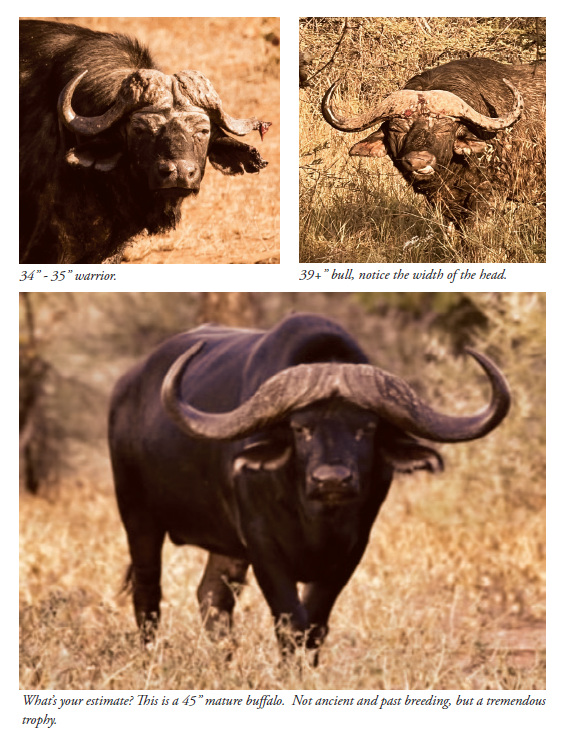
Trophy assessment is best left up to the professional, but all clients should confer with their hunting outfit and discuss the trophy quality present in the areas to be hunted. Each will have a prevalent horn type present in the buffalo due to the genetics within the herds hunted. With regards to horn width, 40” has always been considered the ‘holy grail’ amongst trophy buff alo hunters, but any mature bull sporting horns 36” or wider is a good buffalo. When assessing in the fi eld, a good rule of thumb is to use the width of the buffalo’s ears as a guide. Generally, the ears will extend around 35” in width from the head, total distance between both ear tips. Other factors such as head size come into play, but the above is an easy way to make a general assessment. If the horns are a hand width wider than the ears, you’re likely looking at a 40” buffalo, but a smaller head buffalo may be 39”, so rely on your professional for the ultimate assessment.
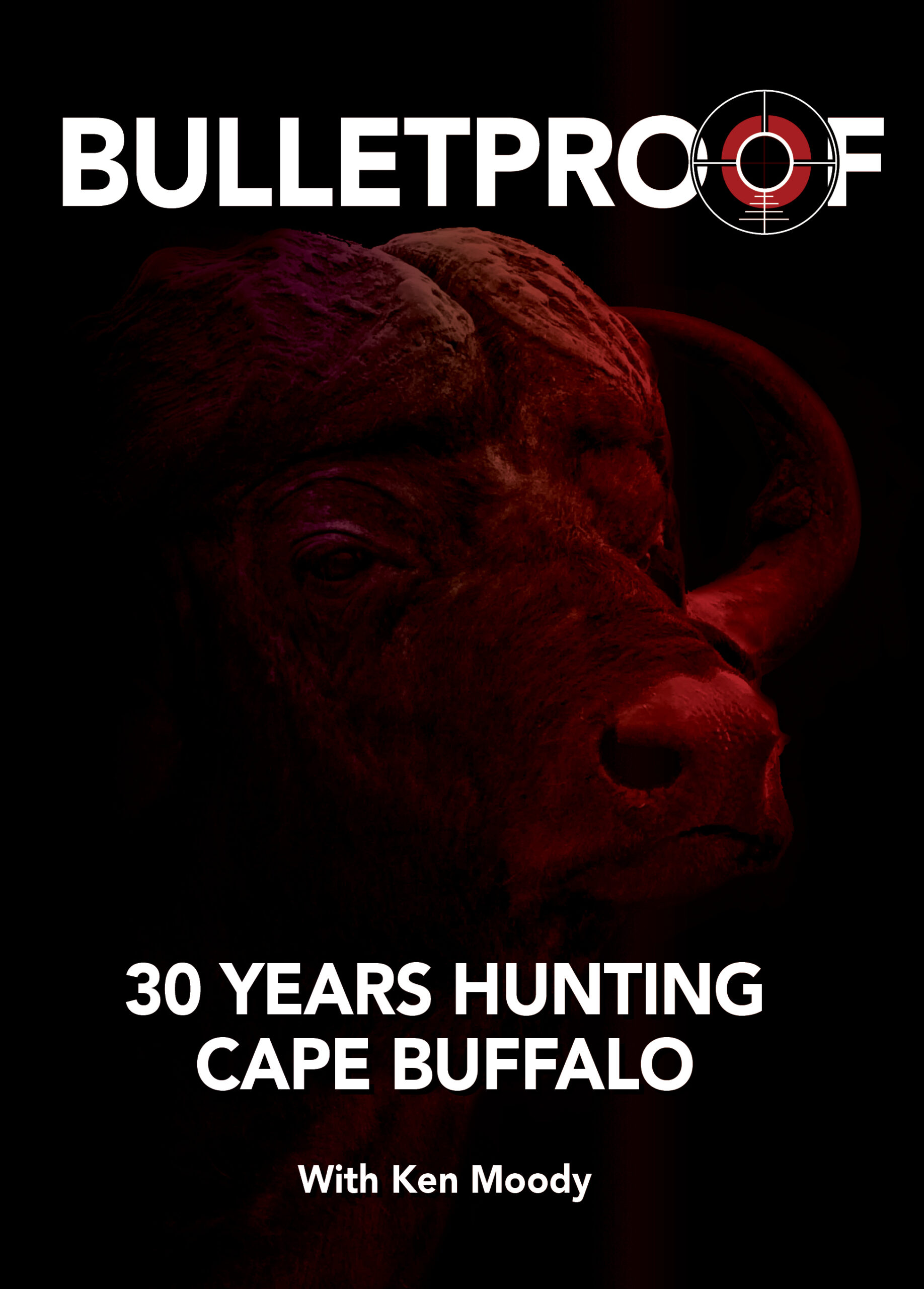
Bulletproof – 30 Years Hunting Cape Buffalo is a beautiful, full color, exciting read from Ken Moody. It contains good information regarding hunting cape buffalo and many adventure stories throughout its chapters.
“Thirty years of hunting ‘Black Death’ has provided me with many lessons and encounters and while I didn’t want to do an encyclopedia on the subject, I have created 136 pages of informative content that makes for an easy weekend read,” says Ken.
Purchase price is $25, which includes shipping to anywhere in the US. You can pay via Venmo at Ken Moody Safaris or PayPal @kenmoody111. Please provide your shipping details with the order. If you’d prefer to send a check, send $25 to:
Ken Moody Safaris
POB 1510
Jamestown, TN 38556