Feb 4, 2026 | Artist Profile, Hunting Stories, Uncategorized
Shaped by the Wild
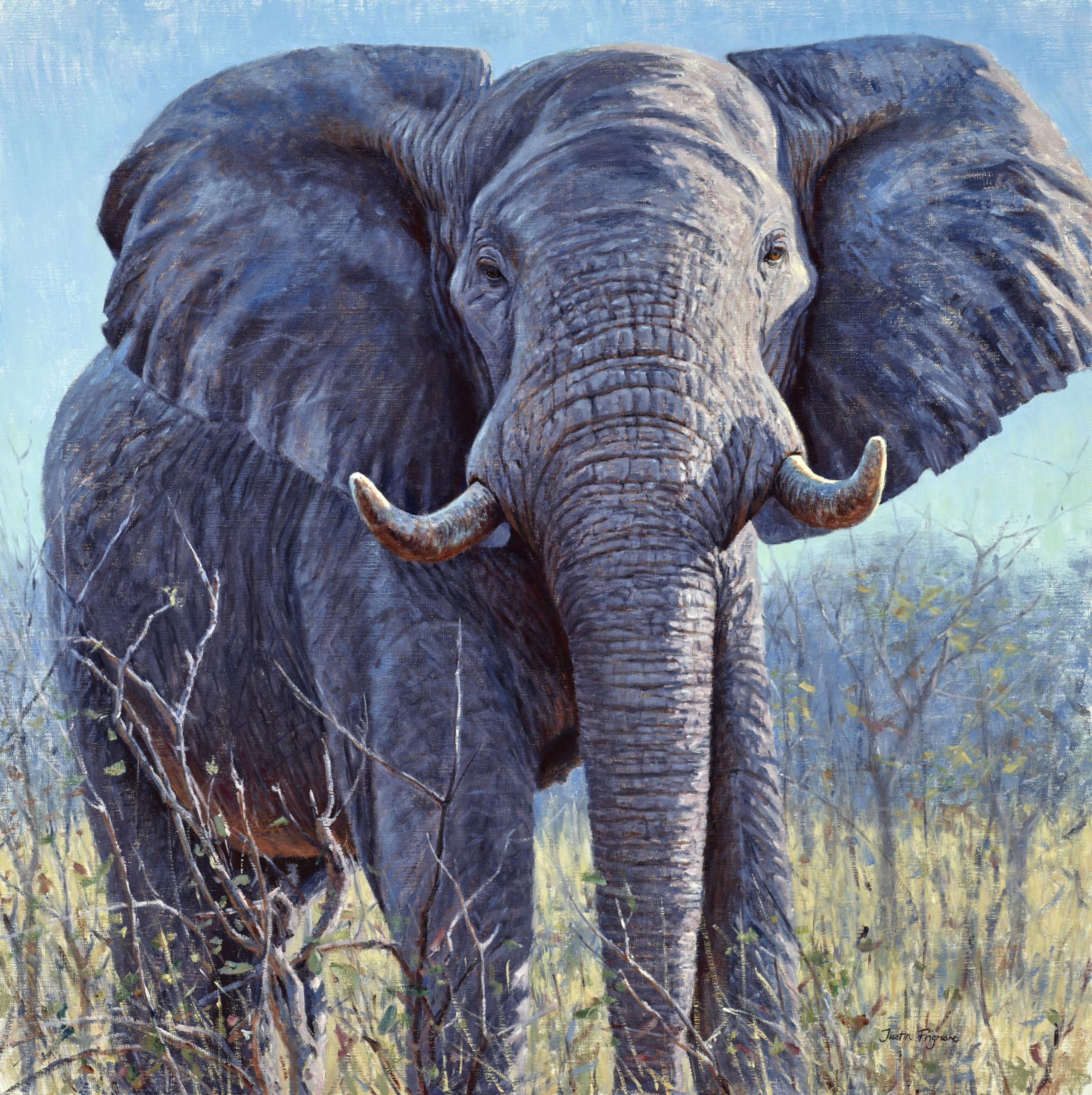
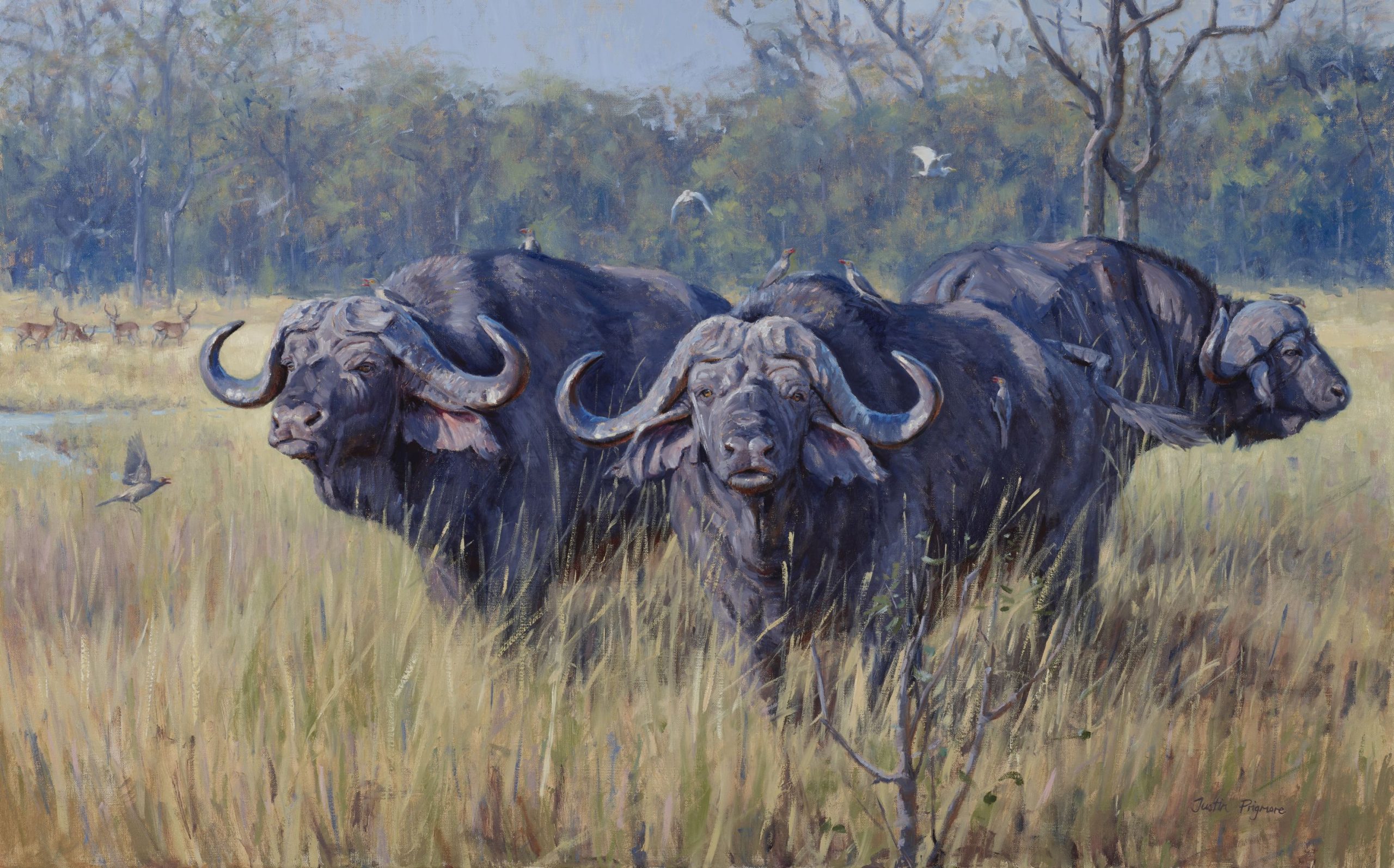
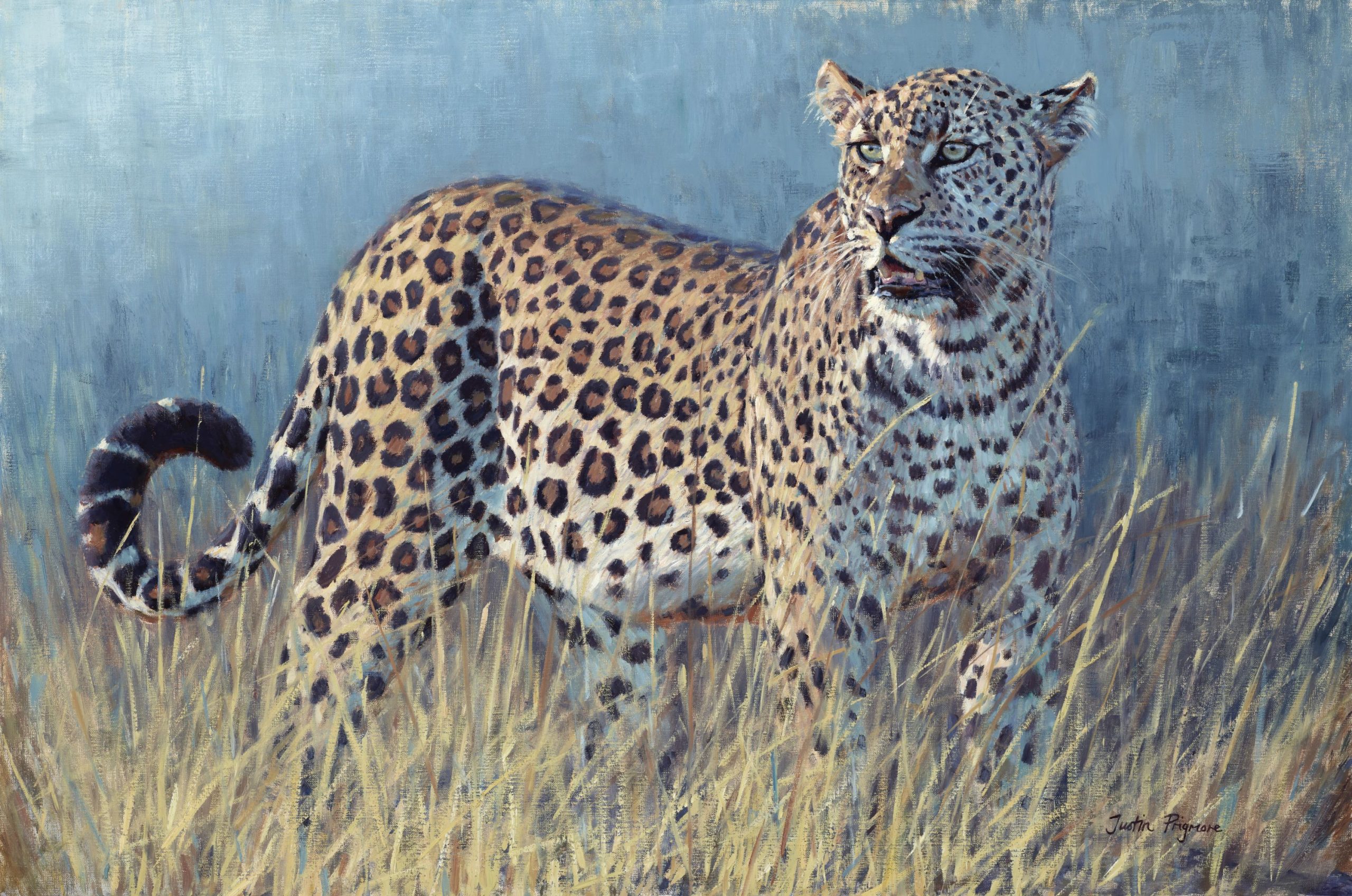
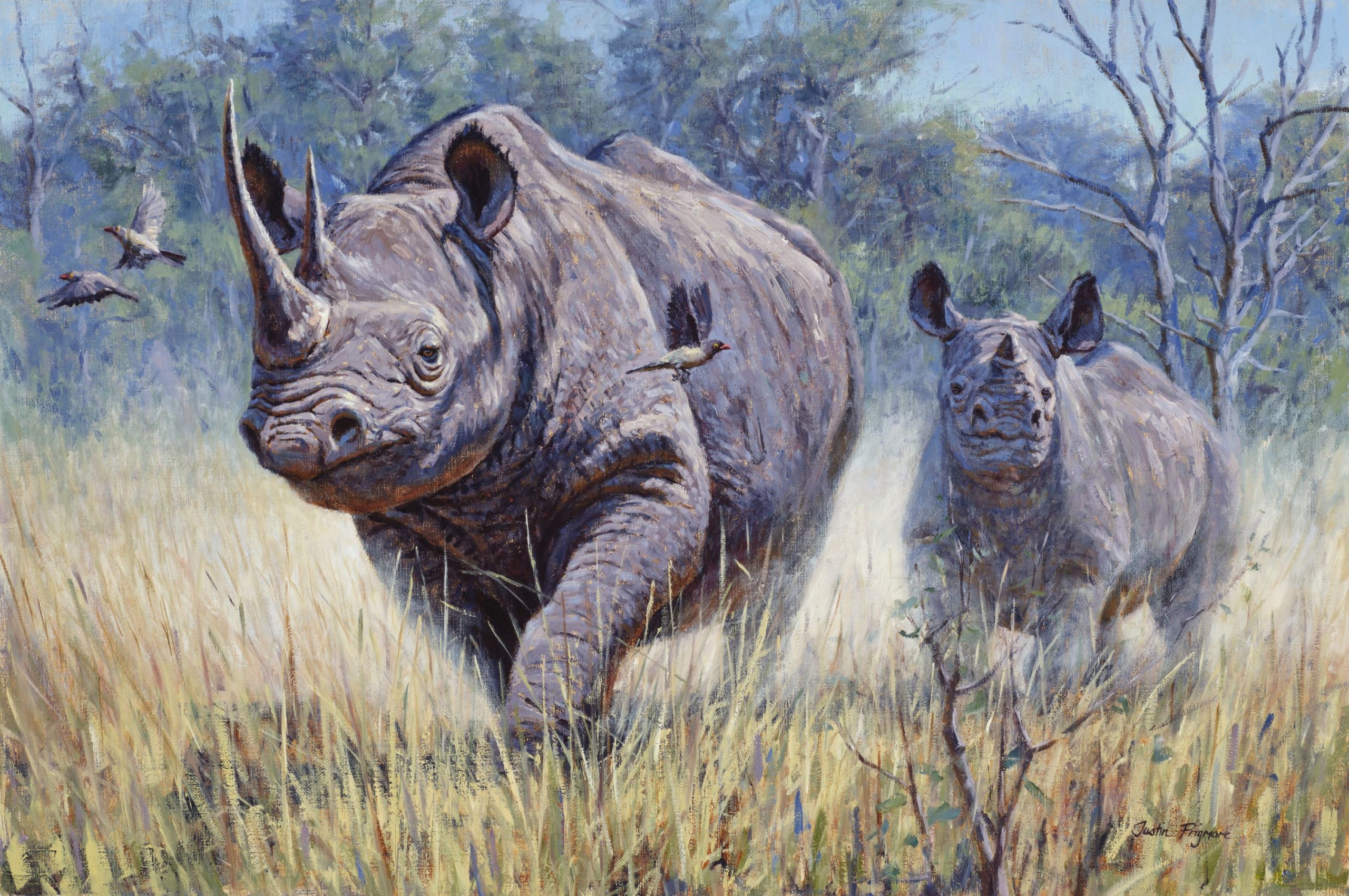
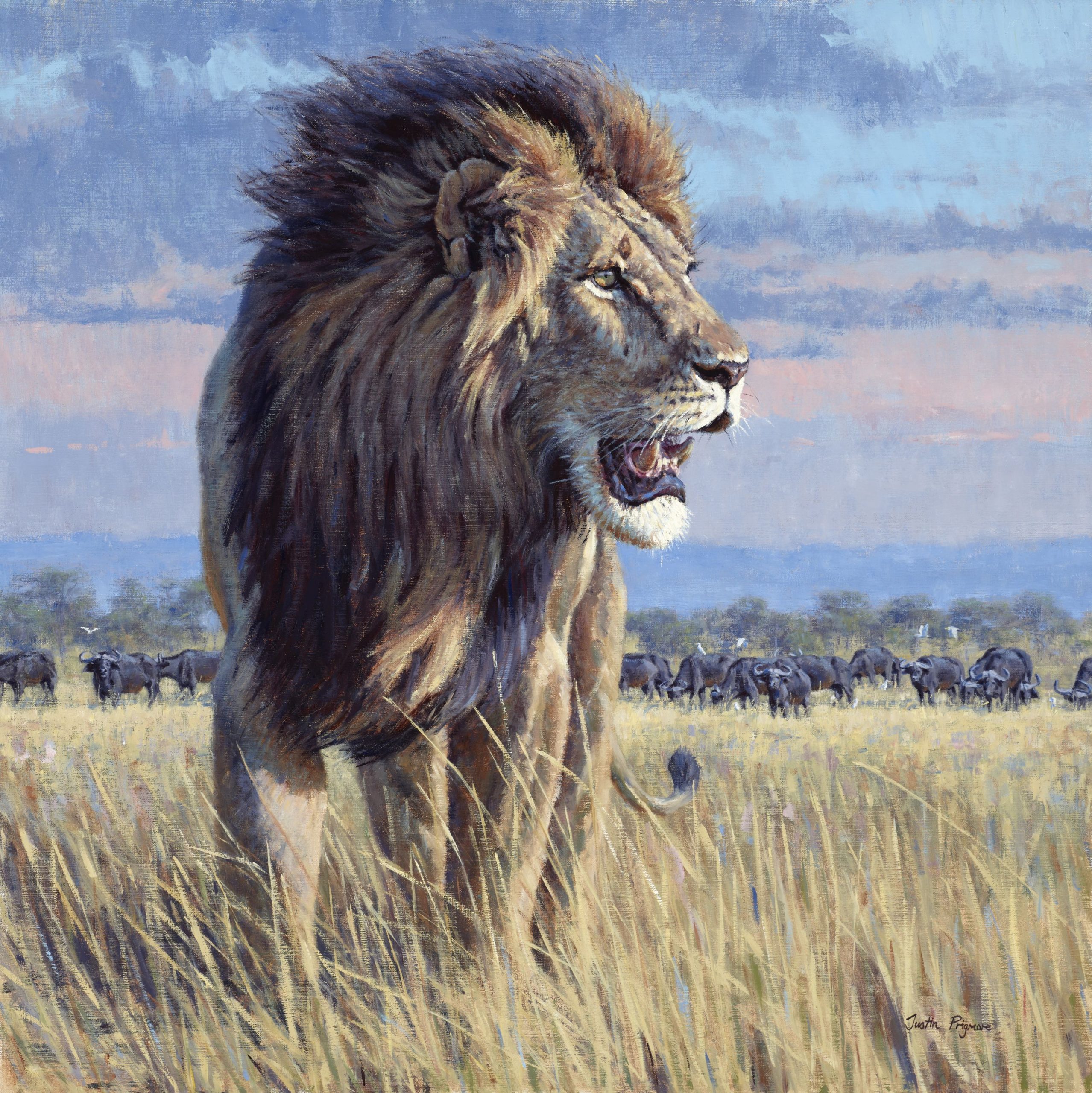
Born in Wales and now long settled in the Highlands of Scotland, the artist’s journey into wildlife art has been shaped as much by geography as by curiosity. Art was always a quiet constant in Justin Prigmore’s life, but it wasn’t until a formative gap year in Colorado that wildlife emerged as his true subject. While studying for a degree in Business Management, a visit to the National Museum of Wildlife Art in Jackson Hole proved pivotal. Standing among those works, Justin realised with sudden clarity that art was not simply a passion, but a calling he wanted to pursue for life.
At the time, a career as an artist felt far from practical. Yet the vast landscapes and cultural reverence for nature he encountered in the American West shifted his outlook entirely. Determined to ground his creativity in knowledge, he went on to earn a Masters in Environmental Science and Ecology. His early professional years were spent working in wildlife conservation, a path that not only supported him financially but also deepened his understanding of the natural world. Eventually, Justin’s dedication allowed him to transition into life as a full-time artist. Today, his work has earned international recognition, numerous awards, and a place in prestigious exhibitions, galleries, and prominent collections around the world.
Justin’s inspirations come from both the art world and the conservation community. During a ski season in Colorado, he encountered the work of wildlife painter Edward Aldrich, who was exhibiting in Vail. It was the first time he had seen someone successfully making a living as a wildlife artist, and the impact was immediate and profound. Although his ambition initially far outpaced his technical skill, that encounter set him on a path of decades-long learning and perseverance. Nearly thirty years later, at the Western Visions show at the National Museum of Wildlife Art in Jackson, he finally met Aldrich in person and was able to tell him just how life-changing that early influence had been.
Another towering influence has been Robert Bateman. Through his books, the idea of an artistic life became not only attainable but thrilling. Bateman’s ability to weave together travel, wildlife, and art—moving seamlessly from a tiny wren to a monumental elephant—revealed a career that could be adventurous, purposeful, and deeply connected to the natural world. Today, Justin’s inspiration extends beyond any single genre. He is drawn to artists who can capture the essence and feeling of a subject without excessive detail, a quality he admires in deceased painters such as Kuhnert and Kuhn, and one he continues to strive for in his own work.
Equally influential were the conservationists he worked alongside early in his career. Their commitment to protecting wildlife reinforced his belief that art has a role to play in fostering connection, empathy, and care for the natural world.
Wildlife remains both his greatest passion and his greatest challenge as a subject. Unlike human sitters, animals do not pose, and the most compelling wildlife art comes from deep familiarity with its subjects—their behaviour, movement, and the environments they inhabit. That understanding can only be gained through long hours spent outdoors, often in difficult and unpredictable conditions, watching stories unfold in real time. While demanding, the process is deeply rewarding, and collectors often respond to the authenticity embedded in the work, recognising echoes of their own experiences in nature.
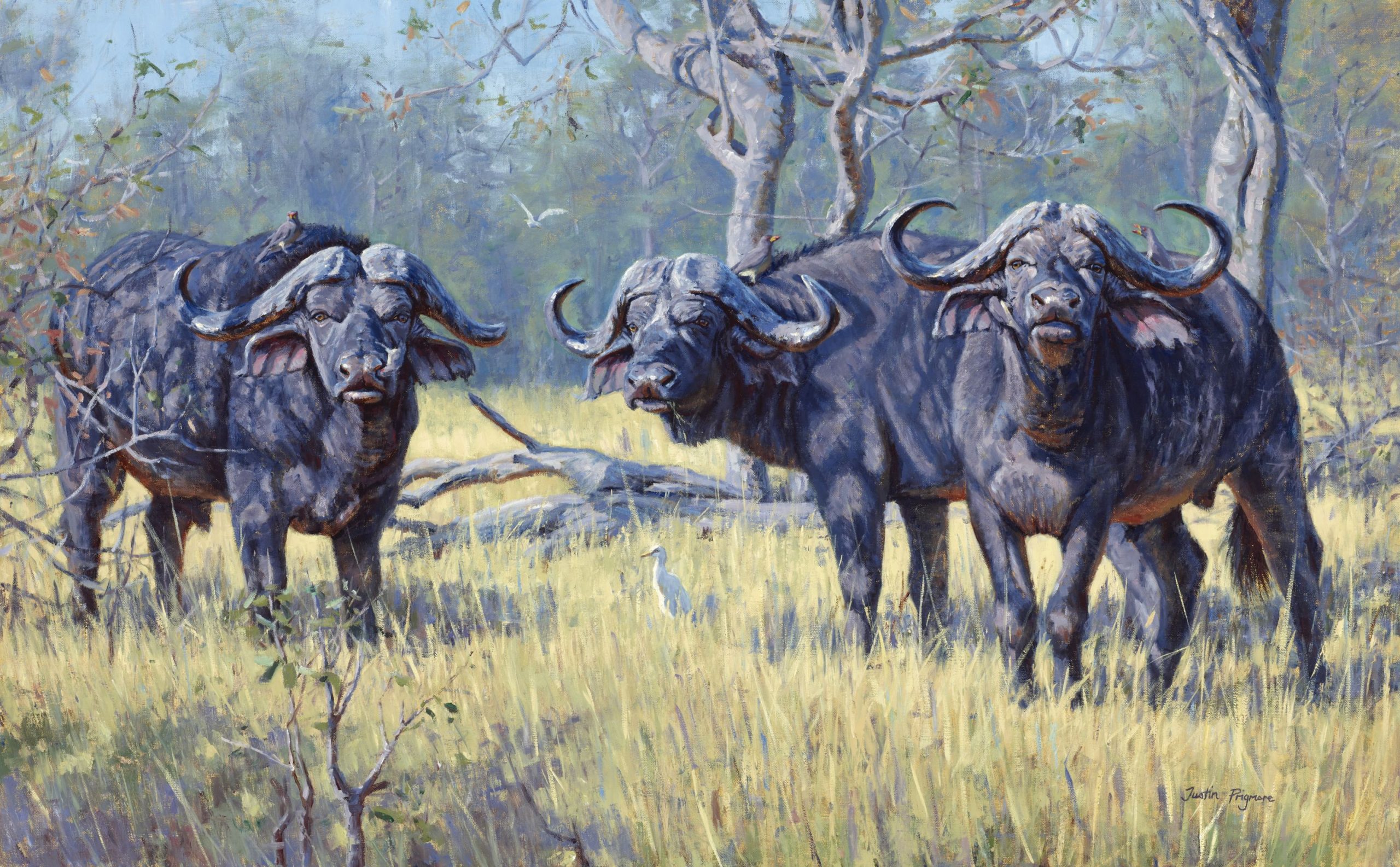
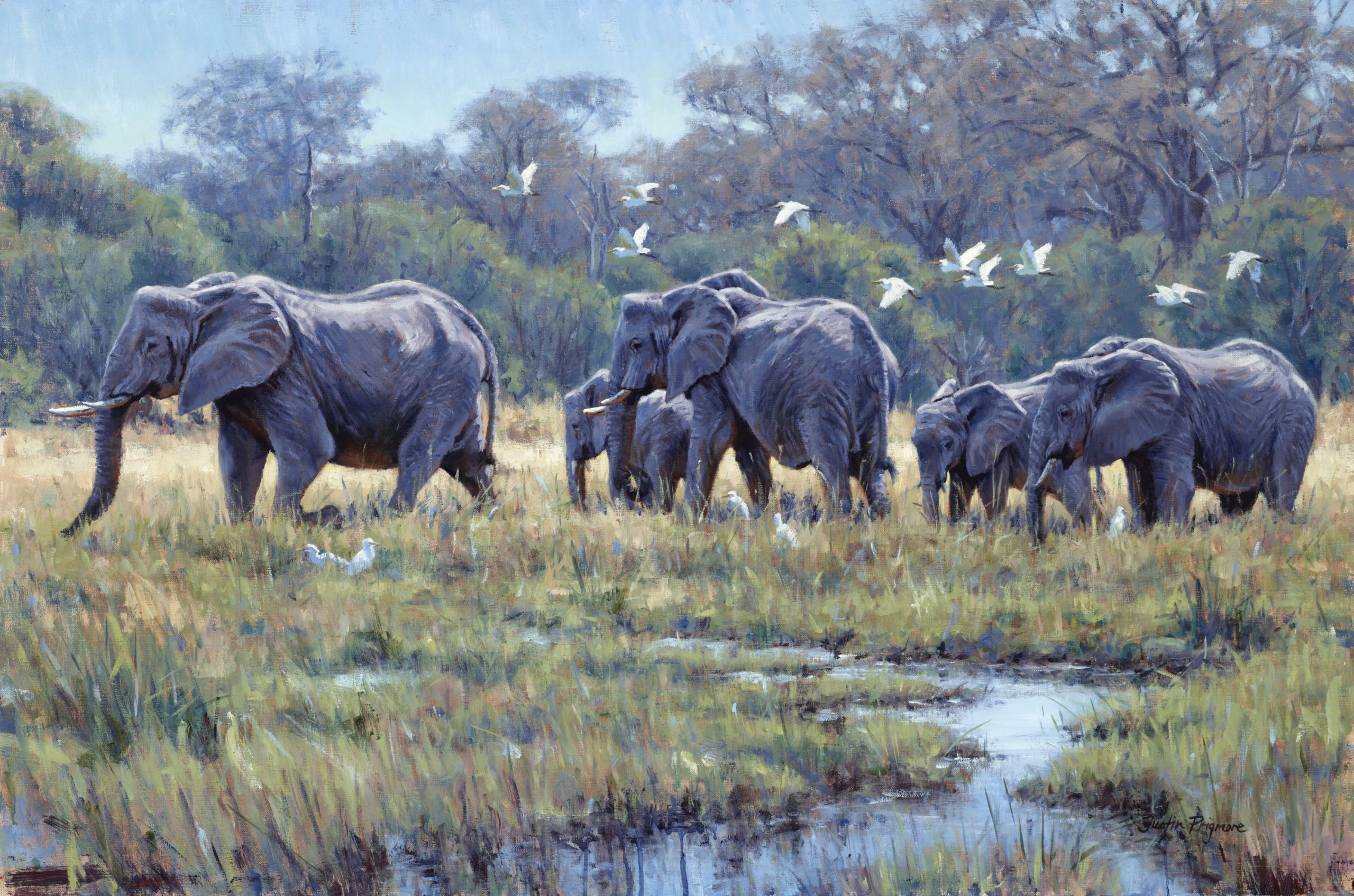
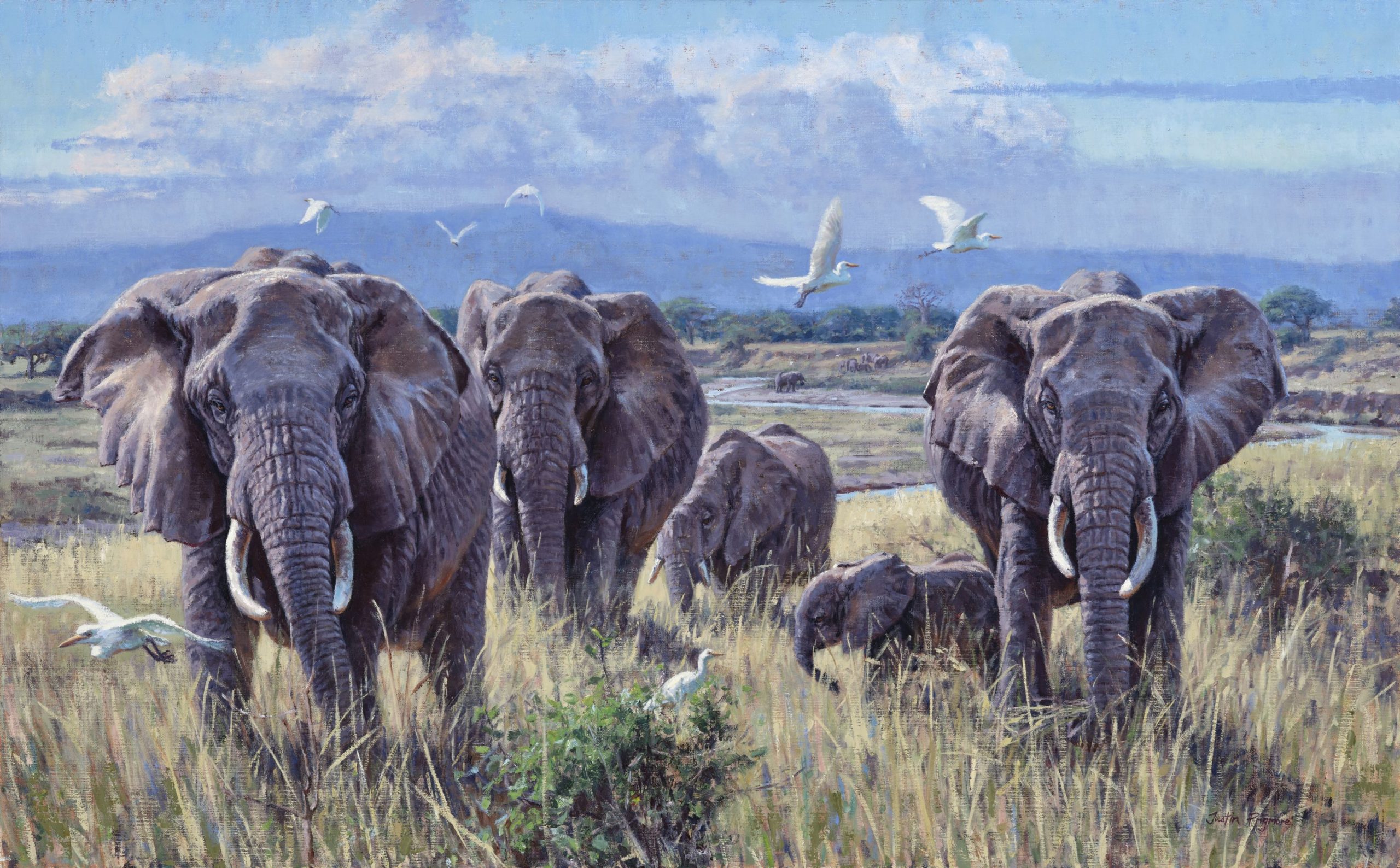
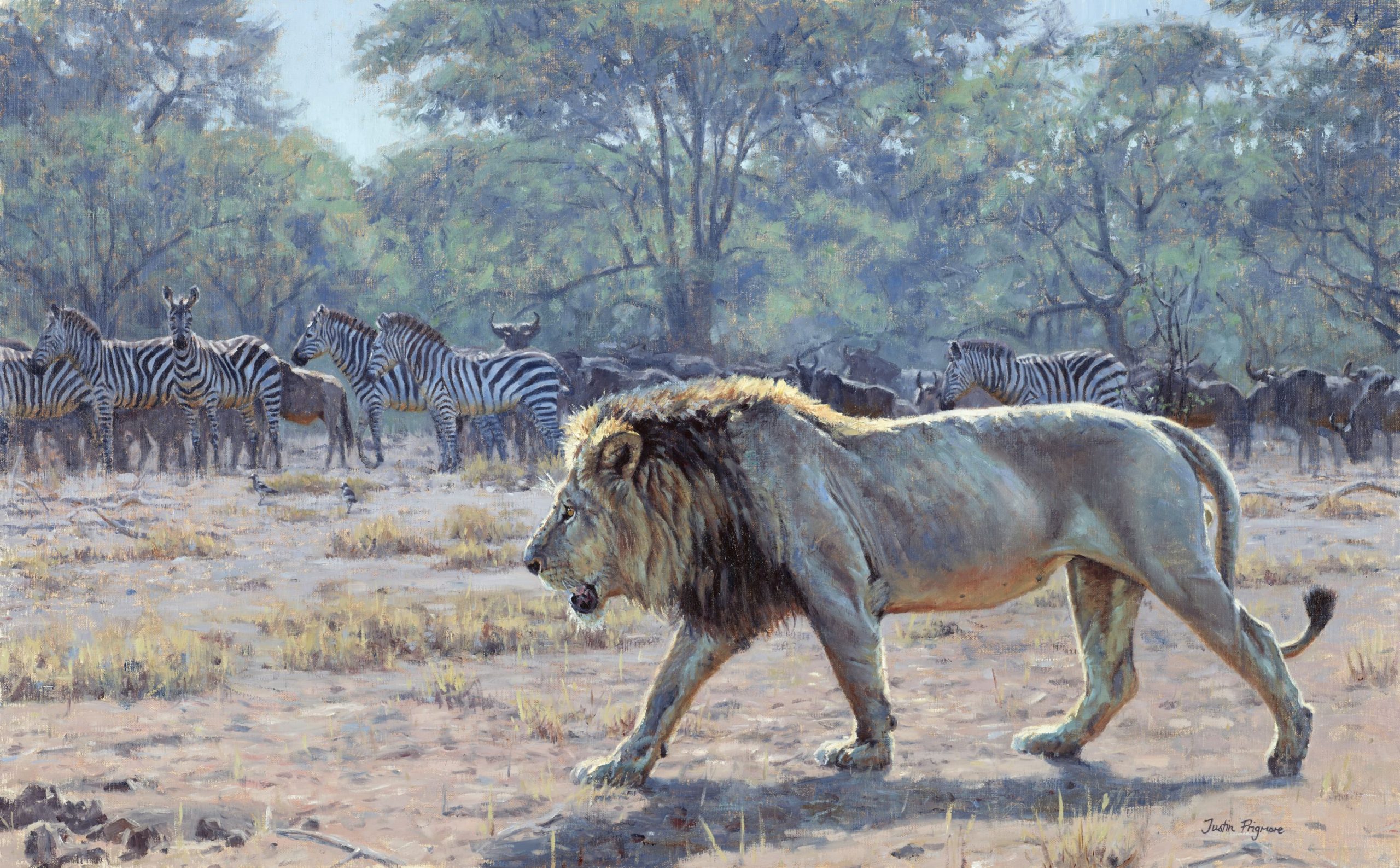
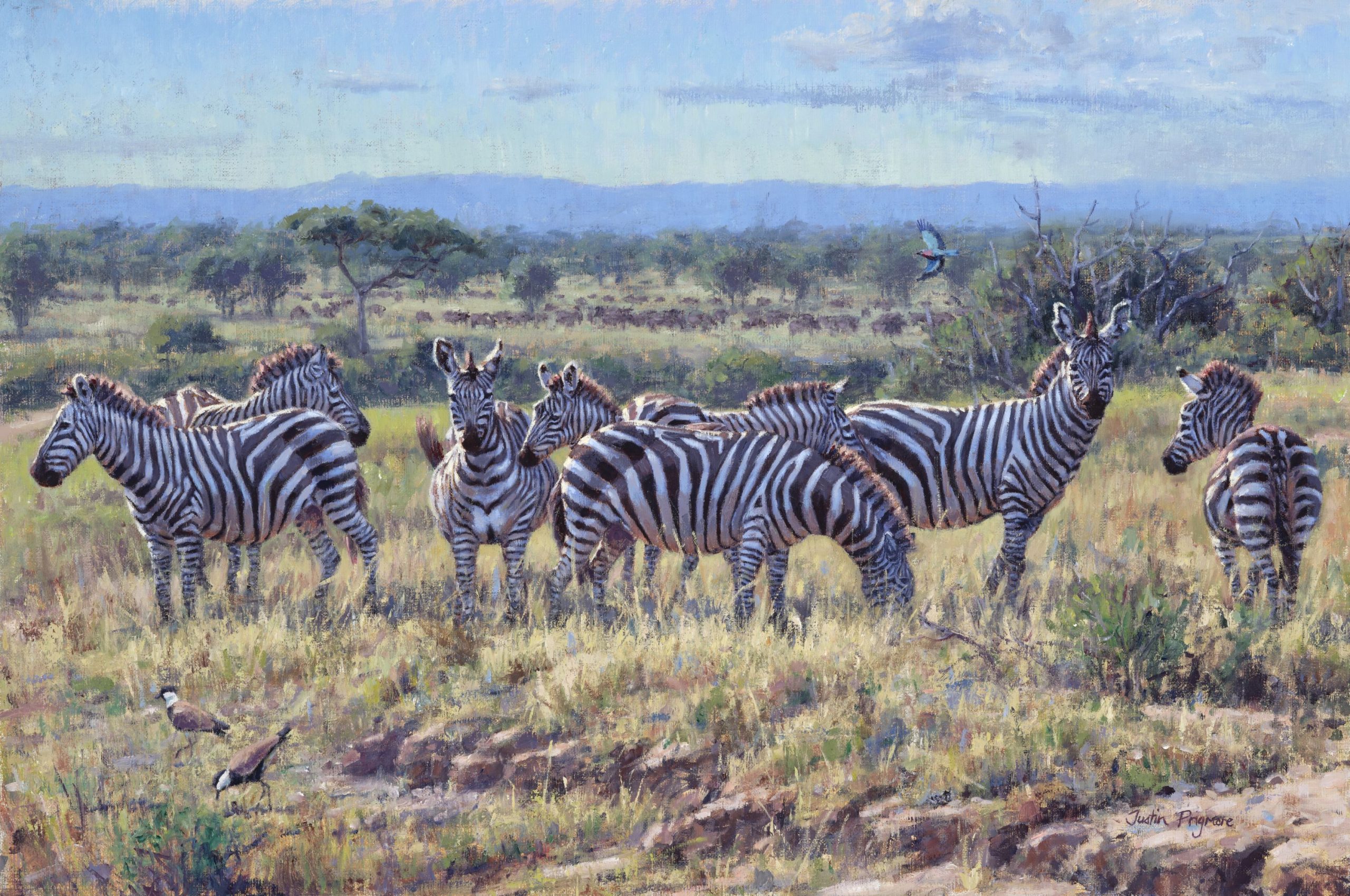
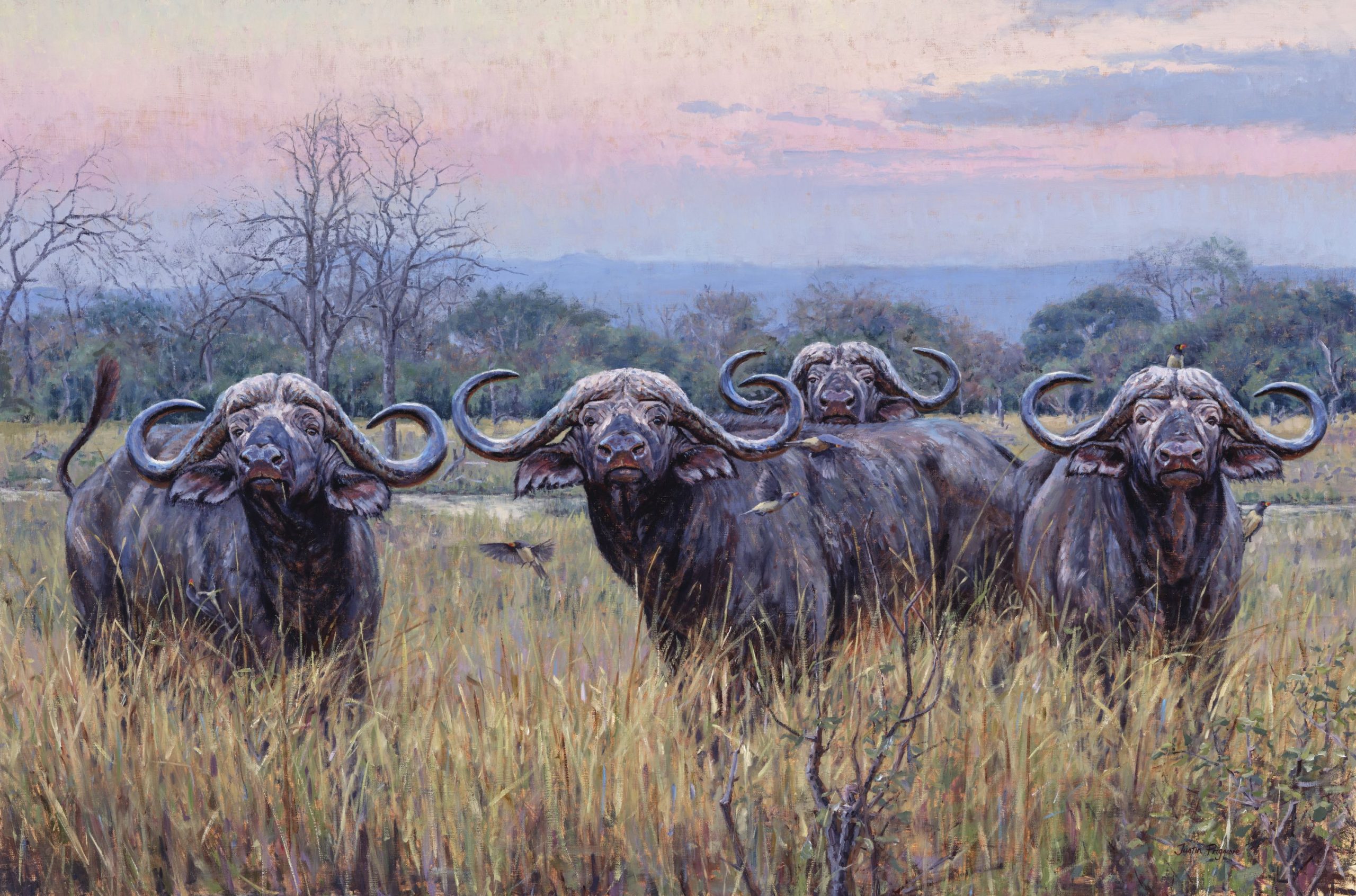
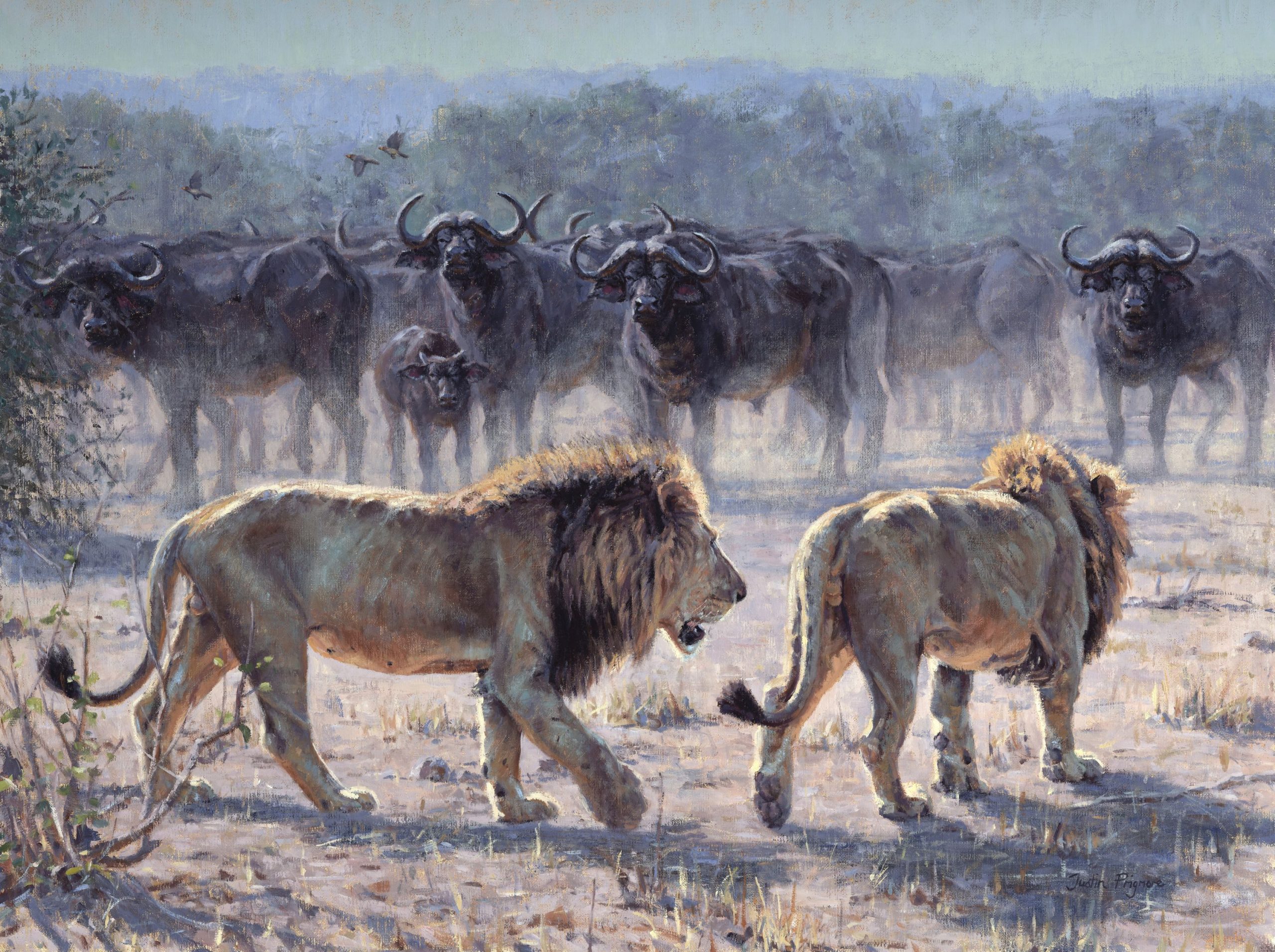
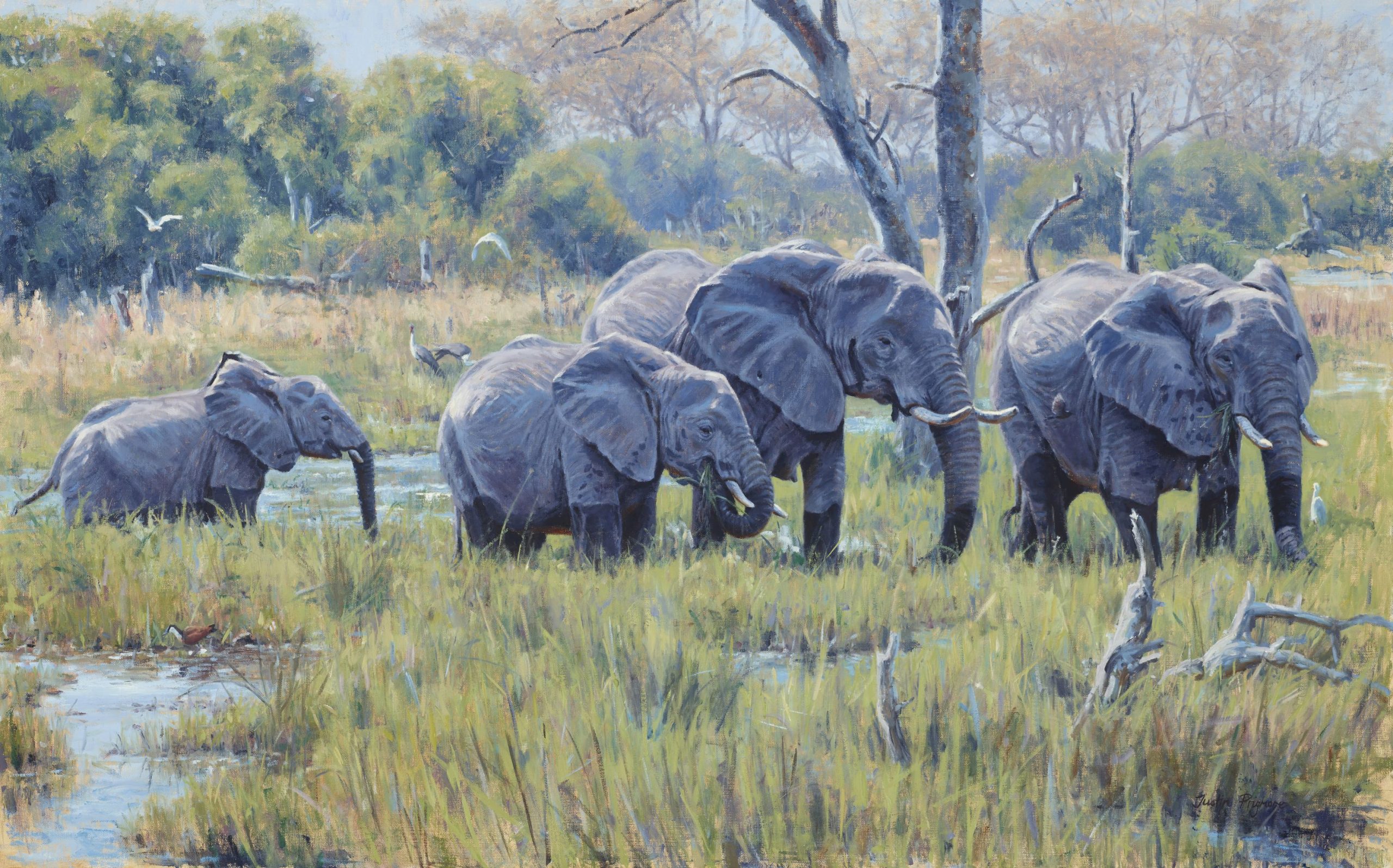
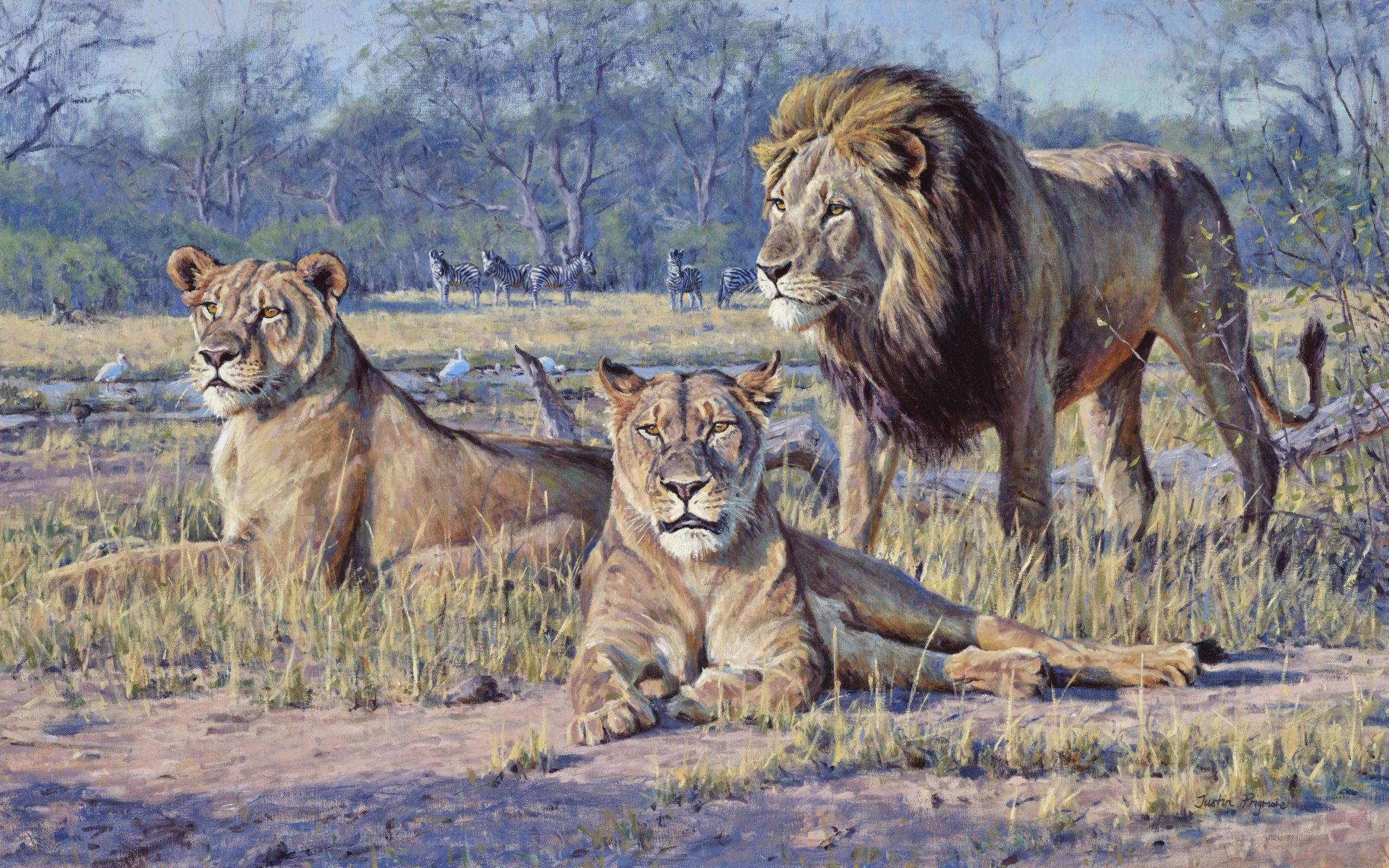
His favourite subjects are often shaped by place. Africa holds an enduring pull, with lions, elephants, and buffalo offering endless inspiration. The Highlands of Scotland, his long-time home, are equally close to his heart, their landscapes and wildlife woven into his sense of identity. More recently, he has been drawn back to the American West, a region whose powerful combination of dramatic scenery, abundant wildlife, and vibrant art culture continues to captivate him.
Hunting has also played a significant role in shaping Justin’s relationship with the natural world. He grew up in the UK bird shooting and fishing, influenced by his father’s enthusiasm for both pursuits. Later in life, he began stalking deer in Scotland, often through invitations from clients who wanted him to experience their land firsthand. Over time, this evolved into a deep appreciation for stalking—not simply as a hunt, but as a way of immersing himself in wild places and gaining a more nuanced understanding of animals and their habitats.
His career has opened doors to experiences far beyond the studio. On a recent commission in Florida, Justin took part in a quail hunt on horseback across a vast ranch. Despite not being a natural rider, he embraced the challenge and found the experience so rewarding that he has returned in subsequent years. For him, it offered a unique way to move through the landscape and engage with it on a deeper level.
Through hunting, Justin has forged lasting friendships with generous, passionate people and gained perspectives that continue to inform his art. Above all, these experiences have strengthened his connection to wildlife and the environments it inhabits—connections that remain at the heart of his work.
Bio
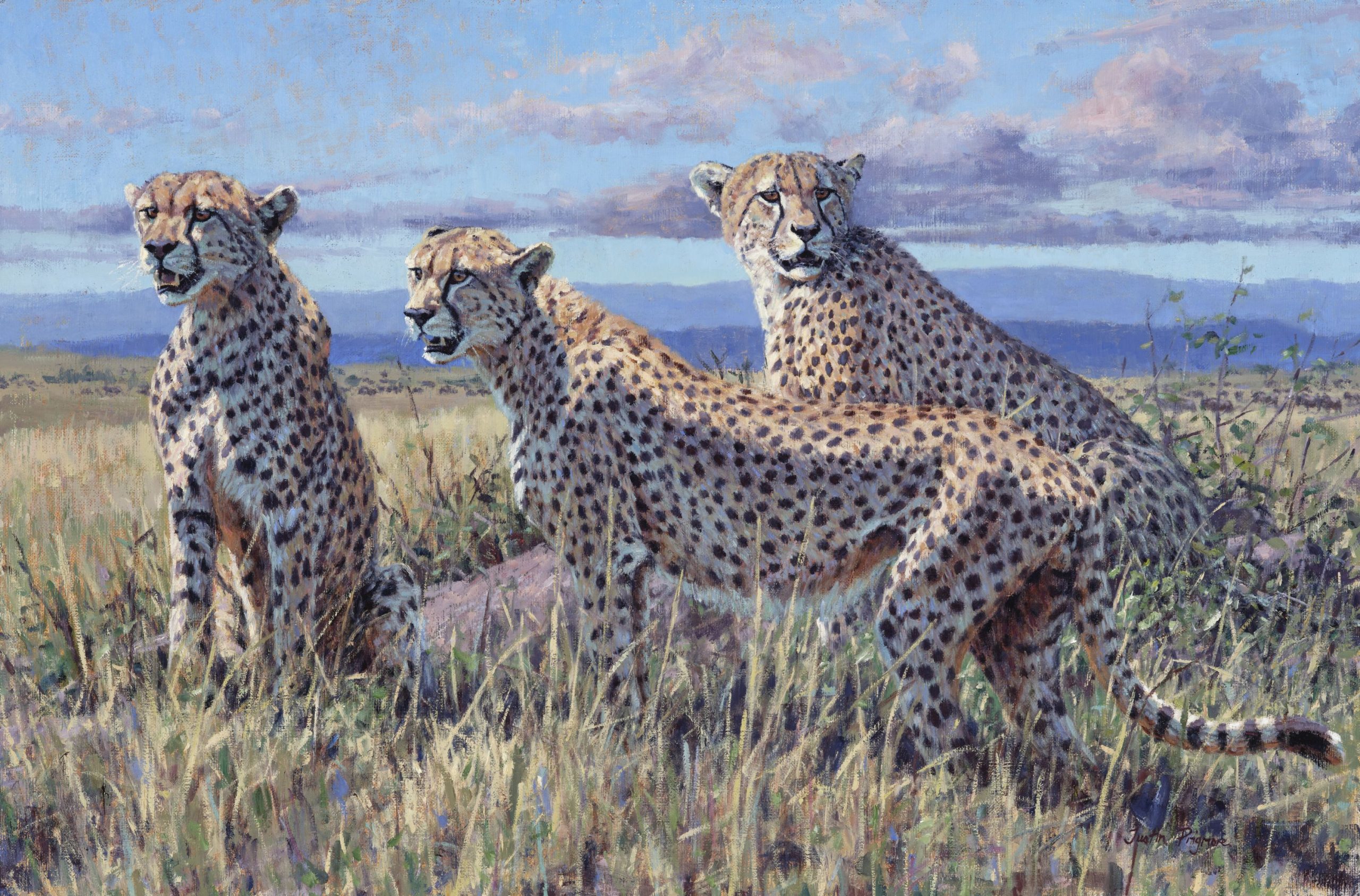
Justin Prigmore was born in Wales in 1974 and currently lives in the Scottish Highlands with his wife, two daughters and a labrador. His career has been shaped by extensive travel throughout the American West, Africa, and Europe. His paintings are exhibited worldwide and held in prestigious private and institutional collections. Through his art, he seeks to capture the essence of wildlife and place, fostering a deeper connection between people and the natural world. He has a MSC in Environmental Science and Ecology and as well as being a painter, has worked in nature conservation for organisations in the UK including the Cairngorms National Park Authority and the Royal Society for the Protection of Birds. Born in 1974 in Wales,
Justin has exhibited his work internationally in prestigious juried shows, auctions and galleries, including with the Society of Wildlife Artists, the Society of Animal Artists and at the National Museum of Wildlife Art in Jackson Hole. He has gained a reputation for dramatic and powerful large-scale paintings and his work can be found is some very prominent collections world-wide. Awards include the Liniger Purchase Award from the Society of Animal Artists, the Best British Wildlife Award at the National Exhibition of Wildlife Art and the winner of Birdwatch Magazine’s Artist of the Year. He is represented by the world-renowned Rountree Tryon Gallery and the legendary gunmakers John Rigby & Co. It is his association with Rigby that has led him to successfully showing his paintings at the Dallas Safari Club and at the Safari Club International in Nashville. These events have had a huge impact and demand for his work has steadily increased with clients from the US. Justin will be returning to the US this month to Atlanta and then Nashville with his latest collection inspired by his recent travels in Tanzania.
Jul 16, 2019 | Artist Profile, News
[vc_row][vc_column][vc_column_text]An innate knack for drawing, an encouraging art teacher, and a passion for wildlife have inspired and motivated Debra to take her art to legendary levels.
Debra was born in Manistee Michigan, a little tourist getaway on the coastline of Lake Michigan. Most of her schooling was in the Manistee area, and she graduated from Manistee High School with three passions: her family, her community, and her talent.
Like any artist, she had a number of influences in her life which have guided her style, the greatest being that of her high school art teacher, Ken Cooper. Ken was always a source of encouragement; he knew she was mostly self-taught, but often reminded her that the origins of one’s art didn’t matter – it was just the talent and desire to run with it. It was his words that gave her the drive, and self-confidence, to take her art even further. And it wasn’t until Debra started working for Legends, that she began to see other styles that resonated with her, the most influential being those of John Benovich and Craig Bone. Their paintings depict a hauntingly realistic perspective of the wildlife they portray and, said Debra, “It was wonderful to meet these great artists in person at some of the venues I have attended.”
Debra has chosen to focus on wildlife for one particular reason – the animals. As a young girl living in Michigan, she was blessed to have the opportunity to witness the antics of the local wildlife. From her back door she could see a whitetail deer nibbling on fruit in the orchards, a groundhog chasing around the yard, and even the entertaining hunts of the family cat! Animals are an intricate part of our environment, and it is her desire to capture it in her artwork.
With her current position at Legends, she has had the privilege to appreciate animals, from around the globe, portrayed in their natural habitat, from the plains of Nevada, the snowy landscapes of Alaska, showrooms in Honduras, to the shores of North Africa. However, by far, her favorite creature to paint is the elephant. Awesome behemoths, these animals have an array of emotions that humans may find difficult to comprehend – they offer a subject she finds utterly fascinating.
Debra feels that painting creatures such as the elephant are essential for African conservation efforts. “We have such a Western view of conservation, we focus so much on preserving the cycle of life that we forget that hunting, and breeding programs are a part of that cycle. Working with the Legends Consortium, I have witnessed firsthand how artwork reminds everyone that in order to protect wildlife, we must accept the entire cycle. From birth, to play, to death, to exhibition, every step is a part of the process to save these great beasts.”
The mechanics of Debra’s artwork can be broken down simply: she is a huge fan of acrylic paints! “Acrylic paints dry fast and are easy to paint over which gives the flexibility to make adjustments after the fact. That being said, the speed of drying makes it difficult to make correction on the fly, so the greatest advantage is also the downside!” Typically, inspiration will strike when she least expects it. “I’ll be watching my grandchildren play outside, and then the imagery will begin to form. This leads to a bit of digging, through a variety of mediums, to better understand the scene in my head. I will look through a hodgepodge of photos and videos of the animals in question. Photographs will often illustrate muscles and how the limbs of the creature will stretch and interact in life. This leads to the work itself. Gradually bringing to life a creature via bits of graphite and acrylic paint, is an indescribable feeling of creativity.”
Debra has been often asked what makes her artwork unique, something she finds difficult to answer. “I suppose it is because I paint on animal hides, which is a bit of a rarity! For me, to see an animal painted on its corresponding hide just has a certain amount of finality, a fitting tribute.”
Contacts:
www.DebraCooperWildlifeArt.com
info@legendstaxidermy.com
[/vc_column_text][/vc_column][/vc_row][vc_row][vc_column][vc_btn title=”View article in eZine” color=”chino” align=”center” link=”url:https%3A%2F%2Fafricanhuntinggazette.com%2Fjuly-aug-sep-2019%2F%23africanhuntinggazette-ezine-july%2F132-133||target:%20_blank|”][vc_media_grid grid_id=”vc_gid:1563279059155-6e32d9e4-db5a-3″ include=”22621,22622,22623,22624″][/vc_column][/vc_row][vc_row][vc_column][/vc_column][/vc_row]
May 17, 2018 | Artist Profile, News
[vc_row][vc_column][vc_column_text]I was born in Zimbabwe in 1985, and I was very fortunate to be brought up on a farm in the central province. We spent much of our time as children in and around the farmlands, riding, fishing, exploring, and generally messing around in the bush. My early school years were spent in a country school with many other kids from around the farming districts. Those were fun years! It was then onto high school were my art developed. We were taught to observe and not to ‘make things up’. This was the basis of my early art education. It was around this time, in my early teenage years, that Craig Bone took me under his wing for a period. He taught me the fundamentals of what wildlife art is. From there I attended Rhodes University in South Africa where I obtained a Fine Arts degree. Those four years of fine art and art theory were worlds apart from the art I create now. University opened me up to the different types of art that people do. It was a really good life lesson.
Currently I am based in Harare, Zimbabwe. I love being in the bush and try to get away as much as possible. I mainly travel to Mana Pools in the Zambezi Valley. It is one of the few remaining places in the world where one can walk in the bush without a guide. However, this is not advisable unless you have experience on your side. Another area that I am passionate about is the southern part of Zimbabwe known as the lowveld. There is pristine beauty down there. I am very fortunate, as the animals I love to observe and paint are only a few hours away, and there are many times when I have to remind myself as to just how lucky I am to be able to experience this sort of diversity in the bush.
Apart from the obvious sale and/or auctioning of artwork to aid financially in the conservation of wildlife through various organisations, paintings seem to embody a life of their own. It is a great pleasure to watch people engrossed in conversation about a painting that reminds them of a certain place or scene that they have seen. It is this feeling that can highlight the need for conservation of these precious animals that for many decades we have taken for granted.
I love working in oils, or oil paint. This is where my passion lies. Oils have an aura about them. They have done for many centuries now, and will do for many more. Oils are rich in colour and provide me with many ways or techniques to try and experiment with to reach a desired result. They are very versatile. In saying this, subject matter and composition then become very important. Apart from doing a few black and white pencil pieces throughout the year, I try to sketch when I am in the field. This keeps my eye in and reminds me of certain places and things that I have seen. This provides part of the process, but photography plays a vital role in any wildlife artist’s life. In the past I used to take thousands of photographs of everything and found that I was overwhelmed with the sheer number of photos. I also found that they were not that good anyway. So I have started to focus on the quality of the photograph, and found that the better the reference material, generally the better the painting. With quality images I find I can combine a few photographs together to create scenes that engage with the viewer.
I think that it takes many years to build up one’s own style of painting and unique style. It takes many yards of canvas and many mistakes to be able to start to get it right.
My work can be found online at www.garethhook.com and the major social media sites link Facebook and Instagram at garethhookart. Links are on these sites to be able to get in touch.[/vc_column_text][/vc_column][/vc_row][vc_row][vc_column][vc_gallery type=”image_grid” images=”14814,14813,14815,14816,14817,14818,14819″][/vc_column][/vc_row]