The Magnum Caveat

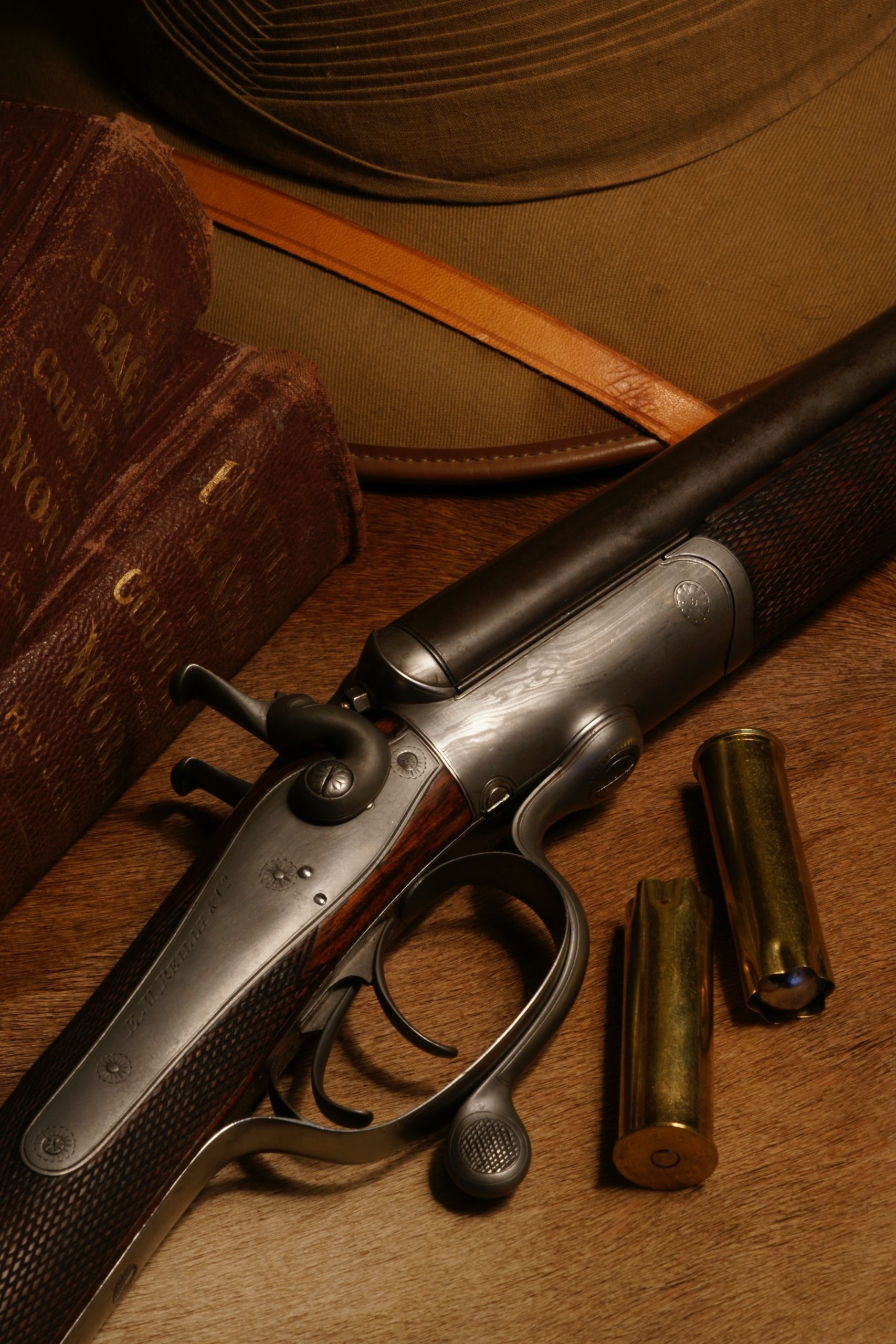
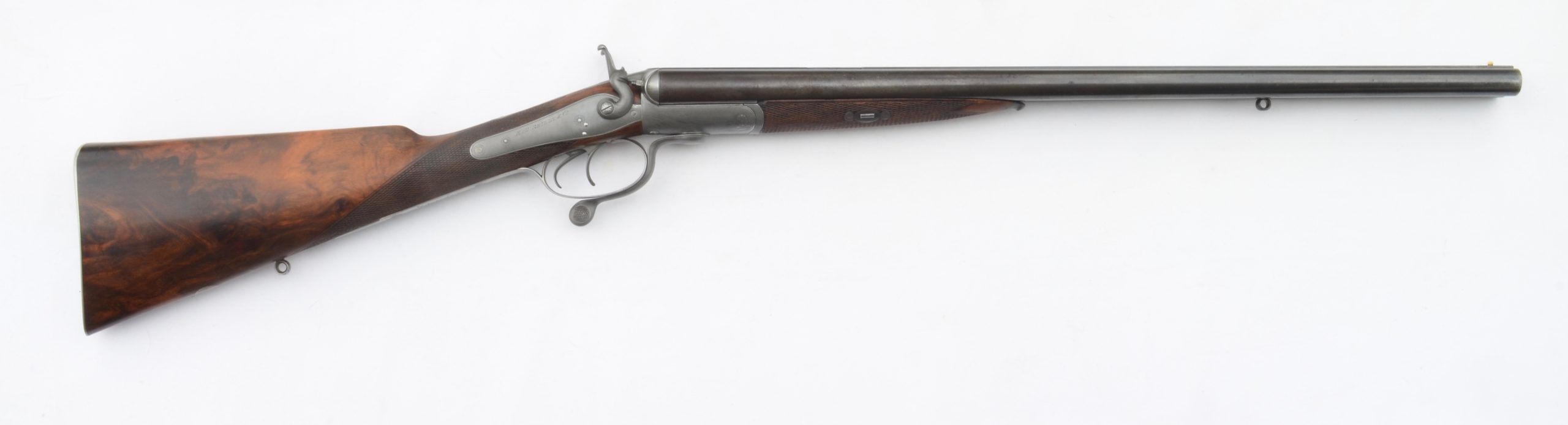
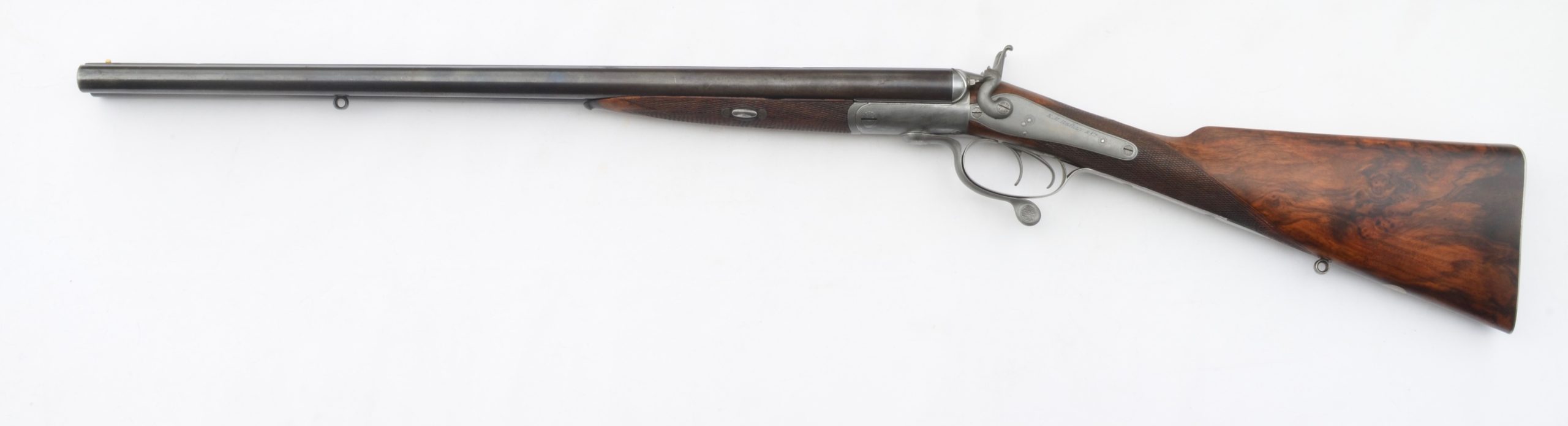
Kenny Jarrett built this .257 Weatherby Magnum on a post-’93 pre-’64 Winchester Model 70 action.  It has a 26-inch barrel — critical for achieving magnum ballistics from a cartridge like the .257.

By Terry Wieland


Forty years ago, give or take an eon, basking in a reawakened passion for rifles after a long sojourn pursuing journalism to the ends of the earth, I was leafing through Cartridges of the World and came upon the .257 Weatherby.


When I was a teenager, the very name ‘Weatherby’ was magical, denoting sexy cartridges with double-radiused shoulders, and rifles out of the Arabian Nights, carried by princes hunting Marco Polo sheep.  At least, that was the image, and something of that pixie dust lingered as my eye rested on the .257.


Five years later, I found myself in Montana with a safari-grade Weatherby Mark V — a lovely custom thing that, out of the box, grouped its first five shots of factory 100-grain into six-tenths of an inch.  Its first shot at big game accounted for the prettiest pronghorn I’ve ever seen, before or since, and it began a short but memorable career as my primary rifle for everything up to zebra.


Along about that time, the first practical chronographs for everyday shooters came along, and I quickly learned to differentiate between the stuff I’d read in the past and what I could now see with my own eyes.  Not that never the ‘twain did meet — there was some overlap — but considerable eye-opening did occur.


First, I learned that to get the most out of a cartridge like the .257 Weatherby, burning significant amounts of such as Norma’s MRP or, later, Reloder-22, you had to be using a 26-inch barrel.  At that time, Mark Vs were still available with 24-inch barrels, but using one of those with a .257 Weatherby essentially gave you an extremely loud .25-06.


The other thing was that, marvellous as the cartridge was with 100-grain bullets, launching them at around 3,500 feet per second (fps), it was even better with something heavier.


Heading for Tanzania and Botswana in 1990, I prevailed upon my good friend, Jack Carter, to make some of his early Trophy Bonded Bear Claws in .257.  These weighed 115 grains, I developed a gilt-edged load at an average of 3,387 fps, and the rifle acquitted itself in Africa like a pro.


The only problem was that, deadly as it might be on plains game like zebra and wildebeeste, it was too long, too heavy, and vastly too powerful for creeping around in the brush looking for duikers and such.


A divorce — no need to ask why — and a few other developments led to my parting with my beloved Mark V.  For the next ten years or so, most of my hunting was done with a Dakota 76 .30-06 with a 23-inch barrel.  This included hunting in, among other places, Botswana, South Africa, Texas, Colorado, Quebec, and Ontario, wherein I took everything from duikers to elk.  Given the virtues of the Dakota, which were many, I didn’t miss the .257 Weatherby all that much, but I never got rid of a hankering for another.  When Kenny Jarrett approached me with an offer to make one of his “beanfield” rifles, how could I refuse?


Thing was, Kenny liked to build rifles on Remington 700 actions, chambered for his own .300 Jarrett.  Promotional puffery aside, the .300 Jarrett is a .300 Weatherby with sharp shoulders.  No, said I, I want a .257 Weatherby.  I also wanted it built on one of the then-new post-’93, pre-’64 Winchester Model 70 actions.  Kenny was dismayed but cooperative.


The result was nothing like my beautiful custom Weatherby from years before, having an early Bell & Carlson fiberglass stock, circa 1996 and astonishingly homely, and an almost-Parkerized dull finish on the steel.  But could it shoot?  Man!  It was, and is, a shootin’ machine.  Long?  Yes.  Heavy?  Yes.  Does it demand a big, heavy, powerful scope?  Yes.  But with the right handloads it fulfills Kenny’s guarantee of three shots into a half inch, time after time.


Now, approaching 30 years later, that Jarrett — which was made to down whitetails at 400 yards plus, across a vast field of soybeans, hence the “beanfield” name — can still go shot for shot with any of the hotshot “long range” rifles I get sent to test, and usually beats them.  But then, we’re talking a custom rifle with handloads versus factory (albeit expensive) rifles with factory (albeit premium) ammunition.


As for all the other cartridges available, new and old, magnum, non-magnum, and magnum in name only, I would still take the .257 Weatherby for animals at a distance.  There’s not much it won’t do — with a 26-inch barrel, that is.  That’s the caveat.  It’s what makes a magnum a magnum.

One for the Road

By Terry Wieland


Across the Kalahari


Almost all of the really great hunting books are less about hunting than they are about journeys.  Sir Samuel Baker’s Nile Tributaries of Abyssinia, Theodore Roosevelt’s African Game Trails, even Ruark’s Horn of the Hunter — are less about being there than getting there.


This element has been largely removed from both modern hunting, and modern hunting writing.  Encounters with the TSA, late flights, cramped airline seats, and delays at Customs are hardly material for great literature.  Even within a country of any size, such as Tanzania, most movement between hunting areas is now done by small plane.  Gone are the long, hot, bumpy, dusty, interminable treks by Land Rover that see you pull out in the pre-dawn and only reach your new camp long after dark.


This may be more convenient, and it certainly saves money when a safari is costing you a few grand a day, but it also takes away that moment of sheer elation that only occurs when you round yet another bend in the dusty track and see the gleam of a campfire through the trees.  All of today’s finely furnished camp huts and elaborate fire pits can never replace the welcoming magic of a small campfire in the bush.


In 2001, my pal Clint Gielink and I finally undertook a trip we’d been talking about for five years:  We left Maun to traverse the Kalahari, with the ultimate goal of spending a night or two at Gemsbok National Park, near the South African border.  This all came about because of my curiosity about a dot on the map of Botswana called “Lone Tree.”  A map of Botswana is mostly blank space, but there was a line that connected Ghanzi to this dot, and this dot to the border post.  What exactly, I wondered, was at that dot?  Was there really a solitary tree standing in the middle of the Kalahari?  We decided to find out.


Clint is South African by birth, but was transplanted to Botswana where he now runs a photo-safari outfit.  This gave us access to a fully equipped Toyota Land Cruiser and such essentials of life as good sleeping bags for icy nights in the Kalahari.  It may be desert, but you can see your breath in the morning chill.  We didn’t bother with such amenities as a tent which, after sleeping under the stars, seems as confining as the 19th floor of the Hilton.


Aside from seeing Lone Tree, I also had a personal ambition to be the first person, at least as far as I knew, to grind my own coffee and make espresso to sip by the aforementioned tiny gleaming campfire.  This may seem a tad esoteric, but coffee fanatics will understand.  I’ll report on the results, and move on, very quickly:  The electrical inverter in Clint’s Land Cruiser handled the grinder with no problem, but blew a gasket the second I turned on the coffee maker.  Less than a day into the trip we were without electricity.  Ah, well.  Fortunately, I had my emergency supply of pre-ground coffee and a little drip device that could work with water heated in a pail over the fire, which we did henceforth.  Clint, not much of a coffee drinker, was somewhat bemused by all this.


We left Maun on the fine paved road to Ghanzi, where we stocked up on the one absolute nutritional necessity:  A goodly supply of mutton chops.  We also filled every water container, topped up the petrol, checked the tires (four on the truck and four spares) and bought what vegetables were available, which wasn’t much.  Some biltong and dry sausage rounded out the commissary.


Botswana halted sport hunting in the Kalahari in the late 1980s.  Up until that time, safari outfits like Safari South maintained camps there for hunting desert game, and transported their clients from the Okavango to the Kalahari and back.  There being little or no enforcement of the game laws, and none really being possible short of assigning a game scout to every safari, all kinds of abuse took place.  It finally got so bad they shut it down, or at least that was the reason given.  Aside from limiting the taking of such desert trophies as gemsbok, springbok, and various hartebeest, this ruling eliminated one of the most interesting side trips a hunter could make.


Although the Kalahari evokes images of sand dunes and salt pans, much of it has trees and rolling waves of grass.  It would be going too far to call it scenic, since it’s so flat you can never see very far anyway, but it’s a place of great beauty in its own way.  Scenery aside, you will never experience silence the way you will there.  Lying in your sleeping bag, looking up at the night sky, is a dark-velvety panorama of the Milky Way that is possible these days in very few places on earth.  With no air pollution, and no city lights to intrude, the vast Kalahari sky embraces you.


Each night, Clint would pull off the winding track through the sand, park under a convenient acacia, and set up camp.  This consisted of laying out our bedrolls next to the Toyota, dragging some dead logs into place, and starting a small fire.  The kettle would boil, we’d spread a little metal grill over the flames, and lay out some of our mutton chops and sausages.  The smell of sizzling meat and acacia smoke was intoxicating.  Later, I awakened during the night and listened, gazing up at the stars.  All was….silence.


Then it was crawl out before dawn, stir last night’s coals into flame, and huddle by the fire in the winter chill, waiting for coffee.  When the sun came up “like thunder…” we packed up, scattered the coals, and pulled back onto the track that wound — endlessly, it seemed, sometimes — through the Kalahari.


The trip was not without incident.  At one point, we pulled into a tiny village and all the inhabitants turned out to see us.  We stopped, conversed, with Clint doing the talking in his fluent Setswana.  We politely partook of the precious water they offered before continuing on.  Another time, we came upon a truck, broken down, with its three Tswana passengers wondering what to do.  This was before cell phones.  The three were all government officials on some sort of assignment in the interior.  Clint, being a professional hunter, was also a very competent mechanic.  It took him about an hour to get the vehicle running again, at which point we shook hands all around with big grins and protestations of undying gratitude and friendship.  They headed north and we continued south.


When we reached the park gates, Clint submitted to the checking of permits, paying of fees, and such like, while I read the long list of park regulations posted on the wall.  There was, I learned, a $10,000 fine for bringing firewood into the park, or for cutting your own firewood inside the park instead of using that which was provided, carefully cut to length and stacked.  There was a fine for straying more than a few yards from the marked tracks and paths, or for pitching a tent anywhere except on the concrete pads provided in each (marked) campsite.  We were assigned a campsite number, a map showing how to get there, and various other bits of paper essential to the modern experiencing of the great outdoors.  All the time, running through my head, was the Five Man Electrical Band:  “Sign, sign, everywhere a sign…”


After the wild Kalahari, prowling the park was like walking into the lobby of the Dorchester.  Our campsite was on a slope overlooking a salt pan with a herd of resident gemsbok, standing around the piped-in water, chatting.  We laid out lunch on the picnic table provided — sardines, crackers, smoked oysters, cheese, pickles — and munched in silence while we watched the gemsbok.  It was all very nice, all very civilized, all very organized.


I looked at Clint.  Clint looked at me.  “Let’s get the hell out of here!”


In a matter of minutes, we were packed and driving out.  The guard at the gate was puzzled as Clint handed in our paperwork and we churned through the sand back out into the uncivilized, unorganized, and thoroughly wonderful Kalahari.  A troop of meercats, whose burrows opened out into the sides of the deep ruts, welcomed us back and watched us go.  A lone hartebeest stared from under an acacia.


Clint and I suddenly broke into song:  “Do this, don’t do that, can’t you read the sign?”  It was one of those great moments.

Into The Thorns

Chapter Eleven


The Bennachie Cattle Killer


In June 2002 our agent, John Barth of Adventures Unlimited, sent us a hunter from Miles City, Pennsylvania. His name was Dan Greene and over the course of his safari we became firm friends. Dan had taken two grand slams of wild sheep so he was no stranger to hard hunting. Dan’s hunt was focused on a large male leopard, a kudu of 55 inches plus, then whatever plainsgame time allowed. As usual we had pre-baited and scouted hard during the week prior to Dan’s arrival, and when he got to camp we had two big males on bait. One of these was the notorious Chavakadze male, and the other was a big male down on one of AJ’s ranches. This particular ranch is called Bennachie – apparently a Scottish word pronounced Ben-na-hee. This leopard had been killing about a dozen calves a year over the last three years and AJ was desperate to be rid of him. Both males had front foot tracks which squared over ten inches, and we decided to try the Bennachie male first. The Chavakadze male was much closer to our base camp at Mangwe Pass, but the pool where we had him on bait was surrounded by small koppies and a jumbled rocky outcrop of balancing boulders. These formations played havoc with the wind in the late evening, gusting it this way and that, and we had already spooked him once. As it turned out we were going to educate him a few more times in this horrible spot over the next two seasons.


Down on Bennachie, which is about an hour’s drive south-west of base camp, the cattle-killer would stroll every few days along a cattle trail which snaked along the base of, and parallel to, a continuous ridge of koppies which ran south east to north west. This ridge is about two miles long and at the south eastern end, about 400 yards distant, three small koppies formed a sort of bottleneck, or pass, where the trail ran through. The main ridge itself is over 200 feet high.


George and one of the staff had originally scouted this cat and set the bait which lured him in to feed. The bait had been hung in a Mbondo tree near the three koppies slightly east of the bottleneck. I had indicated my chosen blind area to George and he had cleared a shooting lane on the same day that he had set the bait. The blind area was closer than I like it to be, about 75 yards. We could not move any further back as there was a dip in the ground that would have hidden the whole bait area from our view.


Dan, Peter, George, Bee and I arrived with all our kit at about 4pm and Peter and I walked over to the bait to see what had transpired during the night. George and Bee quietly unloaded the equipment. One problem that often arises from pre-baiting before a client arrives, is that the leopard would feed heavily two nights in a row and thereafter feed sporadically. When he does that, he will often lay down near the bait guarding it. So the hunters will be lying quietly in the blind unaware that the leopard has arrived and is lying silently nearby. If the hunters move, sniff, or muffle a cough, it will be all over. The best night to sit for the leopard is the night immediately following the first hit. Unless a treacherous breeze or a noise in the blind compromises us, we will generally get a look at him on the second night.


When Peter and I reached the bait I was dismayed to see that it was hanging too low – well within hyena range. Bee had refreshed the bait during the pre-baiting week and, either through laziness, negligence, or both, had not pulled the meat up high enough. The big cat had fed though, and his tracks and scrapes where he had urinated and lain down, were clear. The place reeked of leopard. When we attach a warning line to the bait we try hard to avoid touching the meat so I was reluctant to raise the meat up out of hyena range. We decided to leave it. We attached the line, swept away our tracks with a leafy branch and unrolled the line back to the blind site.


We finished the blind, laid out all the equipment, the trackers left, and we were settled in by 5pm. Not long after we heard the Cruiser drive off, the birds began their business again, chattering in the bushes nearby whilst numerous doves cooed all round us. As sundown approached, the Natal francolin, who lived in the koppies, began to cluck and scratch and call out their last calls of the day as they fluttered and settled noisily into their roosts for the night. Far to our right, towards the northern end of the ridge, we could hear a troop of baboons barking noisily as they, too, went up the rocks and settled into their sleeping positions.


By 6.15pm dark had blanketed the koppies. A light fitful breeze gusted gently from the south east, our left, as we faced the bait and the ridge beyond. We were well within “dassie range” of the smaller koppies to our left, and also from the main ridge, so if and when they commenced their warning calls,we would hear them. Dassies whine out a chirping, grating call of alarm when a leopard is around. I do not believe they call for other predators, but they do call at the approach of humans.


The night cooled very quickly. The sky was crystal clear with the thin sliver of the new moon bathing us and the hills in weak silvery light. I lay on my back and I could see the whole smoky swathe of the Milky Way spreading upward on my left, and the whole sky was twinkling continuously with millions of bright stars. To our front left, just above the big ridge beyond the bait, we could see the Southern Cross and its two bright pointers. As the night drew on, we would be able to watch the cross turn on its side and drop away to our right. It was a typical crisp clear African winter’s night and I lay there certain that we had done everything we could to settle accounts with this killer. Far off a jackal howled mournfully. A few seconds later, even further away, his mate howled back.


Dan was quiet and had hardly moved once we had settled in. He knew that from sundown to about 9pm were the crucial hours. As if on cue, just past 7pm, the dassies in the small hills to our left began to chatter. Perfect. The cat must be approaching down the cattle track from the east, with the wind at his back.


Dan and I sat up letting the blankets fall away without a sound. My heart picked up the pace, my ears straining for any clue. Both of us stared up at the curved warning stick willing it to move. Ten minutes crawled by with us sitting like that. Another ten. Still the stick remained motionless. It was puzzling. The dassies were silent. I had felt so sure that he would come right in and tear into the bait. Another ten minutes. Another ten. I motioned Dan back down under the warm blankets, and we lay there staring up at the stars trying to swallow without sound. Maybe he had carried on down the path to drink. Maybe he would be back later. Maybe it hadn’t even been him. A girlfriend perhaps moving about her business.


At eight o’clock the warning stick lunged forward. This was it! My heart was hammering as I sat up and motioned Dan up into position behind his rifle. As soon as he was seated comfortably, he nodded and I stood up and turned on the light. As the white beam struck I saw a brown hyena drop down off the bait back onto all fours, spin around and gallop off noisily into the bushes. I turned off the light and motioned to Dan to get back into his blankets. I was furious. If the bait had been hung correctly we would never have had this false alarm. We hadn’t been back down in our beds for more than a minute when the dassies started again up to our left. A leopard was on the move. Damn it. God damn it! About five minutes later, downwind behind the blind, we heard a low rumbling growl, then silence.


We remained in the blind for the rest of the night but nothing happened. I knew we had been compromised. Because of that low-slung bait we had furthered the education of an already smart cattle killer.


When the staff arrived with the daylight, I vent my spleen on the unsuspecting Bee. But my heart was not in it. I was partly to blame. I should have raised the meat when I had seen it banging too low. I was damned irritated at the whole escapade but it was water under the bridge and we were using up Dan’s days. Whilst Bee and George took down the blind and folded up the bedding, Peter and I went forward to cut the warning string and see if we could find any sign of our leopard.


Sure enough, just as we had surmised, he had come down the cattle trail past the three small koppies to the bait. This leopard had already fed on our bait three times and was probably not that hungry. We found the patch of sand where he had lain down guarding the meat. The hyena had sneaked in for a quick snack, and before the leopard could take action we had entered the scene with the light. The hyena took off and the leopard slunk around the back of the blind to see who his visitors were, and voila! Another hide-educated cattle killer. We continued to check the bait during the remainder of Dan’s hunt but the Bennachie male never fed again at that spot.


Dan shot a beautiful male a couple of miles north of Graham’s house. Graham’s stockmen had noticed fresh leopard activity in the Damula streambed and reported back to him. Graham went down to investigate and it seemed that the Damula Hill female was in season. Two large male tracks, both between nine and ten inches square, as well as the female tracks, were evident in the streambed and on two bush roads nearby. Graham bad hung a beef bait just off one of the roads, and the larger of the two males had fed. Dan shot the cat perfectly at about 7pm. This was an unusually long leopard with spectacular contrasting bright markings. His belly was a clean white colour and he was in beautiful condition. The average length of a mature male’s tail is about 36 inches, but this ones tail was 42 inches long. I think Marcus Zimmerman mounted this cat. I have seen it mounted, lying languidly on a log high up in Dan’s house and it is a beautiful mount. Dan took a spectacularly wide 54-inch kudu bull on this hunt, and he too looks very good up on the wall.


Meanwhile the Bennachie male prowled on, taking another four of AJ’s cattle in quick succession. Following Dan’s hunt, a hunter from Reno arrived. His name was Mike Boyce and he owned a large Taxidermy business. Mike badly wanted a “supercat”. He had taken an average male previously but he was really keen to try for one of the “Tyson head” giants that frequent these areas. Mike and his staff had mounted the big males we had taken with other American leopard hunters, Ron McKim, John Peck and Joe Crawley. Mike and his staff handle many leopard skins from Tanzania, Zimbabwe, Botswana, Zambia and South Africa every year, so they are no strangers to big cat skins; and the Matobo cats had impressed them. Mike wanted one badly.


He had hunted with us – in 2001, but due to pressure at work had had to cut his trip short and never took the supercat he was looking for. I arranged this return trip for him at no daily rate and we were both keen to get to grips with a giant this time. When Mike arrived we only had a few females on bait. Early in the hunt, we passed the spot where Dan Greene and I had furthered the education of the Bennachie male. I pointed it out to Mike and after some deliberations between Peter, Mike, George and myself, decided to try for the rogue once more.


We knew that if he did find our bait he would circle downwind looking for us before feeding. We had found that out the hard way. Therefore we decided to hang the bait a little further south, closer to the ridge – a move of some 300 yards. This would enable us to sit up on top of the ridge itself. It would entail a long shot of about 115 yards but I felt it very unlikely that the cat would clamber up the koppie looking for us. Also, our wind would be a lot higher than the bait area should any swirls spring up during the night.


Some days later he found that bait and ripped out about ten pounds from it. But he had turned into what we dreaded most. A one-time feeder. He would never, from that day on, to my knowledge, return to a feed until his demise two years later. Mike and I slept on unhit baits in the hope that we would catch him on that first feed, but in the big game of leopard chess, our moves did not bring us to a checkmate.


In August of that same year I was hunting with Kirk Clinkingbeard from Missouri when the Bennachie male hit a beef bait we had hung 200 yards from the junction of Bennachie, Tebele’s Farm and my wife’s uncle, Ernest Rosenfels’s Home Farm. This particular spot was used every couple of weeks by the Bennachie male when he returned to his favourite stamping grounds after patrolling his eastern boundary, the Ingwezi river. It was a very thick,  leopardy area with numerous koppies clogged with Malalangwe (Barlariaalbostilata) bushes. Malalangwe, in Sindebele means “where the leopard sleeps”. It is a low thick springy bush covered with small silvery light greenleaves. These leaves, in the dry winter season, are covered in billions of fine powdery hairs which make you itch like hell. Around the bases of most of the koppies these bushes grow in profusion, packed tightly against one another.  From the corner junction gate ran the dirt road which went south and eastinto AJ’s farms. From here it is less than a mile to where Dan Greene’s and my efforts had come to naught previously. The cat used the road so our bait was placed 50 yards off the road to the east. We had cleared an unobstructed view through the Malalangwe and Mbondo bush back to a small koppie 20 yards west of the road. From where we cleared a spot for the blind, we would fire east, across the road should we get a feed. Once again I was much closer than I like to be, but Kirk was a quiet man in the blind. Besides, it was theonly place from which we could shoot. We got a hit and the pugs were clearly those of our old adversary, the Bennachie male. Kirk and I sat for two nights in a row at that spot but he never came back.


I returned to the Bennachie male’s area in April 2003 with Gene Giscombe from New York. Our good friend, taxidermist Frank Zitz from Rhinebeck New York, had organised the safari for Gene. Gene had taken several leopard already in the average class and was obviously no stranger to a 24-bour hunting day as he had taken some of Africa’s really tough gems like the Bongo and Giant Eland. Gene was a real gentleman and a pleasure to be with. He said straight out that he would be game to do everything it took to nail one of our supercats.


With this in mind we decided to formulate a plan to use Tristan and his hounds should our conventional baiting hunt produce no success. As mentioned previously, we had been less than impressed with Tristan’s dogs operating in the granite, but your line has got to be in the water if you’re going to catch a fish, so we decided to give it a try.


When we hit the halfway mark of our safari, we decided to send for the dogs. Our plan was to split our effort into three vehicles. Our resident manager at that time, Gary Whitehead-Wilson, went in his jeep, Gene and I and Peter in another, and Bee and one of the skinners in the short-wheel-base diesel. With us at the time was a friend from Philadelphia, John Strobel, who was spending the season with us helping where he could. We would split up in the early morning and check all the known roads, rivers and tracks where supercats moved.


We constantly updated our map in the main camp on big cat movement, so we had a good idea of where we would probably find fresh sign. We would all call in on the HF radio on the hour, every hour. If anybody had come up with a large fresh track, my wife would be on the air too, and she would alert Tristan at Figtree by telephone. We guessed that he would be able to reach us within an hour and a half at the outside.


It was imperative that we get the dogs onto the spoor before 9am. After that the granite would heat up rapidly and the cat scent would burn off. Gene and I were handling the very western sector which encompassed Bennachie. We had a bait on a thickly vegetated island in the dry riverbed of the Ingwezi river on Tebele’s farm. This was only a couple of miles upstream from where we had educated the Bennachie stock killer with Dan Greene. Now, two years later, he had to be even bigger and he had to be smarter too.


We reached our bait on the island at about 7am and we could see clearly the monster pug marks in the damp sand of the Ingwezi. The tracks had left the island, crossing to the eastern side, on Tebele’s farm. Peter and I reached the bait. The cat had only torn off a perfunctory bite of about two pounds, then he had lain down a few feet away from the bait. Who knows how long the old rogue lay there, what he was thinking about, as he contemplated that meat. I was very excited. There was no doubt in my mind that these were the tracks of the Bennachie cattle killer, and that I would be able to settle accounts with him this time. We put the trackers onto the spoor and quickly set up the radio to get things moving with Tristan. With that done, we decided to kill time by trying to see how far we could follow the tracks and possibly save time for the dogs. The tracks ambled up out of the riverbed and into a koppie about 200 yards away from the river. I thought that he was probably laying up there somewhere, thinking about returning to the fresh beef bait tonight, but I was wrong. Peter followed him through the koppie then back down into the Ingwezi about a half mile downstream from the island, heading west onto Bennachie back onto AJ’s property. Bee had joined us by this time and I sent him up to the nearest large road to guide Tristan to us without delay.


As we waited for Tristan and the dogs, I measured a clear print of the cat’s front foot which Peter had found on a dusty cattle path. A hair over a square ten and a quarter inches! It was him all right.


I was anxious to close the book with this wiley old giant that had led us such a merry dance and I was impatient for Tristan to arrive. Gene had hunted leopard enough to know that this was a special cat and he too was excited. Maybe this was the world record cat that I felt so sure would come out of our area.


About an hour after our radio call, Tristan’s white Land Cruiser came barrelling down the bed of the Ingwezi, the dogs all clambering over each other straining at their leashes. These hounds were a colourful mixture of Blueticks and Walkers, some bred here in Zimbabwe and others imported from the USA. As they got closer I recognised Jessica and Whip who had done such a good job for us on Fred Herbst’s wounded monster in 2001. From this point on things changed gear and took off. To me it looked like  the proverbial Chinese fire drill, but then we were quite unfamiliar with doghunting, but the mêlée was damned disconcerting to say the least. Before I could even brief Tristan the hounds took off downstream where they could see our trackers waiting. There were about a dozen hounds snuffling, cutting back and forth and galloping down the riverbed. As soon as they hit the track by the island they began baying and howling like mad things, heading off first onto Tebele’s, then crossing the riverbed again up into Bennachie. Tristan began to take control of his staff and his main dog handler, a very fit individual, took off after the howling dogs with various radios, leashes and other equipment in hand. We quickly introduced everybody – Tristan had his father-in-law, Terry Fenn (also a professional hunter), with him. I briefed Tristan on the situation and we all took off at a fast walk after the dogs with one of Tristan’s men following behind carrying 20 litres of water for the hounds.


Suddenly the note and pitch of the baying dogs changed, becoming more urgent and higher pitched, then the sound seemed to angle off a bit to the left straight towards a huge ridge of koppies a mile away to the south. The ridge was a big one and I had been up it before, following four kudu bulls which we had spooked on a nearby road. It was horrible country.


The ridge ran basically east west and was about a mile long and half as wide. Its eastern edge overlooked the Ingwezi river below. The top was about 800 feet high, and the whole thing was riddled with caves and crevices and choked with Malalangwe bushes. You could easily have hidden a battalion of well-equipped soldiers up in the high valleys and dips in its centre. Looking at it now, I realised that this was probably where our old friend had been headquartering all these years that we had been after him.


Gene Giscombe is a big man of about 6’ 2″ and weighing in at about 240 pounds, and he was game, but battling. The pace was devastating and we hadn’t even begun to climb yet. We reached the spot where the dogs had gone berserk to find Peter standing next to a dead cow. Peter is no longer spry and had decided to follow with us rather than try to stay with the dogs. This was no small calf at our feet. The leopard had killed a healthy heifer during the night. More bad news for my friend AJ. The typical dried black throttle marks were prominent on the neck and about 20 pounds of meat had been devoured out of the shredded crotch. This was about a 450-pound animal dispatched easily by the giant cat. I turned and told Gene that now we were going to get the Bennachie killer. He had a bellyful of meat and we were certain he was nearby, up in the ridge. Gene nodded and said, “Let’s go.” We could now hear the hounds baying going up the koppies, fading away then loud again as they disappeared around and into the jumbled outcrops, Tristan’s man right along with them, shouting and whistling encouragement as they climbed.


As John Strobel and I reached the bottom of the ridge we were into the damned Malalangwe bushes. I could now hear the dogs in battle as they barked and howled in the caves at the top. Tristan and I decided to push on as quickly as possible up to the dogs in case they started to take a hammering from the enraged cat. Gene was to follow with the others as best he could. Tristan and I caught up with the handler who reported that he had seen the leopard when the dogs first flushed it from a cave. We questioned him about the size and he answered that it was enormous. This man had seen a lot of leopard at close range and we were sure he was not exaggerating. The commotion had quietened down a lot and moved east down the ridge to the end near the Ingwezi. Here huge boulders were jammed against each other, some of them more than twice the size of a Land Cruiser. Underneath and amongst them, yawned deep black crevices and caves.


Gene and the trackers caught up with us. The dogs were still busy climbing and looking around all over the place, most of them panting heavily. In and out of the cracks they went. Suddenly, back towards the centre of the ridge, Whip gave full cry and the other dogs all took off in that direction howling again themselves. We clambered back west as fast as we could go. I could not figure out why the hounds had not bayed the cat in a cave by now. He had obviously been there very recently with a full stomach and we couldn’t imagine him risking a couple of hundred yards of open ground by leaving the cover of the ridge. Why could the dogs not pin him down?


The baying quietened down a bit again and Tristan urged the hounds all the time. It was now hot on top of the ridge and it was about ten o’clock. We were all sweating rivers. One of Tristan’s older, more experienced dogs, Titus, came out of a cave then staggered slightly, sort of slipped sideways a bit like someone who had had too much to drink. One of the other, younger dogs also stopped, his head hanging.


“I don’t know much about hound hunting but these dogs are suffering from dehydration or something, where’s your water-man?” I said to Tristan.

Tristan was frowning and answered, “No ways – we hunt down in the lowveld in much hotter, drier climate than this”.


He shouted for the worker with the water to come up to us. Tristan could not figure out why some dogs appeared so tired.


The whole hunt had kind of petered out and lost momentum and I was becoming disillusioned with this dog business. It looked like another failure in the making. Little did I know how hard those dogs were trying. We all came together in a shady thicket and watered the dogs. I noticed that some of them lacked the interest or energy to really get stuck into the water dishes which was puzzling, to say the least. They simply lay down next to us. Two dogs, Ginger and Sadie, were still missing along with the handler. Suddenly we heard baying again, this time way down on the western edge of the ridge. But it was only the lonely baying of two dogs. Five were with us and another four were missing. Tristan, Terry, the water man, Gene and Bee decided to try and find where the missing dogs were, and then to move up to the western edge and help Whip and Jessica, who seemed to be with the leopard still. Peter and I walked back to the starting point to collect my jeep and we then followed asmall dry stream which came around under the western edge of the ridge. The plan was to all meet there and try and ascertain where the big cat had gone into hiding, regroup all the dogs, water them and try to revive the hunt.


Before we arrived at the pre-agreed rendezvous point in the streambed, Peter and I saw two of the missing hounds, Ginger and Sadie, laying in the sand. Ginger was staggering, trying to get up whilst Sadie lay flat on her side. As we stopped the vehicle I could see that the dog was not breathing. We went up to look at it, and it transpired that the dog had died some time before as it was already stiff. Ginger was salivating badly with strings of slobber hanging from her jaws. I was concerned at that time that the dogs had been driven into dehydration complications, but in retrospect, I see that would have been highly unlikely at ten o’clock on an April morning. I grabbed a water bottle and tried to force it into the dog’s mouth, but she fought back and bit me by mistake. I poured the water over her and tried to cool her down. Meanwhile Peter was whistling and shouting for Tristan, who answered from halfway down the ridge. Suddenly Ginger lifted her muzzle and gave a plaintive owoooooh, lay down, stiffened her legs and died.


I knew that something had poisoned the dogs and was just about to ask Peter about it when he said “Ginyambila” – black mamba! Tristan arrived and I could see the anguish and confusion on his face. Gabe was laying just behind some bushes in the streambed. He too was on his last legs. Tristan promptly shot him with his revolver, putting him out of his misery.


This was catastrophic. There is a deep, personal relationship that a houndsman has with his dogs. This was also the beginning of the season and it would turn out that four of the dogs, not just the three we had seen, had succumbed to the mamba. Tristan was left with a badly depleted pack. Peter pointed out the massive black bruising which manifested itself on the dogs’ underparts. He seemed to have no doubt as to what had killed the dogs, as he had lost two of his own dogs to a black mamba back in his home village, and he recognised the symptoms. Tristan was devastated. We all were. The hunt had wound down and we could not hear any baying at all. It seemed wrong to even enquire about the leopard in the face of what had happened, so I didn’t. Everybody finally came down out of the koppies. Tristan got his staff together and they made a careful sweep for all the missing dogs. Sadie, Titus, Gabe and Ginger were all dead. Biggun, a large male, was suffering but would pull through. Evidently he had taken a very small dose of venom and was fortunate to make it. My heart ached for Tristan as he sat there in the shade near his Cruiser fondling Jessica’s ears, staring at the sand. A few yards away Biggun lay in the shade licking his balls.


It was a tired, bedraggled group that crawled onto the back of my Land Cruiser. We drove slowly back to the starting point in the Ingwezi, unloaded  Tristan and his five remaining hounds and made our way back to camp. Geneand I returned later in the day and sat up over the dead cow that night in desperate hope but it came to naught. The Bennachie marauder, somewhere up in the labyrinth of caves on the ridge, lived through another attempt on his life.


Looking back, I am actually surprised that more hounds are not lost this way in the Matobo range. The mamba is a very fast nervous snake, and he will normally take off at the slightest noisy interference anywhere near him.


However, if he is cornered in any way, he will attack with ferocity. I can clearly picture the excited clumsy hounds pouring into a cave where they can smell leopard scent, the ones at the rear pushing on the tails of those in front. A mamba, already on edge due to the leopard having been in the cave, finds himself in the midst of a dozen howling leaping dogs with nowhere to escape. He must attack, and attack he did.


Talking to Tristan later, he shrugged it off as part of the risks of his job but I know that that incident must have hurt him badly. At the end of the season though he told me that he had been pleasantly surprised at how all the younger inexperienced dogs had come through for him, and he had managed to put together a workable season after all.


The final chapter on the Bennachie leopard unfolded in April 2004. I had been scheduled to guide a hunter from the States in November of 2003. But 2003 had been an unusually dry year and to make matters worse, in late October a strange cold spell hit the country for about 10 days. Temperatures dropped from 90° down to 40° F overnight. It was just too much for a lot of the plainsgame and cattle who were at their lowest ebb of the year. Our rainy season usually starts in November, so October, at the end of the long dry spell, is end of the tether for a lot of the game animals which are just hanging on by a thread, waiting for the new browse to sprout. The cold spell laid them down all over the veld. We would see zebra, kudu, duiker and cattle laying dead, just riding by in the car. Who knows how much game actually died out there off the beaten track.


The end result of all this was, of course, an early Christmas for predators and scavengers. Leopard would not even look at a bait with so many weak, dying and dead animals out in the bush. Vultures circled lazily for days, gliding down to earth constantly.


Our last client of the 2003 season – I will call him Harry – had already paid his hunt deposit. I called him and explained the situation. Financially we needed the safari, but the chances of him taking a cat were not good at all, so I advised him to postpone to an early hunt for 2004, which he did. Interestingly, his agent tried to book him with another operator, but Harry decided to stick with us. When Harry arrived in April I was finishing up a hunt in which we took a nice average sized Tom of about 130 pounds with a hunter from Tennessee. About three quarters of the way through Harry’s hunt we got a hit on Ernest Rosenfels’s home farm some eight miles east of the Bennachie male’s territory on the Ingwezi river. A mature female had been visiting this bait for about four days and we kept feeding her in the hope that the boyfriend would do his rounds, which he finally did. His track was not as big as the Bennachie male, but not far off. He was definitely a mature male and we decided to sit for him.


We carefully set up the hide and went through step by step what would probably happen. Harry was shooting from a sitting position at about 80 yards. In front of us, about 20 yards behind the bait, rose a huge koppie which dominated the whole area. It was about 500 yards across its base and some 500 feet high. It stood out prominently in that section of bush as it was the only koppie around for a couple of miles in any direction. We often climbed it when glassing for kudu and wildebeest. I had taken a magnificently coloured 160-pound leopard out of this exact tree with Tom Shimak from Illinois, in  2001. I had faith in this setup. One problem we did have here, was that thiskoppie was a sleeping position for a large troop of baboons.


When they arrived in the late evening to start moving into their sleeping positions up on the cliff face, they would either see or smell us, and bark and carry on for about an hour. I was always worried that this would possibly warn the leopard off.


Shortly after 5pm that evening, Harry and I were settled in. The francolin started their evening cackling before they retired and the baboons barked, squealed and echoed high up in the rocks.


By six it was quiet and the Scops owls started their clear monotonous “prrrrp.” Harry was quiet in the blind which was a relief. We ate our unwrapped sandwich and quietly sipped at our water. The temperature dropped quickly and we silently eased under the grey blankets fighting itchy throats and runny noses. Harry’s rifle, a .375, was cocked, off safe, and resting securely on fore and rear sandbag rests, ready to go. Shortly after eight, the dassies began to chatter. Our cat was on the move. We sat up, mouths dry, waiting. This is the hardest throat-drying, heart-hammering part of the whole deal before you move into action.


My warning stick curved forward, relaxed, curved forward, stayed bent. The cat was up in the marula tree and had snagged the bait towards himself and had it up on the branch. I urged Harry into shooting position, watched him whilst he snuggled in to the rifle butt. I kneeled up and switched the light on. There sat the leopard in all his regal nonchalant beauty. He looked at us, then away.


“Take him, shoot Harry,” I said. Nothing happened.


“Harry shoot,” I urged.


“Can’t see him, can’t see anything,” said Harry.


The leopard rose up on all fours, jumped back into the main crook of the marula tree and went down the other side like poured oil. I turned off the light. I was furious. Hours and hours of work to get the right cat in the right position. It was too much. That leopard could have been shot with a scoped pistol. Nothing in the way, sitting in one position for a good eight seconds. I couldn’t believe it.


“What’s the problem Harry, he was sitting perfectly,” I whispered. Harry was also upset, mad with himself. “I don’t know, I just couldn’t see him, I’m sorry.”


I could not figure out why not. A million-candle power Q beam is brighter than daylight, the rifle was on a double rest aimed at the bait. I could only think that a mechanical fault had developed with the scope. Mad as a snake, I gestured for Harry to sit quietly. Who knows, sometimes, if a cat does not decide to come and investigate the light, or any noise we have made, he will go back to the bait.


Sure enough, about 15 minutes later the stick curved slowly – we waited.


The warning stick began to jerk like I had a fish on it. He was feeding. Once more I urged Harry up to the rifle. Once more I kneeled, put the light on.


“There he is, shoot, Harry.’’ I urged.


“I don’t see him, I don’t see anything.”


Now I wasn’t so much angry as resigned. A hunter who couldn’t see a leopard at 80 yards with a four-power scope on a dead rest, with no interfering grass or foliage, should not be hunting leopard I thought.


“I don’t know what to tell you Harry – the leopard is completely in the clear, on the bait; I can’t guide you in any better, the bait tree is the only big tree there!” I said to Harry.


The leopard now left the bait alone and was sitting in the crook of the tree staring at us like a big dog.


Suddenly, BOOM! Harry fired. The leopard didn’t appear to be knocked back by the bullet at all. He appeared to jump down, under control and away into the thick stuff.


Harry worked out what happened. When he moved up to his shooting position the first time the cat hit, for some reason known only to Harry, he had pulled the rifle out of the bedding grooves in the sandbags where he had bedded it aiming at the bait earlier in the evening, and snuggled the butt into his shoulder.


The rifle, as it turned out, was now aiming left of the cat into the bush halfway down the left-hand side of the shooting lane. When the cat came the second time, the rifle was still aimed left, but Harry had caught some movement to the right, realised what he had done, moved the rifle back to its correct bedding, and fired. But I could see he was not happy with his shot and he felt he had rushed it. We waited for the jeep to arrive. When the staff arrived and parked the jeep a couple of hundred yards behind us, I shouted for them not to approach the hide down the normal route from the right. That was the direction in which the cat had taken off. They arrived at the hide a few minutes later with my follow-up gear. My .460, my pistol and belt, and spare flashlight.


The bush was very thick and no one was happy. I looked at Peter. Maybe we should wait until daylight. We decided to take a preliminary look and call it off if the situation looked bad. I belted my cocked pistol on and I also cocked the .460. Into the thorns we went. Again. When we got to the bait tree we could find no blood or fat spatter on the tree at all. However we did find a bullet-cut in the edge of the tree with a tuft of belly fur or inner leg fur jammed into the white frayed edges of the cut. Remembering where the leopard had been sitting, the shot looked too low to have hit any vitals. We turned to where the cat bad leaped out of the tree and made off into the thick stuff at the base of the koppie. Peter crouched down with the spotlight in hand, I stood over him, rifle at the ready. Kloppers, the skinner, carried the battery behind me. Everyone else waited at the bait. Peter found blood about ten yards away where the cat had stopped. There was not much of it though, and it wasn’t from an organ or an artery. We spent another two hours that night looking for the cat or signs of blood, but we only found a few more small drops. When the tracks went up into heavy cover we called it off.


The next day we gave it everything we could. We covered every square inch of that koppie and went into every single cave and crevice. My belief was that the bullet had gone low, through the meat of a thigh and the cat was not mortally struck. We gave it the whole day on that wounded leopard and I sent Bee and two other workers back the next day as well.


Harry was really feeling down. He had taken all the plainsgame he wanted, so he really had nothing to do for the last four days of his hunt. I cannot fathom what got into me but I offered Harry another male if one came to bait. Maybe because he was a nice easy-going man, and we really felt sorry for his predicament. I do not know. What I do know is that it is stupid practice if your business is leopard hunting. Big male leopard are most certainly not an infinite resource, and to offer one for trophy fee alone when it could have brought us over US$9000 in a new hunt, is a self-inflicted wound. Anyway, Harry appreciated the offer but turned it down. He said he was really feeling low and was done with leopard hunting.


I decided to let Harry hunt with a young PH who was working for us at the time, a fellow named Bruce Cronje. They were going to potter around for bushpig and maybe small cats for the few remaining days of the hunt. I took the opportunity to go down to South Africa with my wife and have some X-Rays done on my back. The next day Bruce called us in South Africa and said that Harry had thought about my offer, realized it would save him quite a lot of money by not having to buy another safari later, and decided to try again for a cat. I told them to go ahead, not really believing he had much chance in the four days remaining.


Bruce and Harry took another cow at Graham’s and put out four new baits and continued to check the ones we had up already. On Bruce’s second day, evening was approaching and he found himself at the Tebele, Bennachie junction gate, with a fresh cow shoulder still to hang. This spot is only a couple of miles north of the ridge where we had lost the dogs to the mamba. As Bruce had only joined us that season, he was unfamiliar with the Bennachie male and all the drama and mishaps that had gone before. Bee was with him that day and showed him the spot where I had sat with Kirk Clinkingbeard, about 300 yards away from the gate. Rather than let the meat sit in camp for the  night doing nothing, they strung it up on the off chance. When they checkedthe meat the next day on their rounds, they found the bait had been hit! Not only had it been hit, it had been hit by a monster leopard with a ten and a quarter inch track! The Bennachie male. Bruce set up in the same spot I had sat with Kirk across the road. At 9pm that night the warning stick curved slowly down, then up, down again, then it began to jerk erratically. The monster was feeding.


When Harry was ready, Bruce switched on the light. Nothing. The bait was still swinging but the leopard was not there. The light was turned off and they quietly eased down. What the hell had gone wrong? Had the seasoned old marauder slipped out of trouble again? A few minutes later the jerking warning stick bent heavily. Harry eased back behind the rifle. When Bruce hit the light the second time, the leopard which had run circles around us for so many years, was standing up on his hind legs ravaging the meat. He was huge. Bruce said he looked like a lioness. As he fed he never even looked up at the light. At the blast of the rifle the cat went down, growled, and then took off leaving the bait swinging.


After much backslapping and armchair quarterbacking, the happy duo moved out of the hill and onto the road which passed just a few metres away. When the vehicle arrived Bruce manoeuvred the car right up to the bait. As it turned out, when the leopard had hit the bait the first time, a huge piece of it had come away in its jaws, and he had moved a few feet away to eat it. This was why the hunters had not seen him. It was strange that the light never bothered such an old experienced cat, but this was probably the first time he had actually been under the light.


Bruce and Harry found a promising pool of blood under the bait tree where the cat had fallen at the shot. It looked good. But things that look good in the African bush can look very bad in a very short space of time. Bruce and his team went as slowly and as carefully as they could until the rapidly diminishing blood spoor went up into the koppies.


They were not too despondent as they drove back to camp because Bruce felt that the chances of finding him dead in the morning were good. But Harry had met Murphy the week before, and Murphy was waiting for them in the morning.


The team searched high and low for the wounded cat, but the cat had licked the wound clean and the droplets had dried up. It seemed that he was not fatally wounded. By late morning they had not found him and Bruce got a message through for Tristan to come down with his dogs. Unfortunately, Tristan’s partner was away on a hunt with the main pack, and all that remained were two dogs, a male and a female, who proved to be worthless as the female  was in heat and not even leopard blood could entice them into going to work.Tristan’s blood must have run cold when he arrived on the scene, because from this spot, can be seen clearly, to the right, what we had named mamba ridge from the year before.


The end result was a failed follow up. Bruce and his staff combed the hills for the rest of that day but found nothing. It is hard to believe, but an otherwise good hunter had wounded, and lost, his second big male leopard in ten days! Shooting off sandbags at under 80 yards! But the most disheartening thing of all, was the fact that this failed opportunity was the last chance we would have to close accounts with the Bennachie stock killer. Tristan’s handler had seen him. Bruce and Harry had seen him. And he was a giant in an area where big leopards are common. Whether he died from his injury or whether he died in a territorial dispute, no one will ever know, but he was certainly the cat with nine lives as far as my efforts were concerned.


Bee said he returned the next day and saw the killer’s tracks made during the night walking along the road heading straight for the thick rugged fortresses in mamba ridge. But he said there was no blood and the tracks were evenly spaced. When I heard the story I was not too sure if it was even the same cat, and now, a whole season later, we have seen no sign of the giant calf killer. But seven miles south, on the edge of Dombolefu Mountain, AJ says a giant leopard is starting to take cattle.

Into the Thorns is now available at Good Books in the Woods

www.goodbooksinthewoods.com

jay@goodbooksinthewoods.com

Lessons From an African Bowhunter

By Strang Middleton


SHOOTING FORM

Basically, to shoot long yardages, you need good form. This means your shooting technique must be solid and, with practice, should come to you like putting one foot in front of another. A bowhunter should shoot his bow often enough so that no matter what situation he finds himself in, he will react instinctively every time – kind of like driving. No matter where you stand, what the conditions are, or how excited you are, you come to the same anchor point – relax your front hand and squeeze your trigger.


I have a little saying I always run by myself as I prepare to shoot: FPS (Feet Per Second) achieved by adhering to the following important guide: Please see pictures to illustrate these points.


FINGERS – Both hands relaxed, grip and trigger hand (I am a firm believer in a good mechanical release aid) The only finger to move in a shot should be the trigger one with the squeeze. Every other finger and both your hands should be totally relaxed.


PEEP – Line your peep sight up with the ring frame of your pin sight. Most sight guards today are round. This gives you another anchor point as such. Also, pick a spot. (I visualize a beating heart).


SQUEEZE – Take a breath, expel the air, hold on your spot… and gently squeeze the shot off. If you cannot hold it totally steady on your target spot, do not panic! This creates the worst “target panic” out there! Just hold as best you can and squeeze the shot off. You will be amazed how well you do.


These few points along with plenty of practice should develop good form and very tight groups at 20 yards. Use five arrows. If you are worried about wrecking them by shooting arrows already in the target butt, move to 30 yards then 40 yards and so on. I practice at 60 yards all the time. I like to put all five arrows in a paper plate consistently from 60 to 100 yards. Always put a center spot the size of a golf ball on your paper plate to give you a spot to focus on the target.


I have converted many short-range shooters into some long-range hunters in this way. Remember you need a bow that carries the energy all the way down range. We must always be fair to the quarry we chase and use equipment that is more than capable of killing it cleanly and as quickly as possible. Today’s bows in the 310fps+ range are all capable of good energy.


Shoot, enjoy it, and be confident in your ability and the performance of your bow – this is critical to achieve a long shot. If none of this works, find someone who shoots long, ask their advice and to watch you shoot, and take it from there. There are a good many archers today shooting successfully at long ranges.

Once I shot an impala ram from 112 yards. The ram lurched forward, looked around, and carried on feeding. He collapsed a few seconds later with absolutely no idea what had happened, not to mention the rest of his herd. An amazing feeling! I believe rifle hunters would compare that to something like making a 700- yard shot. Once you make a good, clean, long shot, you will be hooked and it makes your closer shots that much easier. It is also a great advantage if you ever have to follow up a wounded animal.


SMALL ANTELOPE

These little guys range impressively from the tiny, royal antelope to the blue duiker, the oribi, to the Vaal rhebok. There are dozens of different species of small antelope found across Africa. From the savannas to the mountains, the coastal areas to the rain forests to the deserts, each terrain has its endemic species. These little animals are not hard to kill but are some of the toughest little critters to get a shot at. Any hunter going after Africa’s little antelopes with a bow must be ready for a bunch of hard work, determination, and improvisation.


The basic equipment needed for the little guys is a bow that you can draw and hold comfortably in ANY position, whether it be sitting, kneeling, squatting, leaning, or tree standing. You want a fast carbon arrow coming out of this. Bows with a short axle-to-axle length are better for the thick bush hunts you are likely to encounter.

Three bowhunting arrowheads

My preferred style of broadheads…
2 blade silver flame xl
3 blade shuttle T lock
2 blade Sevr titanium

Choose a broadhead that works for you that will get an arrow flying its best for your rig. You must be able to “thread the needle” which means shooting through any window you are given no matter how tight! Bear in mind that often the little antelopes are in heavy cover or grass, so be sure you are happy to shoot through some stuff with your arrow. This is very possible with a good broadhead, if what you are shooting through is up close to the animal, not 10 yards or more in front! If it is too far in front, your arrow will deflect to cause a miss or, worse still, wound the animal. I love using Silver Flame 2xls made by Alaska archery. They are strong, cut big holes and fly great. Whether grass or light shrub, my arrow gets through to my target.


A good sight with pins that are bright are essential – also pins from 20 to 60 yards are important. I use a pendulum sight which is better for the longer shots but can be tough when you have a little animal that won’t stay in one place. This is a personal choice.


I stick with one pin as it makes me focus better than having a mass of pins in my field of view. Like many hunters, if you find yourself tending to “flock shoot” your pins – in other words, put all the pins on the animal and let the arrow fly, change to a single pin sight, and eliminate that problem fast!


There are so many excellent bowhunting products out there so I will only cover what equipment I have found to work for me in a chapter later in the book. The archery manufacturers of the world have provided us with many wonderful gizmos and toys to last us a lifetime! We owe them a great deal for the great advances they have made in making our bowhunting adventures that much easier.


Most small antelopes live in thick cover, with scent, hearing and hiding being their top defense from predators. I hunted a Sharpe’s grysbok for five years before I took one. I never hunted waterholes for them but sat at their middens where they go and poop regularly to mark territory boundaries. Hunting them like this takes lots of time – days of evening and morning hunts. Everything must be perfect with the wind being the most important.


Getting into some scent kit and being as high in a tree as possible always helps. When I got my male, I had a tree stand imprint on my backside! When he finally came in, the buck fever was out of this world and a real job to control! The grysbok is a tiny animal and shooting down from a tree was tough, but practice made perfect, and my little buck did not go far! A good broadhead placed solidly anywhere in center mass of these small animals really works.


An easier way to hunt many of these little animals is at night with a light. Make sure it is legal where you do it and practice shooting at a target with a light – it is different! Aligning your peep is hard but vital at night. Sights with a glow-in-the-dark frame are a good idea. Always be sure to use a range finder too. Things always seem a lot further at night.


Alternative means of hunting are walk and stalk, blinds or stands at waterholes, and calling, which is amazing to experience if you have a caller that knows his stuff.


Your PH should know what works best in the area he is guiding you.


I once hunted thick riverine, coastal forest for blue duiker with a friend. We had a tracker with us who would set up, much like when elk hunting, and call these duikers in. So often the duikers would come in so fast that we only had a fleeting glance. Shots were really tough, and we ended up taking all the pins off his sight except one – set at 20 yards. When the duikers would come flitting through, he would judge, compensate, and let fly! Many vines, branches, logs and twigs were broken before he finally made contact with his little blue duiker. Those trackers who call have an amazing talent to bring in small antelope.


In contrast, species like oribi, steenbok and Vaal rhebok live mainly in vast open areas with sight and speed being their number one defense mechanisms. I know of very few hunters who have taken Vaal rhebok, found in South Africa, with a bow. Rhebok typically live in open, often hilly to mountainous areas. The few I am aware of have been shot on driven hunts and from using a pop-up blind and a decoy.


When I helped on one particular hunt, many of the mountains had flat tops where the rhebok lived. By positioning hunters on well-used routes on the top of a mountain and driving the length of the plateau with beaters, it offered shots to a few guys. Very often, the rhebok would stop as it was about to descend from the top. If a hunter was smart, ready, and aware, he would get his ram like this.


I sat with one guy and we set up behind a big rock. We heard the rhebok coming our way and prepared ourselves. I was filming. The females came past at a trot about 20 yards from us and, as we watched, the ram came flying over our rock and headed to a screeching halt 40 yards from us, and my hunter let fly! I think the excitement was too much – the arrow sailed over the animal’s back by about two feet! This was about our fifth drive, so a tough one to swallow. Sadly, he never got his rhebok.


Another hunter got a stuffed decoy and set it up in a ram’s territory. He set up a pop-up blind about 50 yards away and would get in there before sun-up and spend the day there. Sure enough, after a few days, the group of rhebok showed up and the dominant ram came straight in to check out the decoy. The hunter got his rhebok. Great plan, but access to decoys is very limited!


Oribi are always a great challenge and highly sought after. These little animals really like wide open spaces and are difficult to get. The best way to hunt them is by spot and stalk in the late evening and early mornings. Oribi love burnt areas, so start here if there are any around. I know one place where I hunt that sets up their oribi hunters well. Every year, they will control-burn strips of grass about 150 yards wide through areas of high grass. When the new, green shoots of the grass come through, the oribi go to these like bees to nectar. To hunt them, we simply cruise the edge of the burns until a good oribi is spotted in the distance. You can then set yourself up with the wind and use all the high unburnt grass to stalk your ram. Often shots are in the 40-yard range but prepare yourself to shoot out to 70 yards for the little guys, and really prepare for string jumping – they are fast! Not always, but when they do jump, you normally miss them.


The common duiker is probably the one little antelope that is seen most in Southern Africa. Because they are small, don’t underestimate little guys. I know of one hunter who shot a common duiker far back and high. The duiker collapsed and the hunter went to cut the little animal’s throat to finish him off. Before he knew it, the ram had swung round and sunk both his horns four inches into the man’s thigh! Had the duiker’s aim been higher and had he got the man’s femoral artery, it could have been a much worse story. There are several known cases of domesticated duiker having killed people by piercing the femoral.


Every Southern African country has its “own” specific tiny animals. They all offer fun hunting and a challenge for any hunter.


Next month, we’ll look at swamp antelope and medium-sized animals.

Bulletproof

By Ken Moody


An uneasy feeling tugged at my gut as we made our final approach on the wounded buffalo.  We had pushed the old boy for hours and now, it seemed, the pushing was over.  I knew he was there, just in the distance holed up in a tangle of sickle bush, but I also knew that he was tired and ornery and all those things a buffalo can become when they’ve decided to make a stand.  As we crept closer, I also knew a decision point would be reached and that all hell was likely to come thundering towards us.  I knew all of this, but onward we pressed, as this, you see, is the essence of hunting buffalo. 


Bob had come to me the previous year, seeking out our booth at a trade show closest to his state of residence, hoping to discuss a possible buffalo hunt. The 13-hour drive the day before had a tiring effect, and I could see the weariness in his eyes as he sat down to talk.  After an hour of discussion and attending one of my seminars, Bob booked a 10-day buffalo adventure for the following season.  The actual booking of the hunt seemed to rejuvenate Bob, as after the show, he joined my wife and me for a few shots of bourbon and a perfectly cooked steak.  It was a great evening spent rehashing old buffalo hunting tales and going over the finer details of his upcoming safari.  When he departed our company, he was excited and determined, just the way we like our clients to be. 


The year passed quickly as Bob and I kept in contact, going over his bullet selection and practice regimen. He was past 50 but in good shape and had worked on his stamina all through the off season, something evident when he walked into camp, his slimmed physique not going unnoticed.  ‘Been doing some work, I see,’ I said laughing as he entered.  ‘Absolutely,’ he replied. ‘Can’t let myself be shown up by you.’ 


Going to the rifle range proved that his health wasn’t the only thing he’d been working on.  Bullet after bullet found its mark at various ranges off the shooting sticks.  ‘So, you’re a sniper now,’ I quipped. ‘On paper, I’m deadly,’ he replied, laughing as he said it.  ‘Let’s just hope I can keep it together on a big buff.’ 


The banter may have been jovial, but his words were all too true.  Many clients are marksmen on the range but completely fall apart when asked to deliver a good shot on a buffalo.  Some just imagine what could happen if they screw it up and pull their shots.  I’ve seen them hit everywhere imaginable.


Day one of the safari began, as most do, scouting for buff.  We scoured the river and other watering points for hours looking for that track that screamed, ‘come find me,’ but none were to be found. On one occasion we happened upon a small herd drinking and rolling about in the mud, a display all too common, but nothing shootable presented itself.  We continued our search until darkness made the endeavor no longer viable and returned to camp for our first campfire.  Much was discussed that first night.  Everything from the first day’s outing – the track deciphering and the trophy quality of the bulls discovered amongst that herd we had found.  Bob was excited, and rightfully so.  He was in the African bush hunting buffalo and for those of us who do it, absolutely nothing could be better. 


The second day of the hunt was a bit different.  While we were hunting the day prior, we had one of our other team members drag all the roads in the late afternoon that paralleled the river and national park on our border.  The buffalo moving out of the park and onto our concession for water would come out early, so today’s tactic was to put our tracker and PH, John, on the front of the truck and slowly drive these roads in search of good spoor.  Around mid-morning we hit pay dirt.  Entering our area from one of the densest parts of the park were the tracks of a small herd of old bachelor bulls, dugga boys, as we call them.  The tracks were fresh and so was the dung that confirmed it.  We were on to something now. 


‘Your bull is at the end of these tracks, Bob,’ I said as I loaded up the double.  ‘You think so?’ questioned Bob, a grin upon his sunburned face.  ‘I reckon so,’ was my response.  ‘I’d say these buffalo crossed here just at daylight, so we’re about four hours behind them.  They’ll go to the water and linger along the river for a while as they feed.  In about two hours from now, they’ll start to look for a shady place to bed, so we’ve got about that much time to close in on them.’  Bob looked a bit concerned as he replied, ‘How far is the river?’ ‘Oh, about two hours from here,’ I responded, chuckling as I said it.  ‘Did you lace ‘em tight this morning?’ Bob looked down at his boots. ‘So tight I can’t feel my feet.’  We both laughed and took to the track, our PH/tracker leading the way. 


The terrain sloped downhill a bit, and the initial tracking was easy, five buffalo bulls in all, making a direct line towards the river along a well-used trail.  John made short work of his job, our progress steady and at a good clip.  Bob showed no signs of fatigue as we finished the first mile, his work in the months before the safari evident.  I knew the area well and the stroll we were on would soon become more challenging with the thickets and thorns that lay ahead.  Buffalo don’t seem to mind such things, but it can become a slog for those burdened with rifles, ammo, and an accouterment of gear.  I’ve always traveled light in the bush, but even so, a heavy nitro express in hand along with a belt of heavy ammunition can take a toll. 


By mile two, we were into it.  The gradual slope we had initially enjoyed had increased significantly as we negotiated the winding trail at a near downward angle.  A gorge to our front had to be crossed and the only thing worse than getting down into it was the thought of having to climb skywards out of it.  Still, we pressed on, the rewards at the end hopefully worth it.  ‘How’s it, Bob?’ I asked as we finally hit the ground level at the bottom of the little canyon.  ‘Good to go,’ was his positive reply. 


Winding deeper into the gorge, the trail meandered along the level bottom for a few hundred yards before rising with an imposing incline to our front.  We took a break before the climb, each of us drinking water and catching our breath.  ‘Thought we were hunting buffalo, not mountain goats,’ Bob said.  ‘Don’t be fooled by their appearance, friend,’ I replied. ‘A buffalo is pure power and can climb the steepest mountains.  I’ve seen them go up hills that would make a goat envious.’  ‘Well, I’m still perfectly fine, but my rifle is worn out,’ said Bob. 


We all chuckled at the remark.


Once we had rested enough, we began the ascent from the depths of the gorge along the steep trail in front of us.  Huffing and puffing, one foot in front of the other, we pushed on, breaching the top and finding level ground after a 30-minute battle with fatigue.  We had about 45 minutes until we hit the river.


With good walking terrain ahead of us, we made up for lost time in the gorge with a quick pace.  Around noon, we entered the thickets that protected the river.  The track still followed the same path, so we stuck to it, the sickle thorns tearing at our clothes and gear.  When we were near to the banks of the water, John threw up his hand and the rest of us stopped instantly, bush statues barely breathing.  There in the distance, standing in the shallows of the river, was a big buffalo bull, the sunlight glistening brightly from his wet boss and horns.  What a brute. 


With a buffalo identified, I crept up to John. ‘That’s a superb buffalo,’ I said, ‘but there’s five more around him somewhere.’ John nodded and we formulated a plan to move on the bull while hoping we wouldn’t be ‘busted’ by the others.  There was a chance that this bull had stayed along the river as his mates wandered to a bedding area, but odds were, all of them were there.  We just couldn’t see the others yet. 


A cross wind from the water inland made our approach doable.  We would circle to our left and move just outside the thicket until we came online with the buffalo, then turn into him and approach directly.  We moved slowly and carefully, the sand beneath giving way with every step.  At a point we judged to be across from our target, John turned us right and we crept up a slight embankment, hoping to find a vantage point from which to discern our final stalk.  Cresting the little hill, we gazed upon the last known spot which held our quarry and saw nothing.  The big bull had moved, to where we knew not. 


‘He’s given us the slip,’ said Bob, a look of concern on his face.  ‘Maybe not,’ I replied. ‘He’s likely just moved back into the thicket along with the others.’  My words to Bob were for reassurance, but I too believed that possibly the old boy had sensed our approach and moved off.  Checking the wind and finding it still favorable, we crawled over the hill and towards the last known spot of our buffalo, everyone’s senses on high alert.  Catching a charge in these thickets wouldn’t be conducive to our continued good health, so we all kept diligent as we moved. 


As our approach brought us closer, I could hear the running waters of the mighty river and knew our proximity to the beach could be measured in mere meters.  Suddenly, John held up his hand and stopped, the rest of us in limbo as he appeared to be focused on a single point to our left.  John slowly motioned to come forward, and I moved a little closer as Bob tapped me on the boot, mouthing the words, ‘what’s going on,’ as I looked back.  I stuck my hand out towards Bob, fingers together pointing upwards, motioning him to stop.  An overanxious client who can’t hold his nerve has blown many stalks in the past and I wanted to let him know firmly to be still and keep quiet. 


When I reached John in front of me, a slow-moving finger pointing at ten o’clock met me when I arrived.  I pulled up my binos and cast a glance into the general direction of the finger.  I concentrated on the thickets and tried to make out anything resembling a buffalo, but only saw branches and foliage.  Then there it was, a movement indicating a leg.  Studying the area, I could begin to see the legs of more than one buffalo, tucked away deep in that tangle.  I looked at John and with a hand signal, he suggested that the buffalo were bedding down.  They would shuffle a bit in the thicket but eventually all lay down and bed for the afternoon.  We had gotten to the river a little too late. 


I knew we couldn’t hope to be successful by trying to move towards the bedding area, so we all backed out along the trail we had entered and moved to the vantage point we had staged at earlier.  ‘Why didn’t we move on them?’ Bob quipped. ‘They were only about 60 yards away.’ ‘Because you’re paying us to be smarter than you,’ I replied, smiling as I said it.  ‘Moving on a group of bedded dugga boys is a recipe for failure,’ I continued.  ‘Our best plan is to hold up here and wait until they get back up in a few hours.  Once we determine their movement, we’ll make a plan to intercept.  The wind will stay constant here along the river, so we have the advantage. This is our best course of action.’  ‘Ok, bwana,’ chuckled Bob, ‘I trust you and your team’s expertise on this.’  ‘That’ why we make the big bucks,’ I said, causing the group to laugh.  Settling down on the sandbank, we had a quick lunch and rested while John kept vigil, waiting for any movement from our little group of bulls. 


Around three hours into our respite, I was awakened by a pebble striking my chest.  I peered under the wide brim of my hat to see John motioning us to rise and ready.  The buffalo were on the move.  I climbed the shallow incline and joined John and we glassed off towards the river, finding six old dugga boys strolling long its banks, moving away from our position.  They were, as expected, all still together.  ‘I reckon they’ll follow the river and feed along the bank,’ I whispered.  ‘Let’s move parallel to them until we find terrain more suitable to an approach.’  The wind still proved favorable, and all agreed to the plan. 


With Bob in tow, we crept along the brush line, just keeping out of sight of our quarry.  Having given them all a good look, I surmised that at least five of the six were good bulls, any of which we’d take given the opportunity.  Bob was happy with a mature buffalo and, with these additional options, I felt confident we could deliver hunter and buffalo to the same general proximity.  A quick scan on my onX Hunt app showed a small hill about two hundred yards to our front along the riverbank. If we could get to it and gain a bit of elevation, we could see the bulls approaching and make a plan to intercept.  A hasty ambush setup is much more productive than trying to move to a target buffalo.  Having them come to you provides a great advantage in that the client can attain a dead rest position and wait for the best angle to execute the shot on an unsuspecting bull.  


We picked up the pace a bit and tried to outdistance our quarry.  I wasn’t concerned with the buffalo crossing the river as it was deep along this stretch and the lush grasses along the side holding them was plentiful.  When I spied the hill, I motioned that we should go around and come up from behind so that we weren’t spotted during our ascent.  It was a small hill just high enough to provide us with a visual advantage.  We climbed the mound and once we approached the peak, got to the ground and crawled to the crest.  Peering over the top, I glassed to see the oncoming buffalo, but saw nothing but a barren bank.  Had I made a blunder? 


‘Where they at, Chief?’ querried Bob, concerned.  ‘Patience my friend,’ I responded.  ‘These old bulls don’t get into a hurry.’ Outside I was calm and professional, but inside I was worried, hoping I hadn’t blown it with my ‘brilliant’ plan.  A minute or so passed and then I saw it, a winged cattle egret flying over the thickets and towards the river.  Following the bird, I watched as it glided effortlessly before descending and perching atop something.  That something I knew to be a buffalo.  ‘There!’ I exclaimed.  ‘There they are.’ Bob strained his eyes, peering through his binos.  ‘I don’t see them,’ he said.  ‘You don’t need to,’ I replied.  ‘That white bird you see there just off the bank is riding one now.’  Two of hunters’ best friends are the little oxpecker and the bright white egret.  Both of these winged messengers can signal the location of buffalo as they ride them and pick off the ticks clinging to their hides. 


The bird atop the bull was soon joined by others until all six buffalo had at least one egret on them.  Like a beacon, we could now follow their progress and get ourselves into position.  The buffalo seemed to just be mingling around a certain spot, a place I assumed where they had found some nice grass to feed on.  We observed the herd for a while until eventually, one of them left the cover along the bank and ventured out along the river for a drink.  Satisfying his thirst, he moved back to the others, and the wait continued.  We had a little over an hour before darkness set in, so if they didn’t move soon, we’d have to go in and take our chances. 


‘I think we need a new plan,’ whispered Bob, his lack of patience getting the better of him. ‘We already have one,’ I said.  ‘We’ll move from here and go to them if they don’t head this way soon.’  Smiling, Bob gave me a thumbs up as we went back to the binos.  The problem with moving on them now was the ‘scouts’ sitting on their backs.  The egrets would most likely spot us and take flight, alerting the herd to our presence, but soon, a decision would need to be made.  Another 15 minutes passed.  ‘Ok, let’s go.’  I had concluded that the old group of bachelors had become very content with the patch of grass they’d found and were in no hurry to leave it.  If we didn’t make our move now, darkness would catch us, and the day would be lost.  It was now or never. 


I gathered the group and, collectively, we made a plan of action.  We’d sneak off the side of the hill and follow it around to the riverbank where we’d approach from the water’s side towards the clump holding the buffalo.  It would be much quieter to creep along the sand than through the tangle of thickets.  We’d use the birds as reference and if we were lucky, they’d be more interested in eating ticks than staying alert.  We had to move slowly, but in a hurry.  Any experienced buffalo hunter knows exactly what that means.  Like snakes, we crept along that riverbank, inching our way closer to a hopeful paydirt.  Staying low, we ensured that we were beneath the birds’ line of sight while occasionally raising up a bit and reestablishing their position.  Time was not on our side, so we moved cautiously, but with purpose.  John led us forward, searching for just the right spot from which we could wheel inward and towards our prey. 


A slightly raised hand from our tracker signaled a stop.  As he pointed to his ear, I strained to hear the tell-tale sounds of a buffalo herd feeding, the grass being munched just faintly audible.  Then a grunt came from the thicket, followed by another.  The buffalo were fully engaged in feeding and the wind was perfect.  During our hunt briefing, which occurred the day Bob got to camp, we went over this type of scenario; where he was to be in line, what hand and arm signals meant, where to shoot based on the buffalo’s presentation, all of it.  There’s no time in the field to address these things, it must be understood prior to the hunt.  When signaled, we all turned into the thicket and began the tedious move, all of us on hands and knees.  The closer we crept, the louder the feeding sounds became.  I tapped Bob on the foot as we moved and smiled at him, hoping to calm the anxiety I knew was there.  It’s a big moment when closing in on a massive Cape Buffalo.  All the things that could go wrong and all the power they could bring to bear can be overwhelming to think about.  It takes a lot of experience to quell those thoughts and focus on the job at hand.  Just move into position and get it done.  That’s all you should concentrate on. 


As we crept closer, a trail appeared that seemed to go on a direct line to the buffalo.  Maybe this was a spot they knew well and used frequently enough to carve out a decent line of approach as they had moved back and forth to the river.  For whatever reason, I was happy we’d found it, as it would be much easier to negotiate than picking our way through the tangles.  We took the trail and closed the distance, the sounds of the buffalo now amplified by our close proximity.  Rounding a turn on the trail, John froze, causing us all to stop dead on the trail. The seconds seemed like forever as we lingered there, motionless and barely breathing.  I could see Bob kneading the sand with his right hand as his nerves were to the breaking point.  Suddenly, all was quiet.  The feeding sounds, the movement, all of it ceased.  They knew we were there. 


A single grunt emitted from one of the bulls signaled the stampede as all six of the dugga boys came thundering down the very trail which held our party.  Having little time to react, John rolled from the trail into the thicket as Bob and I rose up to our knees, rifle barrels in tow.  BOOM went the shot from Bob’s .416, the bullet seeming to strike the first buffalo in the chest, merely paces to our front.  BOOM came a second shot, my .470 responding to Bob’s initial round.  The stricken bull turned, crashing through the thicket not an arm’s length in front of us while the rest of the herd scattered behind him, the sand and dirt thrown into the air causing a cloud of unbreathable debris.  Chaos is the only description.


Seconds passed and I could hear the crashing of water as one or more of the buffalo made their way across the river.  Was our wounded bull amongst them?  I quickly checked on Bob and ensured his rifle was made safe before moving up to check on our valiant PH and tracker, John.  ‘How’s it, John?’ I queried as the old African got to his feet. ‘Close,’ he replied, brushing the sand and dirt from off his clothes and pulling the branches of thorns away.  John shook his head and checked his old bolt action .458 as all three of us took a few moments in silence to try and pull ourselves together.  I knew that had the impact of our bullets not turned the buffalo, both Bob and I would be dead or seriously injured, knowledge that was not lost on Bob.  ‘Do you think he’s down?’ Bob asked, a concerned look blanketing his face.  ‘Doubtful,’ I replied. ‘A buffalo is a bullet sponge, and my shot was somewhere in the black, that’s all I can say.  It happened too fast for any accurate shooting, and I basically pulled once the butt of the gun hit my shoulder.’  ‘Me too,’ sighed Bob.  ‘I think I might have actually shot from the hip.’ Bob’s demeanor had, understandably, changed dramatically.  I could see the fear engulfing him having just survived the shock of a buffalo charge and I knew that now, getting him onto this buffalo would be difficult.  I, too, was shaken as anyone would be.  All the bravado and hubris in the world can’t save you when it’s your time.  Fortunately, it wasn’t ours.


I had no reason to believe that bull was down from those two ‘Hail Mary’ shots, but at that range, maybe one or both of us hit something good and we would find him on the other sides of the water.  Once composure was reestablished, we moved onto the track, which took us straight to the river’s edge.  There, we found the spoor of all six buffalo entering the water and we could spy that they’d exited the other side, directly across from us.  The water was too deep for a crossing and with crocodiles ever present, we chose to find a more accommodating fording place for tomorrow’s track.  With the darkness approaching, we marked the spot and began the long, slow trek back to our truck and then to camp. Once there, we showered and got to the fire started for a nice, filling supper of loin and vegetables.


Bob was still visibly shaken.  His anxiousness had been replaced with doubt and his positive attitude with fear.  He was no longer the Bob we had started with.  ‘Chin up, Bob,’ I said firmly.  ‘We are obligated to sort this thing out and must finish the fight.  I fear we may be in for a long one tomorrow, so let’s get to bed early and rest up.  I know today was not what you expected, but every buffalo hunt is different and occasionally, we get a charge.  You did well not freezing up, and at least got a bullet into him.  Without your shot, the day may have ended differently.’ ‘Well,’ said Bob, ‘I’m certainly no hero.  I can’t even remember pulling the trigger. I don’t know what I’ll be able to do tomorrow,’ he lamented.  ‘I’m sure you’ll do your job, Bob.  John and I will be there and when the time comes, we’ll all flatten that buffalo if he’s still on his feet.’  After a couple of bourbons, we retired for the evening and awaited the morning’s arrival. 


The ride to the river was a quiet one, all of us feeling a bit of anxiety over what may be waiting for us once we crossed the water.  Bob seemed a bit melancholy and John, as usual, was steadfast.  I was feeling confident and figured with two bullets in him, our bull might be a bit sluggish and hold his ground rather than run away, a benefit to us once we caught up to him.  His five companions, however, gave me reason for pause.  They would be a different story and hopefully, not need too much convincing to leave their wounded comrade when the time for unleashing lead was at hand.  John knew the area well, so upon reaching the river, he found a nice fording spot and drove us across, the water lapping over the running boards on the side of our cruiser. We exited the truck just as the first rays of sunshine filtered over the hills and onto the riverbank.  It was time to go.


A brisk, chilly wind nipped at my exposed face once we sorted the track and began moving into the thickets.  I was cold but knew the rising sun would bring with it the warm rays of comfort before eventually turning the temperature up to the high 30s (Celsius).  With rifles loaded and mentally prepared, we pushed forward, the tracks of six fleeing buffalo easy to follow in the sandy terrain.  When we broke out of the thickets, the separation between the buffalo increased, so John was careful to ensure we followed our wounded bull.  Meticulously, he surveyed the ground and went along each track until the slightest trace of blood revealed itself.  With a light whistle, he pointed towards the ground, and we were off, the wounded bull heading on a straight line into the bush. 


The blood was sparse, but the track remained solid, all the bull’s spoor becoming intermingled from time to time before opening up again.  John had our bull’s track in his head so he could easily distinguish it from the others, making the tracking move at a nice pace.  Every so often we’d find a patch of blood indicating that the buffalo had lingered there momentarily before moving off.  The track had started as a running spoor but now was a steady walk, the wind still in our favor.  ‘What do you think?’ whispered Bob. ‘I think we’ll catch up to him before midday, but he’s not going down anytime soon.  We’ll need to convince him to surrender,’ I replied, trying to inject a bit of levity into a tense situation.  ‘Are you ready for that?’ I asked.  ‘Let’s hope,’ said Bob, still feeling a bit dejected by the entire scenario.  


Around 10:30am, the wind began to get ‘squirrely’ as it normally does that time of morning.  Back and forth, one side to the other it swirled.  I knew we’d be winded once we got close to the herd, but we had no choice, we had to follow where our wounded bull led.  An hour or so later we all heard it, the buffalo crashing to our front and right, branches breaking with a dust cloud rising through the thicket.  Busted!  We all stood motionless as the sounds of running buffalo dissipated in the distance.  ‘Was he with them?’ I pondered, staring at the thicket which had, seconds earlier, held the herd.  John and I conferred and both of us had the suspicion that possibly our buff was still there within the confines of thorns before us.  ‘Let’s proceed with caution,’ I whispered.  ‘I have a feeling he’s still in there,’ I continued while looking at Bob.  As quietly as we could, we moved slowly towards the clump ahead.  An uneasy feeling tugged at my gut as we made our final approach.  Just before we entered the thicket, I placed my hand on Bob’s shoulder just to remind him I was there and to also direct him if needed.  Into the dimming light we went, John in front, Bob and I on his heels.  There wouldn’t be much room to maneuver in the tangles, and I was happy to be carrying a double rifle as there would be little time for working a bolt action at the distance we might find ourselves at. 


On we went, slinking down into a small ravine, until we found the tracks of the herd.  Here we followed, but just before we broke out into the open again, an audible grunt broke the silence and a mass of black stormed from the cover of a thornbush towards us.  Bob raised his rifle and froze, standing motionless as my rifle came to shoulder.  BOOM went John’s .458 staggering the bull, which shook his head but plowed ahead. BOOM, BOOM came my report, both barrels unleashed at under 10 yards, but still he came, momentum undeterred. I reached over and grabbed Bob, who still hadn’t moved, and pulled him towards me, diving onto the bank of the little ravine. 


The bull passed us, flicking his massive horns to the left and catching Bob on his shoulder.  Turning, the bull charged back but was met with a volley from John’s Bruno and one of my barrels which had been hastily reloaded.  The buffalo staggered but didn’t fall, turning again and escaping on the trail we’d entered on.  Bob grasped his shoulder, which seemed bruised but was not bleeding.  ‘Are you ok?’ I asked, obviously concerned that our client might be injured.  ‘I think so,’ he replied.  ‘My arm is sore, but he didn’t hit me too hard, just grazed me as he ran by.’  ‘Can you function?’ I continued. ‘Maybe, but I’m not too sure I want any more of this.  It’s just not what I thought it would be.’ ‘I noticed you were having trouble getting a shot off,’ I said, hoping he could explain his lack of participation.  ‘I don’t know,’ Bob said, shaking his head.  ‘Just couldn’t seem to move or do anything.  I don’t know.’ 


I knew that this buffalo had to be taken down and knew it would be John and myself who did it.  Bob was a liability at this stage and frankly, scared shitless.  His proximity to John and me with a loaded rifle was far scarier than facing the wounded buffalo.  A few professionals have been shot by frightened clients, some killed.  Likely all of us have been shot at, me twice in desperate situations.  ‘Bob, as much I’d like to have you finish the job we’ve started, I fear you might cause us some anxiety now when we close in on this buffalo again.  If you’re not 100% up to it, I’d suggest you remain here in the ravine up on the side of the bank where it’s relatively safe while John and I go forward and sort this out.  It’s up to you.’ ‘Go for it,’ he said.  ‘I’ll feel much better about it if I’m not there.’  With those words, John and I turned and got to the track, the wounded bull surely close by.


John and moved with purpose, both of us knowing a reckoning was about to occur.  This buffalo couldn’t absorb that much punishment and be too far from us.  At least we hoped we’d find him quickly. 


When we got back to where we’d entered the ravine, we saw him, an old warrior with worn horns and shiny, smooth bosses, staggering as he stood, seeming to dare us into coming closer.  He wanted to go down but wouldn’t.  He just stood there, blood oozing from his mouth and wounds, head slumping, defiant to the end.  I whispered to John to go get Bob and bring him up, as we were only a hundred yards or less from the old bull.  Bob needed to administer the coup.  I stood there watching the buffalo, my grip on the rifle tight, ready to end it if necessary.  In minutes, John returned to us, Bob in tow.  I brought Bob up by my side and once John had set up the shooting sticks and Bob’s rifle was cradled within them, I looked at my client and simply said, ‘finish him.’  The .416 cracked once and the old bull buckled.  A second shot put him on the ground, and one more ended it.  We had done it.  As we closed on the downed buffalo, John looked at me an uttered one word… ‘Bulletproof.’  ‘Almost,’ I replied, ‘almost.’

Bulletproof – 30 Years Hunting Cape Buffalo is a beautiful, full color, exciting read from Ken Moody. It contains good information regarding hunting cape buffalo and many adventure stories throughout its chapters.


“Thirty years of hunting ‘Black Death’ has provided me with many lessons and encounters and while I didn’t want to do an encyclopedia on the subject, I have created 136 pages of informative content that makes for an easy weekend read,” says Ken.


Purchase price is $25, which includes shipping to anywhere in the US. You can pay via Venmo at Ken Moody Safaris or PayPal @kenmoody111.  Please provide your shipping details with the order. If you’d prefer to send a check, send $25 to:
Ken Moody Safaris
POB 1510
Jamestown, TN 38556

One for the Road

By Terry Wieland


The Forest, the Trees, and Missing the Boat


A couple of years ago, I was part of a group pheasant hunting in North Dakota.  As with many of these gatherings, it was an eclectic crowd of writers, cameramen, and industry types.  One of the cameramen was a young guy, starting out in the business, and ecstatically happy to be invited anywhere at someone else’s expense.


Much of his time was spent quizzing one of the older writers about his time in Africa.  Now, this particular guy had been to Africa a half-dozen times, starting in the mid-1980s.  He’d been to Zambia early on, for about a week, and later spent time in Zimbabwe and South Africa.  I’ve known him for 20 years, and was interested to eavesdrop during dinner and see how he would present his experiences.


I should add that he’s from the Deep South, pushing 80, and retains some attitudes towards other races that most young people today would find highly questionable, if not downright repugnant.  More than that, though, was his eagerness to push his impressions from several once-over-lightly trips to Africa as being deep insights into the realities of the Dark Continent.  In fact, although he’d visited several countries, over about a 25-year period, he had spent no more than eight weeks total on the continent, and then had seen little more than airports and safari camps.


His loud view on Zimbabwe today was that it was, indeed, being mismanaged, but that conditions were not nearly as bad as were being presented.  He’d been there, after all, and hadn’t seen any shortages.


Well, naturally not.  Hunters being a serious source of very scarce foreign exchange, the authorities in Zimbabwe are anxious they not only be treated with some regard, but shielded from the realities of life in Harare and Bulawayo today.  After this particular discourse on modern African history, I asked him for particulars about his last trip.  How long?  Six days.  How much of Harare did you see?  Well, none.  My PH picked me up at the airport and we were in the bush that afternoon.  And after the hunting was over?  Straight back to the airport.


Obviously, modern life is different than life was 50 years ago.  Travel is faster.  Everyone makes a fetish of being constantly busy and unable to afford the time.  In 1908, a safari lasted six months to a year; by 1938, it was three months, and in the early 1950s, six weeks was a long time.  By then, though, air travel had already cut the time required to get there — and the early safaris were really long, not only because of the slowness of foot, or early motorized safaris, but because, having to spend three weeks or more on ships each way just getting to and from, it made no sense to spend less time actually in Africa than you spent on the ship.


In his 1967 book on big-game hunting, Jack O’Connor presented his credentials for writing about Africa, and calculated that, from his first safari in Kenya in 1953, he had spent a total of six and a half months in Africa, hunting in East Africa, Angola, and French Equatorial Africa.  Six months is a good long time.  I calculated my own total, starting from my first trip in 1971, and it added up to almost two years.  Granted, these were not all safaris.  The first ones were straight journalism — four months in Uganda and the Sudan, three months the following year in Kenya and Uganda, and two months in 1976 in South Africa and Rhodesia.  After that, whenever possible, if I was planning a trip to Africa I would build in as much activity as possible into as long a time as possible.  I became, to all intents and purposes, a temporary resident of South Africa, Botswana, or wherever.


Looking back on all that time, I find that my most prominent and vivid memories were less the hunting — although some certainly stand out! — than the time I spent living in grass huts, mud huts, in the old Indian quarter of Kampala, with the Masai in the Rift, or among the highway workers paving roads around the Okavango.  Two months on a remote farm in the wilds of the Orange Free State might not provide the most pleasant memories, but they are vivid none the less.


This is not to suggest that everyone should have the same experiences I have had.  Obviously, that’s not possible.  What bothers me, though, in the modern rush to “hunt Africa” is the common  desire to get in, shoot as much as possible in as little time as possible, and then get the hell out with a minimum of inconvenience, unpleasantness, or exposure to the actual people who live there.


From his first trip to Africa in 1951 until his death in 1965, Robert Ruark would spend months at a time in Kenya, or on safari in Mozambique, Uganda, or Tanganyika.  He developed a genuine love for many of the non-safari, non-hunting aspects of life in Africa, and it shimmers in his writing.  Although he was not here as much, and he was always limited to depicting his experiences in magazine articles, O’Connor had much the same attitude.  If he had been able to spend months at a time in Africa, I suspect his writing would have shown the same interest and insight as his many stories of hunting in Arizona and Sonora earlier in his life.


Obviously, modern life is not going to get any slower, but we all lead our own lives, and we all shape our own destinies.  Some shape them deliberately, others passively allow them to be shaped by others, which amounts to the same thing.  You can’t tell me that a man wealthy enough to fly to Africa for a two-week hunting trip cannot afford the time to build in an extra week to visit Stellenbosch and taste the wines, or take a few days in the beginning to visit Spion Kop.


Of course, to do that, you’d need to know about the attractions of sipping Pinotage, or the events that made Spion Kop a byword for military slaughter only eclipsed, 15 years later, by the Somme.  Too many people today make the trips, but the object of the game is not to see or learn anything, merely to show the people at home that they’ve been there, and to check it off their list.


More than any other single factor, it was reading Robert Ruark as a teenager that ignited my deep desire to see Africa and spend time there.  As I mentioned, my first three trips in 1971, ’72 and ‘76, which totalled nine months in six countries, I did not hunt a single thing.  When I was able to start hunting in Africa, in 1990, the focus became different, but then, so did the publications I was writing for.  Still, the hunting was an excuse to go back to Africa; it was not a case of being forced to make the distasteful and inconvenient trip to Africa in order to put a kudu head on the wall.


At dinner on the last night of the trip to North Dakota, with which I began this tale, my Deep-South acquaintance was holding forth yet again, this time on the quaint practices of the Masai.  He’d seen some at a distance on a four-day wingshooting trip to Kenya, and found them amusingly naive.  Can you imagine, he asked, when they get some money, what do they buy?  A cell phone!


Having spent some time among the Masai, it seems to me that a cell phone is a more useful acquisition than, say, a dress suit or an electric kettle.  Who are they going to call? he asked, to uproarious laughter.  Well, other Masai — like his brother, in his cluster of huts four miles away, who he could not talk to unless he walked over, and even then would have no idea if he was home.  Eminently useful, a cell phone.


Sitting there, listening to this, gritting my teeth, I could see where modern writers are largely failing modern readers.  In our anxiety to tell about the myriad kudu in this country, or the huge flights of sandgrouse in that one, or where the biggest elephants are found, we have forgotten the passion of seeing something new and exotic, and instilling that same passion in our readers.


Instead of writing about what it was like, we write about how long the horns were, which, when you think of it, hardly matters at all.  In an era when technology would allow us to see so much more, we choose to see and feel so much less.

Cape Fearsome

Wieland with his Mount Longido bull – a Cape buffalo that proved the legends to be true.

By Terry Wieland


Years ago, I was told that professional hunters in East Africa wanted a young PH to have a close call with a Cape buffalo early in his career.  Why?  Because, they said, you could hunt and kill 500 buffalo without incident, become complacent, and number 501 would get you.  Better to learn a lesson early.


Recently, a writer I know and respect, who has hunted all over the world, including many Cape buffalo, wrote that he did not know, personally, anyone who had experienced a problem with a buffalo, much less an injury.  Nor, he wrote, did any of the professional hunters he canvassed on the subject.  Cape buffalo, he insisted, are over-rated.  (In fairness, he later told me it was semi-serious hyperbole.)


Well, I beg to differ, and I would like to point out that his statement about none of his acquaintances is patently untrue, because he knows me, and in March, 1993, high atop Mount Longido in the Great Rift Valley of Tanzania, I had a problem that ended only with a bullet in a buffalo’s skull at four feet.  Had that bullet — my third shot —  not found its mark, I would probably have ended up dead.


A brief explanation:  I was hunting with just my PH, Duff Gifford.  Our trackers were eating breakfast by the fire while we scouted in the early morning.  I found a big bull amid the brushy dongas on the mountainside, put a bullet into his lungs at 75 yards, and he dashed into a ravine.  From up on the edge, we could see nothing through the brush but we could hear his labored breathing.  If he did not come out in ten minutes, we decided, we’d go in after him.  At ten minutes almost to the second, the bull came out at a run and up the trail on our side.  He was hunting us.


At any time, he could have escaped down the ravine under cover.  Instead, he lay in wait, facing back the way he’d come, with one purpose in mind:  He was dying, I believe he knew it, and all he had left was revenge.  He soaked up three shots, never wavering, before the final bullet dropped him.


Before that incident, I had killed two Cape buffalo; I’ve killed four more since, and been in on the deaths of a dozen others.  Of them all, the Mount Longido bull was the only one that demonstrated mbogo’s legendary traits of vengefulness, determination, and cool ability to formulate a strategy and carry it out to the bitter end.  But one example was all I needed, and I’ve never since questioned the legends.


Unlike the other notably dangerous game of Africa — lion, leopard, elephant — the Cape buffalo is a decidedly Jekyll-and-Hyde character.  Most of the time, he’s a peaceful herd animal who just wishes to be left alone.  Let him be angered, or wounded, or caught in a snare, or have a toothache, however, and he can turn into an enemy as calculating and dangerous as Doc Holliday.


What’s more, he’s not content just to rough you up and move on.  Once the decision is made, he’s not happy until you are are reduced to a bloodstain in the dust.


In 2004, two men were killed by Cape buffalo, in separate incidents in the Rift Valley.  Neither was hunting buffalo.  In fact, Simon Combes, a wildlife artist of my acquaintance who had lived in Kenya his entire life, got out of his car to look at the view over the Rift when a bull came out of the bush and savaged him.


The other victim was a Canadian outfitter — an experienced hunter — looking for tracks around a waterhole.  He was carrying only a .270.  Again, a bull buffalo, and again, out of nowhere and for no known reason.  Neither bull was ever found.  Snare?  Toothache?  Old wound?  To this day, no one knows.


If, however, you read that Cape buffalo are over-rated, oversized cattle without a malicious bone in their bodies, please keep the above incidents in mind.  And when in buffalo country, carry a buffalo rifle.

The 30th is Pearl

By Bob Bixby


My wife Pam and I marked our 30th wedding anniversary not with a Caribbean cruise or a European tour, but with nearly five weeks in Southern Africa. It is a place that’s always meant more to us than just a destination. On our 20th anniversary, we renewed our wedding vows in a church overlooking the Indian Ocean. This time, we returned to make more memories.


The trip had three distinct phases. First, we spent time in the Victoria Falls/Livingstone region, exploring Chobe National Park in Botswana and visiting Victoria Falls from both the Zimbabwe and Zambia sides. Then came the heart of the trip, a 14-day hunt with Huntershill Safaris. We wrapped up the trip with a week in Cape Town and the surrounding wine country, a peaceful end to our adventure.


We flew into Victoria Falls then immediately traveled to Botswana. We settled into a quiet resort on the edge of Chobe National Park, right along the river. That first evening, we had dinner outdoors overlooking the water. The food was good, and the setting was unforgettable, hippos grunting in the distance, the sun melted into the river like gold into a fire.


The next morning, we boarded a boat for a game-viewing ride. It felt like stepping into a different world, untouched and raw. Elephants, hippos, crocodiles and buffalo, all going about their business and all indifferent to our presence. That evening, we switched to a land-based game drive and saw four of the Big Five – everything but the leopard. We got close enough to a male lion that we swore we could hear and feel its breath. It was one of those days that reminds you why we came – not just for the animals, but for the feeling of being part of something bigger.


Day two flipped the order: morning drive, evening boat ride. The bush doesn’t follow a schedule, and that’s part of the magic. Every outing revealed something new. We’d previously been to Kruger Park, and while it’s impressive, Chobe felt more personal. Less traffic, fewer tourists. There were moments when it felt like we had the whole park to ourselves.


After Chobe, we returned to Victoria Falls and spent five days exploring both sides. The Zambian side had more viewpoints; Zimbabwe had fewer, but arguably the better ones. The falls themselves? Nothing short of incredible. They call it Mosi-oa-Tunya – “The Smoke That Thunders” – and it’s not just a poetic name. It fits. We spent two full days exploring the falls. On our first evening in Victoria Falls, we had dinner at the Lookout Café, perched above the Zambezi near the falls.


On our last day we visited Livingstone, a bit less touristy than Victoria Falls with a lot more of the old-time safari-hunter feel. We had dinner on the Royal Livingstone Express, which travels to Victoria Falls Bridge. That was an amazing end to the first phase of our adventure.


Time in Africa is strange. The days fly by, but the moments seem to stretch. I always wish they’d last longer.


From Victoria Falls, we flew to Johannesburg for an overnight stay, then caught an early flight to East London. That’s where we met our professional hunter, Chris Kriel. Young, sharp, and easygoing, Chris helped us load our gear, which was more than his truck could comfortably hold, and drove us to Huntershill Safaris main camp.


After two days of travel, we were ready to rest. But Africa had other plans. The hunt was about to begin.


We’d spend the first week at Huntershill’s main property, chasing plains game across wide, varied terrain. The main property was split pretty much evenly between bottom flats and rugged mountains. Then we’d move to a more remote and mountainous camp for a different set of species. Each location promised its own challenges, its own stories, and its own rewards.


A few hours after arriving, Chris knocked on our door. “Want to check the rifle?” he asked. This was my fifth safari, but my first without my own rifle. It felt strange, like forgetting to wear my wedding ring. We drove to the range as the light began to fade. It would most likely be the last thing we did that night.


Chris handed me his Remington Model 700 chambered in .300 WSM. It had a Sig Sauer scope and a ballistic app that dialed in windage and distance. I usually bring my .300 Ultra Mag and 7mm Ultra Mag, both Remington and with Swarovski glass, so the setup felt extremely familiar.


One thing was new though, a suppressor. I’d never shot a suppressed rifle before. The first shot at the range told me everything I needed to know. The reduced noise, the softer recoil – it was smooth. Leaving my own rifle behind didn’t feel like a compromise at all.


The rifle was dialed. We were ready. The bush was waiting.


Huntershill has a resident rhino family that roams near the lodge. On the drive back, we took our time, snapping photos and watching the hills. On a previous trip, I’d walked out of my chalet and nearly walked into a group of rhinos. I had to shoo them off like oversized cattle. Africa doesn’t do fences like we do back home, animals here pretty much go where they want.


Dinner was excellent, hearty and simple. We turned in early, tired from travel but excited for what lay ahead. Tomorrow, the hunt would begin. Not just for trophies, but for stories. And that’s what we came for.

The Lechwe, Copper Elegance

The first morning of the hunt started the way it should, early, quiet, and full of possibility. The air was cool, the light just beginning to stretch across the hills, and the bush had that stillness that only comes before the first pursuit. Pam and I had a quick breakfast, and by first light, we were rolling out with Chris, in search of “something.”


My list for this trip was ambitious but flexible: kudu, bushbuck, lechwe, waterbuck, golden wildebeest, black impala, nyala, mountain reedbuck, bontebok, and warthog. I wasn’t chasing numbers, five or six would be my limit. I was going to let the trip play out as to which animals I went after. I wanted animals with stories, not just the best scores.


We spotted a herd of golden wildebeest almost immediately. Their color is something else, a rich copper tone with brindled highlights that shimmer in the sun. I’ve always had a soft spot for red tones, maybe because Pam’s hair carries that same fire. But none of the bulls stood out, so we moved on.


A small herd of blue wildebeest crested a hill toward us. One bull looked decent, but I wasn’t interested in another blue wildebeest. Watching wildebeest, the blues and blacks, is always entertaining. They’re the clowns of the savanna, bouncing and bucking for no reason at all. We watched for a while, then pressed on.


A short drive brought us to a herd of Cape buffalo. I wasn’t hunting buffalo on this trip, but I’ve dreamt of that day. There’s a gravity to buffalo, a presence that demands respect. We glassed the hillsides for an hour or so, hoping something else might show, but the bush stayed quiet. It was time to head back for lunch.


Just a few minutes into the drive, Chris stopped the truck, jumped out, and said one word: “Lechwe.” Across the valley, behind a small kopje, was a bachelor herd of three bulls. Two were shooters, one with the classic symmetry and sweeping hooks, the other with a twisted crooked horn that made him a trophy in his own right. We moved to the near side of the kopje, but the cover was thin. Two more younger bulls approached from behind, and if we moved too soon, they’d bust the whole setup.


We waited. The bulls shifted direction, meandering back the way they came. We circled low, hoping to intercept them. It worked. At about 150 yards, they came into view. Chris asked, “Unique or traditional beauty?” I chose the latter, the fourth bull in line, graceful and balanced.


Chris got a final range and dialed in the scope and had me set up perfectly. I settled behind the sticks and found the bull in the scope. I made sure it was the right lechwe, a mistake I’d make later in the trip. Once confirmed, I placed the reticle just above the front shoulder. Calm breath. Gentle squeeze. The shot broke.


What followed was a sound I’d never heard before in Africa: a soft “thwap,” courtesy of Chris’s suppressed rifle. The rifle felt great, dialed in and my confidence was high.


The bull ran no more than 30 yards. His hide was stunning, a deep chestnut color with a golden sheen, and horns that swept back like an impala’s but longer and more dramatic. One of my top animals, and it was already headed to the salt.


By the time we finished photos, it was well past lunch. We returned to camp for a quiet meal, just the three of us. After a short siesta, we went back out, not to shoot, but to scout. I didn’t want to take everything on my first day. Africa rewards patience, and the best stories are never rushed.

The Golden Wildebeest – the Chestnut Dream

The second day began much like the first. A quick breakfast and the anticipation of something extraordinary happening. We set out towards the area we’d scouted the night before, and almost immediately we were reminded why we were here. A mother rhino and her calf stood just off the road, framed by the morning light. Few things in the bush are more precious than a baby rhino. Maybe a sheep farmer’s newborn lambs.


We watched for nearly twenty minutes, taking photos and soaking in the moment. It’s surreal, really, two teachers from small towns in Iowa, sitting in silence, watching a rhino calf nuzzle its mother. Unbelievable.


We moved on, passing a few small waterbuck bulls just inside the tree line, but nothing worth pursuing. Chris led us to a semi-secluded flat that he knew was a good glassing spot with cover and a couple of flat rocks to sit on. He scanned the landscape with ease, calling out animals like a conductor reading sheet music. I had my Swarovski binoculars up trying to locate anything, but as usual, I couldn’t see a fraction of what he saw. It’s a skill that comes with time, and Chris had it in spades.


We glassed for a couple of hours before moving on to another vantage point. The goal was kudu, ever elusive and majestic, and now at the top of my list as the lechwe was in salt. Chris mentioned a particular bull that had been giving the other PHs a run for their money. Big horns, big body, definitely a shooter. We were after kudu, but if another opportunity presented itself, I wasn’t about to let it pass. There is an old saying, don’t pass up something great to get something good. The list was a guide, not something written in stone, and Africa has a way of offering surprises worth taking.


At the second spot, we saw a lot of game, but nothing extraordinary: giraffe, zebra, impala, springbok, blesbok, blue and black wildebeest. We didn’t see anything I was after until just before lunch. As Africa often does, it delivered at the last moment. A herd of golden wildebeest appeared, distant but promising, and clearly different from the one we’d seen the day before. Chris made a mental note, and we headed back for lunch.


Lunch was full of expectation. No siesta today, just an extra cold drink and a plan. Within 30 minutes of finishing lunch, we were back at it and headed towards a new vantage point, 400–500 yards from the herd of golden wildebeest. Chris broke out the spotting scope and studied the herd with the intensity of someone reading between the lines. After what felt like an eternity, he pulled away with a grin. “There’s a giant in there,” he said. “One that stands out so much bigger, it’s crazy.”


We packed up and began the stalk, weaving through trees and brush, always keeping something between us and the herd. At 250 yards, we hit a dry riverbed, more canyon than creek, and scrambled down and up the walls like two nearly 60-year-olds trying to be 30 again. More likely, two 58-year-olds acting like two 90-year-olds. We laughed, but not loud enough to spook the herd.


At 150 yards, we reached the edge of the field where the wildebeest were grazing. They were in the open, but we had good cover. Chris was right, one bull did stand out, even I could tell. His horns extended what seemed like 6 to 8 inches beyond his ears, a brindled chestnut dream in motion. Only one problem – he wouldn’t stand still.


Chris set up the sticks, and I got on the gun. For at least an hour, I tracked that bull through the scope as he wandered, meandered, and mingled with the herd. My reticle was on him the whole time, but he never gave me a clean shot. Until he did.


He made the one mistake: stepped just far enough from the herd. Chris had already ranged the herd and dialed in the scope for the distance, so all I had to do was to take a calm breath and gently squeeze the trigger. The rifle cracked, then the sound every hunter wants to hear, the thwap. The bull ran 75–100 yards and dropped.


The herd circled and returned to their original spot and watched us, never leaving. The bull, though, ended up much closer to us after he ran. We only had to walk about 50 yards. And the closer we got, the more beautiful he became; red-orange hide, vibrant brindle stripes, and horns that seemed sculpted.


The sun was setting as we took photos. Too late to continue, so we headed back to an excellent dinner and the firepit where I discovered European-style hard apple cider. Nothing like the American version. It is crisp, dry, and dangerously drinkable.

Chasing the Grey Ghost

The next morning, Chris told us we’d be heading to the other farm where we had two days left to chase the bull we’d been hearing about.


Huntershill spans some 60,000 acres, split between flat plains and rugged mountain terrain. We knew the bull wouldn’t be in the low country, so we headed into the hills. The plan was simple: drive to a lookout, glass for an hour or so, move on, and repeat. We saw plenty of game. The kudu were thick, but all too young or female. The only notable sighting was a herd of Watusi cattle winding their way up a mountain trail. Entertaining, but not what we were after.


After a quick lunch, we went back out. Not long into the afternoon hunt, Chris got a call from another PH, Nippy Bridger. He thought he’d seen the bull near where they were hunting warthog. We loaded up and met Nippy who slipped away with Chris to scout the area. Thirty minutes later, they returned; they’d seen the bull cresting the mountain on the far side. We left Nippy and drove around hoping to cut him off before we lost him.


We reached the other side and began glassing, but it seemed the kudu had given us the slip. We continued to scan the area for what seemed like hours but never saw him again. Chris suspected the bull had circled back toward where we’d started. We decided to return the next day.  


Morning came early and we headed back to the spot where we’d first met Nippy. Whether by luck or instinct, Chris spotted the bull not long after sunrise. He was moving up out of the shadows, into the warmth of the sun, but still too far for me to judge his size. Chris said he was the best bull seen on the property this year.


The bull moved directly toward us, to around 400 yards. Then he turned left and started moving along the mountain’s side. We quickly packed up and followed, trying to stay close enough for a shot but far enough to remain unseen. We moved three or four times, but never got within 300 yards, and he never gave us an opportunity for a clean shot.


As he neared the crest of a ridge that spilled into a valley, I could sense Chris felt that we were on the verge of losing the kudu.


“Can you run?” he asked.


“Not fast anymore, but yes.”


As soon as the bull crested the ridge, we took off, scrambling uphill, boots slipping on loose stones, hearts pounding not just from exertion but from urgency. Under normal circumstances, running after a kudu isn’t the best plan. But this wasn’t a normal circumstance. This was a chance at a great bull, and we weren’t about to let him vanish into the folds of the mountain without a fight.


When we reached the ridge, the terrain opened into a broad plateau to the left, while to the right it dropped into a deep valley against the mountainside. It could hide a kudu with ease. We glassed quickly, scanning everywhere, but saw no sign of the bull.


Just then, a herd of black wildebeest wandered onto the plateau and began their usual antics. They chased each other in circles, stopped, bolted, and repeated the cycle like children at recess. It was entertaining as they’ve earned their reputation as clowns, but our focus was elsewhere. We were hunting a ghost, and the clock was ticking.


We had to make a choice. The bull had crested the ridge, and now it was anyone’s guess – had he gone left toward the plateau or right into the valley? We chose left. Moving slowly and deliberately, we crept toward the plateau, using every bit of cover we could find. The wildebeest were still clowning in the open, but they hadn’t seen us. We reached the edge and glassed the area.


Just then, Chris caught movement behind us. A group of kudu cows had slipped in quietly, and miraculously, we hadn’t spooked them, considering we were focused entirely on staying hidden from the wildebeest to our left. Chris shifted his attention to the cows. He thought he saw horns. No idea on size, and at that point, we were pretty sure it couldn’t be our bull as we had earlier “decided” he’d gone the other way.


But Africa has a way of rewriting your assumptions, and this hunt was far from over.


The cows had settled into a quiet rhythm, feeding in a patch of brush that gave us clear views as they weaved in and out of one another. Then, almost casually, the bull eased his head out from behind the cover.


At first glance, it looked like a whitetail buck back home curling his lip in what a biologist would call the “Flehmen response”. I just call it curling their upper lip. It’s where an animal will flare his upper lip to better catch a scent. What I saw seemed relatively ordinary, but Chris was puzzled. He’d never seen a kudu behave that way. It wasn’t a scent test, it was something else. Something off. And while we didn’t yet know it, that odd moment would be the first clue to a bull unlike any we’d ever seen.


They had fed down to within 50 yards of us, drifting into a small clearing that gave us a perfect window to study each animal as they moved through the brush. Chris was able to gauge the size of the horns and confirm it was the bull we’d been chasing. He quietly set up the sticks. I got the rifle into position, and Chris dialed the scope for a 50-yard shot.


We were tucked just below an outcrop of the plateau, and the bull had moved ever so slightly down the slope. That small shift was enough to throw off the shot – my crosshairs were no longer on the kudu but instead locked onto the rocks in front of me. It was frustrating, but in Africa the terrain is as much a part of the hunt as the animal itself.


We had to move up onto the plateau, fully exposed to the wildebeest that, until now, hadn’t paid us any mind. As soon as we crested, they bolted across the open like a thunderclap, a thundering herd in full retreat. Thankfully, the kudu remained undisturbed, still feeding, still unaware.


Chris got the sticks up again, this time higher, and we were back to within 50 yards. I settled behind the rifle, and Chris confirmed the distance. I took a calm breath and gently squeezed the trigger. The rifle let off a crack, and almost immediately, I heard the third thwap of the trip – that unmistakable sound of a bullet finding its mark.


The cows scattered in every direction, and the bull bolted, maybe 25, possibly 30 yards further down into the ravine before piling up. I’ve never claimed to be a great shot. If you asked my friends, I hope they’d say I’m at least a competent shot. In this case, I almost wish I’d been a little less competent. Where that kudu dropped was at least 200 yards from the nearest spot the truck could reach, and even that would require the trackers to cut a new trail through the brush just to get us that close. It’s one of those moments where the excitement of the shot is quickly tempered by the reality of terrain.


That side of the mountain was steep, brutally steep. It took everything Pam and I had to get down to where the bull lay. But we made it, and there he was. A truly magnificent animal. Kudu have always been my favorite African animal. On each trip, it had been the top priority  to hunt. This bull was special, but as we got closer, something wasn’t right.


When we first saw him curling his lip, I’d assumed it was the Flehmen response. But it wasn’t that at all. He’d been attacked, something had torn his upper and lower lips, splitting them into four distinct flaps. It gave him a rough, almost grotesque appearance. An ugly face, no doubt, but what an incredible hunt.


That kudu story was already one for the books, but the real spectacle was just beginning. Nippy and his crew had heard the shot and came over to see the bull everyone had been chasing. He was a fine animal, not a 60-inch Namibian giant, and not a top-ten record book entry either, but he had a beautiful curl, thick bases, and what stood out most to me: six-inch ivory tips. Not the torn lips; it was those tips that made him truly unique to me.


That side of the mountain was steep, and now it was time to pay the price. There was no way we were getting that kudu out intact. The crew didn’t want to skin and quarter him, so they made the call to cut him in half. Then, two trackers hoisted one half each onto their shoulders and started the climb. It was only 200 yards, but when it’s straight up, that distance feels like a mile. This bull was no lightweight either, easily in the five- to six-hundred pounds range. That meant each man was carrying close to 300 pounds uphill, through brush and loose rocks, without complaint.


Watching that kind of grit and strength made me grateful all over again, not just for the hunt, but for the people who make it possible. The whole hunt so far, from the first glassing session to this final shot here at the main property, had been unforgettable. It was lunchtime, and we were hungry, so we loaded up and headed back for our last meal at Huntershill.


After lunch, we made our way to the caves to see the rock art, a quiet detour. The path wasn’t easy, winding through brush and stone, but the reward was worth every step. The bushmen paintings, etched into rock thousands of years ago, stood as silent witnesses to a time long before rifles, before lodges and fire pits. We stood in awe, trying to imagine what life looked like when those figures were drawn. What were they hunting? What stories were they telling?


Africa has a way of making you feel small, and in that moment, we felt it deeply.


After the taxidermy was complete and the mount hung on the wall, the bull still bore the scars of that encounter. The taxidermist did a fine job making him look as normal as possible, but I’ll always remember the truth in his face — the war wounds, the chase, and the moments where he almost got away.

The Old Warrior Bushbuck

The drive to Rocklands was uneventful. The place was known for warthog, waterbuck, and bushbuck, animals from my wish list, and they were in abundance, as well as big herds of buffalo, pods of hippos in two lakes, hartebeest, eland, zebra, and especially giraffe in great numbers. But I wasn’t after any of those. The bushbuck would come from an adjacent farm, one with a river and thick tree cover, their perfect habitat.


The first morning at our new camp, we headed to one of Chris’s favorite lookouts, one of several elevated vantage points surrounding a lowland flat. Each gave a slightly angled view to below us. We set up at the first, overlooking a watering hole. The activity was constant. Several waterbuck came in to drink as the sun rose. A few were tempting, but it was day one, and we were going to be selective. Warthogs came and went, either a lot of them, or the same ones making repeated appearances.


A very nice warthog came in late that morning, and I was hoping Chris would give the nod. He didn’t. “We can do better,” he said. At the time, I wasn’t so sure. A bit of foreshadowing, that would end up being the warthog I would take, and yes, I know for a fact we could have done better.


The tusks were long and thick, at least to my eyes. They would’ve been longer if not for the worn tips, but they held their mass all the way to the blunt ends. He looked like a bruiser, and I was excited. When Chris passed, I was disappointed. He must’ve seen it on my face, because he followed up with a grin: “Don’t worry, he’ll be here every morning. Plan on this one if we’re down to the last day.”


I smiled. That was good enough for now.


That afternoon, we climbed a road up the side of a mountain. On the way, we spotted a proper kudu. He would have been worth chasing if I hadn’t already taken one. We chased him for a while, keeping note of his direction and where he was headed to pass along to the next group. Back on the road, we reached the first stop. More waterbuck. One stood out, horns that swept forward and curved together like a football perched atop his head. Unique, but again, we passed.


We moved from spot to spot, glassing at each before moving to the next. We saw plenty of animals, but nothing that was truly special. By this time it was getting late, so we headed back to camp. Chris prepared our first braai here at Rocklands, including a traditional Afrikaans treat, roosterbrood, on the grill. The meal was incredible.


The next morning, we headed to an adjacent property with a river running through it. Early light brought mist and fog to the lowlands. We walked along the river’s edge, staying on a road just beside the tree line. We spooked several bushbuck, never saw them, but heard them close. We saw others farther out, but nothing worth taking or nothing that presented a shot.


Lunch was a field affair. Chris brought a portable grill, a semi-sphere with a propane tank underneath. He cooked one of the best field lunches I’ve ever had. I do enjoy African game meat.


After lunch, we climbed out and onto the bank, more of a canyon than riverbank, with a 50-foot elevation change. We walked along the rim, glassing down into the trees. We continued walking and glassing until we reached the far end of the property. We considered moving on to a different farm, but Chris made the call to send our tracker, Moses, to the other end to walk back toward us through the bottom, pushing the game in our direction. We set up just above a large clearing about midway along the bank.


It worked. A good ram moved out of the trees, heading toward us. Two problems: he was walking fast, and he was moving toward the side of the canyon. By the time I got on the sticks and found him in the scope, he was almost beneath the bank and about to disappear. He kept moving quickly, almost perfectly parallel to the edge of the riverbank. To keep him in the scope, I had to get up on my toes and point the gun lower. I never felt comfortable enough to take the shot. He slipped away, and I felt that familiar ache of a missed opportunity.


Then, from the far side of the clearing, an old ram fed out into the open, slowly and deliberately. Chris got his spotting scope out. The ram didn’t seem to be in a hurry to go anywhere. Through the glass, you could see he was well past his prime. His horns weren’t terribly long, but they were as thick at the top as they were at the base. He was an old warrior. One eye had been gouged out, the truest definition of a perfect trophy. The only problem: he was feeding 400 yards away.


I’m not a great shot. I’ve made longer and missed shorter. Prone would’ve been ideal, but the terrain wasn’t right. Chris set the sticks, dialed the scope, and I settled in. Calm breath. Gentle squeeze. The rifle cracked. The fourth thwap. He dropped.


We celebrated the shot, though it wasn’t quite as good as I’d hoped. Moses walked over to where the bushbuck lay. When he got close, he started waving his arms like something was wrong. Crap. We made a mad rush to where the ram lay. He was mortally wounded, but not dead yet. He lay still, even with Moses just five paces away. A wounded bushbuck is known to be dangerous, so we approached cautiously.


For whatever reason, he didn’t care that Moses was so close. But when we got to 20 yards, he struggled to his feet and started to lumber away. Not a run or a walk, just a labored, painful effort to escape. Chris handed me his .44 Mag revolver. One shot at 15 yards finished the ram.


We took photos, and then I stepped on what looked like a dandelion in flower. It wasn’t. Thirty barbed spines embedded in my jeans, some through to my calf. It took vice grips to pull them from my boot. A few pierced the skin, painful, irritating. Thankfully, we had pain relief Neosporin to help with the pain… and those Savanna ciders back at the lodge.


Bushbuck now crossed off the list. Seven days remained, and I could be as selective as I wanted. I’d already seen suitable warthog and waterbuck. I was on cloud nine. We returned to the lodge for dinner and a celebratory cigar around the fire. We stayed up later than usual, enjoying the company and the warmth. We planned to sleep in a bit — waterbuck now became the number one priority, unless some incredibly massive warthog stepped up.


Halfway through the trip, four of my target animals were already in the salt. This hunt was shaping up to be one for the ages.

The Waterbuck: the Worst Day of the Trip… Then It Wasn’t

The morning started like the others but would end as one of the most emotionally charged days of the entire trip.


We set out for a new section of the farm, aiming to start high and glass the bottoms as animals fed upward. At the first vantage point, we had a commanding view, though there were still plenty of places for game to move unseen, although that tends to be true everywhere in Africa. We glassed for about an hour, spotting warthogs and a variety of other species, but nothing we were after. We slipped back to the truck and moved on.


The next spot offered even better visibility. Giraffes dotted the landscape, watching us as intently as we watched for game. We stood out to them, no question. They knew something was off.


After nearly two hours of glassing and being silently interrogated by giraffes, Chris spotted a lone waterbuck. Even at 1,000 yards, the spotting scope revealed a promising set of horns. That classic forward sweep, with mass carried all the way to the tips. Not a record-book bull, but exactly the kind I was hoping for.


We made a plan to intercept him. Driving down, we circled ahead, hoping to catch him as he moved up the mountain. We parked on a plateau and began walking with purpose, not rushed, but deliberate. After about 45 minutes, we spotted him again. He was elegant. I’ve always thought waterbuck were regal in the way they hold their heads when they walk. He moved parallel to us, roughly 400 yards away. We closed the distance some while trying to cut him off, but he disappeared over a small rise before we could get into a comfortable shooting distance.


It wasn’t much of a hill, but it was enough to help him vanish on the other side. We moved carefully to the crest, staying low to avoid skylining ourselves. At the top, we had good cover and began glassing. The terrain was a mix of bush and open patches, perfect for hiding. He had vanished.


After 15 minutes of glassing the area, a waterbuck poked his head out from behind a tree. The horns looked right. Chris set up the sticks, and I got into a seated position. He ranged the animal at 100 yards and dialed the scope. As always, he said, “Let me confirm.” After a long look, he said, “OK.”


As soon as I heard the “Oh,” I was already taking my calm breath and gently squeezing the trigger. The rifle cracked, and the now familiar thwap followed. Five for five now on hearing that sound — but instead of excitement, I was working out the “Wait” I’d heard as I finished squeezing the trigger.


Chris had said, “OK,” and then immediately, “Wait!” But it was too late.


The waterbuck dropped straight down at the base of the tree. It didn’t run at all. As we approached, the horns and body seemed to shrink more than usual. It was immediately clear that this wasn’t the bull we’d been chasing. Not a terrible trophy, but not the one we’d worked for.


Chris was mortified. He knew things had gone sideways. It had been too easy. We’d lost the original bull over the rise, then when we got to the top, this one stuck his head out. His body and horns were much smaller, but nearly identical in proportion. Through binoculars, you couldn’t tell the difference in scale. It had to be the same one. At least, that’s what we told ourselves. But the reality on the ground was unmistakable.


We still took photos. Pam and I were pleased, maybe not as excited as we could have been. It was still the biggest waterbuck I’d ever taken, and it was in salt. I had six days left and only one animal remaining, the warthog. I planned to be as selective as possible. That warthog would need dinosaur tusks to earn a shot.


After lunch, Chris left briefly to call Huntershill and explain the mix-up. He returned with good news. We could continue after the original waterbuck.


That afternoon, we returned to the same hill I’d shot from earlier. It didn’t take long to find the bull, farther down, about 250 yards out. We adjusted slightly for a standing shot. Chris ranged him at 225 yards and dialed the scope. I settled in, with the reticle just above the front shoulder.


Calm breath. Gentle squeeze. Crack. Then the sixth thwap.


The bull turned downhill, moved maybe 10 yards, and dropped. No shrinkage this time. He was big at 200 yards and even bigger up close. His horns swept back and hooked forward, with mass carried all the way to the top. Chris said that’s what set him apart.


We took a lot of photos, this time with real excitement. I was in awe. A kudu, lechwe, golden wildebeest, bushbuck, and now a waterbuck. All great trophies, not just in score, but in story as well.


With him loaded, we headed back to camp to enjoy another braai, a few more celebratory cigars, and definitely more ciders. The trip had already exceeded every expectation.


That night after dinner, we settled around the fire. The pit was on the elevated courtyard, about six feet above the ground. This was part of the lodge’s quiet charm. As the flames began to fade and the stories wound down, I noticed two small lights flickering in the bush, maybe 10 or 15 yards from the edge of the deck. They moved, not fixed like lanterns, and I realized it had to be eyes catching the light from the fire.


I quickly stepped into our room, grabbed my flashlight, and returned to the edge of the patio. I aimed the beam toward where I’d last seen the lights, and what I saw took a moment to register.


Standing there, staring back at me, was a mature Cape buffalo bull. Not just close, very close. Five yards away and six feet below me, locked in a silent stare. It wasn’t just the eye contact, it was his presence. He wasn’t looking at me; he was looking through me.


Then the rest came into focus. Behind him, a herd. Fifty, maybe sixty strong. My flashlight caught dozens, maybe hundreds of eyes reflecting back. It was unnerving. I stood there with a cigar in my mouth, a drink in one hand, and the flashlight in the other, sweeping the beam across the herd. The magnitude of it was staggering. And all I could think was: Could they charge the patio? Could they jump?


Time slowed. It might’ve lasted five minutes, but it felt like an hour. A silent standoff. Then, the cigar fell from my mouth. It hit the patio with a soft burst of red sparks, just enough to break the moment. The herd turned, thundered back toward the hills, the sound like a low tornado rolling away.


I’ll remember that forever.

The Warthog That Wasn’t, Then Was

With five full hunting days ahead and only the warthog left on my list, we knew we’d be working for the perfect pig. Chris brought chairs for Pam and me, knowing we’d be spending long hours at fewer spots. It could’ve ended quickly, if I’d done my part.


That next morning, we headed to the last section of the farm we hadn’t yet explored. High ground, good visibility. A big herd of eland greeted us and promptly spooked, running from one end of the property to the other, kicking up everything in between. Fortunately, the interior remained quiet.


We glassed across to the opposite mountain, scanning dense scrub and scattered clearings. For me, spotting game is like finding a needle in a haystack. I was proud when I spotted a few warthogs that usually Chris had already seen, studied, and moved on by the time I found anything. One pig I found looked massive, bigger than the one from day one. But Chris said, “Not big enough to shoot with all our time left.” That’s the hard part, passing on something good in hopes of finding something better.


Later, Chris spotted a true brute. His tusks stuck out and curled up like American football goalposts. Through the spotting scope, they looked like bodybuilder arms flexing from his face. Even with five days left, this one was worth going after.


He was 1,500 yards out. We worked our way down, gaining ground. As we moved closer, we found ourselves moving lower more than closer. At 600 yards, we hit a limit. If we got any closer, we’d lose sight of him. He was still high in the clearing, if we moved any closer, the trees would obstruct our line of sight.


We had to set up there. I laid out jackets and packs to lie on, trying to get comfortable on the decline. The warthog was uphill, and I was lying downhill, struggling to keep him in the scope. It was like trying to look at my eyebrows through the scope, I just couldn’t get comfortable.


My breathing was shallow, labored. Chris noticed. “Relax. Breathe. Squeeze the trigger.” I tried. I wish I could say it was because the pig moved, but the reality was that I never did feel comfortable with the shooting position. I knew it was a monster pig. I got the scope as best I could onto the warthog, took a deep breath, closed my eyes, and pulled the trigger.


Missed.


Chris had been filming. The video showed the bullet passing just under the belly. I wasn’t upset about the miss, I was disappointed in myself for not being able to relax and go through the steps. The rifle and scope were perfect. I hadn’t done what was necessary to make the shot.


We kept after it. Returned to the same spot the remaining days, hoping for another chance. It never came, and I was okay with that. The hunter who came in after me ended up getting that pig. It was a monster, and I was happy for him.


One afternoon, we went for a walkabout, no rifles, just quiet steps. We got close to a herd of buffalo, probably the same one from the fire pit encounter. We found a warthog sow under a tree and filmed our approach. The wind was perfect. We got within five yards of Chris, with Pam in the middle and me at the back filming. Then the wind shifted. She bolted, one moment lying down, the next tail up and gone. So much fun.


On the final morning, we returned to the first vantage point. After a while, that old boar came into view. Chris knew his pattern and moved us to where he’d likely be in 30 minutes. We waited. Giraffes watched us, but the rest of the bush was unaware.


Right on time, the pig walked into the field. About 300 yards out. Chris asked if I was ready. I nodded. He set the sticks. I found the pig in the scope.


One last calm breath. Gentle squeeze. Crack. Then the final thwap.


He ran maybe 30 yards and dropped. We walked out for photos. He didn’t disappoint. Long tusks, worn down with age, but full of character. I was happy. We took plenty of pictures.  As the last pictures were being taken, a small amount of dejection crept in as I knew that this meant the hunt part of the trip was over. It is always a bit saddening when the reality hits that we are nearing the end of our time with new friends.


Back at camp, we had an early lunch and made a quick trip into Fort Beaufort and packed for the airport the next day. I’m never ready to stop hunting, but the next chapter was Pam’s, a week in Cape Town. Four nights in the wine region, Franschhoek to be specific, then four more on the Victoria & Alfred Waterfront in Cape Town.


The hunt was over, but the trip continued.

Cape Town, Our New Favorite Place

Franschhoek is a beautiful small town, nestled in the Cape Winelands and framed by the Drakenstein mountains. Its French Huguenot heritage is evident in the architecture and the town’s name. Franschhoek literally means “French Corner” in Dutch. The name honors the refugees who settled there in the late 1600s. The first Huguenots arrived around 1688, fleeing religious persecution and bringing with them their knowledge of winemaking. We visited the Huguenot Memorial Museum and Monument to learn more about their history.


The town’s main street is lined with boutiques and art galleries, and Pam thoroughly enjoyed exploring them. We spent our first day walking the street, slipping in and out of shops, enjoying the relaxed pace.


The next two days were dedicated to the Wine Tram experience, which took us to various vineyards throughout the region. Many trams and buses connect the estates, making it easy to spend full days tasting wines and enjoying meals at some truly remarkable locations. We especially enjoyed the Méthode Cap Classique, or MCC for short, really what most would simply call Champagne.


Though four days may seem long, they passed quickly. We returned to the main street each day, revisiting our favorite shops and soaking in the peaceful atmosphere. It was a welcome contrast to the more rugged and adventurous parts of our trip. Given the choice, we could have stayed forever, but our children and grandchildren were waiting for us back home. We left with far more than we arrived with, even needing to purchase an extra suitcase to carry everything home.


On our final night, we sat by the fire in the courtyard, reflecting on the experience and taking it all in. The next morning we headed to Cape Town to begin the last leg of our journey.


Our friend arrived mid-morning to pick us up. We stopped in Stellenbosch to visit another friend’s leather shop, Els & Co. The shop is a favorite of Pam’s for purses and bags. Coincidentally, they also carry a variety of hunting and safari-related items. We caught up over drinks, toured the workshop, and then visited the store. While Pam shopped, they kept our glasses full, wine for her, freshly brewed beer for me. I picked up a knife and a humidor, and Pam chose two beautiful bags. The owner offered to emboss the bags, giving us time for one more drink before we left in high spirits.


We had lunch at a nice spot in Stellenbosch before continuing to Cape Town. Once we arrived, we checked into our hotel near the Victoria & Alfred Waterfront, got settled, and headed out to explore. The V&A Waterfront includes the Victoria Wharf Shopping Centre and a large surrounding area filled with shops and restaurants. We spent the first day exploring the mall and nearby attractions, ending the evening with a champagne cruise around the bay, a perfect way to capture the moment.


The next day, we visited Table Mountain, perhaps the most iconic attraction in South Africa. We spent the morning hiking trails at the top. The weather was dramatic, strong winds and clouds sweeping up and over the mountain, creating a misty, surreal atmosphere.


That afternoon, Pam went paragliding off Signal Hill. Her flight lasted about 30 minutes, offering stunning views of Table Mountain before landing at the Sea Point Promenade, where we stayed for dinner. Afterward, we returned for another evening cruise.


We enjoyed our morning on Table Mountain so much that we repeated it the next day. It was our final full day in Cape Town, and we wanted to make the most of it. After another morning of hiking at the top, we spent the afternoon shopping at the Waterfront. One last late-night cruise marked the end of our journey, and we returned to pack for the flight home.


Departure from Cape Town International Airport offered one final, breathtaking view of the region, a fitting farewell to a journey that had been unforgettable from start to finish. As I looked out over the landscape, I found myself already thinking ahead, making quiet plans for a return in the summer of 2026.

Conservation Controversies

The vista from the summit of Mount Stupid is vastly different from the view from the Valley of Despair

By Morgan Hauptfleisch – Namibia Nature Foundation, Oppenheimer Research Fellow in People and Wildlife


12 November 2025

Knowledge of wildlife behaviour, how animals care for their young, how they communicate with each other, and other cute and interesting facts are common in nature guidebooks, magazine articles, and safari guide rhetoric. The eco-tourism experience is about giving the animal a place in our hearts. Conversely, knowledge of ecosystem processes, energy flow, homeostasis, genetic bottlenecks, and carrying capacity is not well understood by the general public, as it is seldom explained outside of scientific writing and lecture halls. The last thing an avid tourist on safari wants to hear about is how a six-carbon sugar is converted into two molecules of pyruvate, allowing an elephant to locomote.


A love of animals, combined with a limited understanding of ecology, is possibly one of the root causes of many vitriolic debates about wildlife conservation. My teenager would call it a clap-back battle – a mud-slinging contest by camouflaged keyboard ninjas on social media. Some of the topics that incite these debates include elephant culling, trophy hunting, and alien invasive species extermination (especially if the species is a ‘cute’ mammal). I will attempt to unpack two of these topics affecting biodiversity conservation in southern Africa: trophy hunting and elephant management.


Trophy hunting and the Dunning-Kruger effect

The narrative around trophy hunting is driven by equally vociferous pro- and anti-hunting activists on social and traditional media. Meanwhile, economic and ecological statistics are hidden in scientific journals alongside thousands of unrelated writings.


A group of scientists from the University of Reading in the UK randomly selected 500 social media posts about the trophy hunting debate. They found that 350 of these opposed trophy hunting, and only 22 advocated for it. The other 128 either had a neutral view or their stance could not be determined. The general tone was unsurprisingly classified by the scientists as hostile, while 7% of the posts were classified as abusive. The posts were largely considered to be unproductive in terms of exchanging ideas and opinions. They further characterised four archetypes opposing trophy hunting: the activist, the condemner, the objector, and the scientist. Only the objector and the scientist allowed for any form of productive discussion.


The problem with social media is that information is provided in snippets of around 20 words, making it easy to retain in memory. If a reader were to digest the first 10 social media posts in the example above, it is quite likely that they would feel supremely confident about the “facts” presented, especially the persuasive ones. This leads them to steadily climb up “Mount Stupid”.


Let me explain what I mean by Mount Stupid. In 2011, two scholars of psychology – David Dunning and Justin Kruger – published their research on why people with little knowledge or competence in a particular subject are overconfident in their understanding of that subject. Their resulting graph (see below) is now known as the Dunning-Kruger effect.


The Dunning-Kruger model shows that as we move from no knowledge to a little knowledge, there is a dramatic rise in our confidence: we think that we have mastered the subject and therefore form a strong opinion. As we educate ourselves further, however, our confidence tumbles down the mountain, reaching the “Valley of Despair”. Here we discover the complexity and nuance of the subject and start to realise that we know very little. Often, the scientist is clawing his or her way out of the valley, somewhere towards the “Slope of Enlightenment”, but their confidence is nowhere near that of those left behind on the crest of Mount Stupid. Without trying to gain more knowledge on the subject, those on the mountain are seldom budged.

Dunning-Kruger-Confidence-Competence-graph

               © Wallstreet Mojo


From the anti-hunter’s mountaintop, it is overwhelmingly evident that the hunter poses a threat to the animal, and its demise will result in the loss of a sentient being to the earth, likely threatening the species with extinction. The act is savage and cruel, equal to murder. It is equally clear from the hunter’s mountain that hunting is a sport that is good for conservation and economics and that the opposing view is elitist, idealistic, and even neocolonial.


Upon further investigation, however, the complex context of communities coexisting with wildlife can be better understood. Hunting provides job opportunities, meat, and economic benefits, which increase tolerance for the species’ long-term existence. This comes at the cost of a living creature, which was wild and free until the trigger was pulled. But does the loss of that individual result in a weaker or stronger gene pool for the population? Does it affect the viability of the species? What roles do ethics, motivation, social and economic status, or other factors, play in the hunter’s actions to benefit or harm conservation? These are the questions that scientists grapple with in the Valley of Despair.


One way to test the effect of an action, such as hunting, is to compare “treatment” and “control” scenarios, where the thing being evaluated is either present (treatment) or absent (control). Namibia has allowed trophy hunting since 1967 on freehold lands and 1996 on communal lands, and is therefore our treatment. Kenya outlawed trophy hunting in 1977, making it a controlled activity. In Namibia, wildlife populations have increased substantially since the 1970s, particularly outside formally protected areas where hunting is permitted. In Kenya, wildlife populations declined by 68% between 1977 and 2016.


This prompts us to ask: Does Namibia have stable or growing populations because of hunting, or does hunting occur because there are healthy wildlife populations, or is it a coincidence? To further add to the complexity, Namibia and Kenya have changed in many ways besides just allowing or not allowing hunting – human population growth, changes in legislation on related matters (e.g., land ownership), and their years of independence are just a few of the many differences between the two countries. This comparison did not happen in a controlled laboratory setting!


Trophy hunting is clearly not a topic to be judged in the court of Instagram or Hello magazine. The complexities need to be translated into hypotheses, tested, and accepted or rejected, leading to new knowledge and further scientific advancement. This should move us a little further up the Slope of Enlightenment.


Too few or too many elephants? Another case for Dunning-Kruger

Herd of African elephants

Returning to the first point made in this article, elephants are one of the major attractions for tourists visiting Africa. They are the main characters in storybooks, films, and commercials. They are indeed magnificent, gentle, wise, and intelligent creatures. Any thought of interfering with their existence or population numbers through lethal means is, therefore, horrifying and inhumane to a large proportion of humans. To compound matters, only a fragment of the savanna elephant’s historical range throughout Africa is still occupied by elephants today, and many subpopulations across the continent are in decline. It is, therefore, understandable that elephant-lovers on Mount Stupid believe that all elephants must be saved at all costs.


Proceeding to the opposite peak of Mount Stupid, a farmer in the Kalahari who wakes up one morning to a destroyed borehole and reservoir, flattened fences, and a stripped crop field sees a marauding herd of beasts that stole his livelihood. There may not have been elephants there in that farmer’s lifetime, so he imagines that there must be far too many of them.


A debate has been raging for decades about the need to reduce elephant populations in certain parks and reserves across southern Africa. Between the 1960s and 1990s, elephants were regularly culled in Namibian and South African parks if they were thought to have exceeded the park’s carrying capacity. As elephant numbers grow within parks and cause increasing conflict with humans outside the parks, culling is again becoming an option. There is, however, public sentiment that it is cruel and barbaric, and killing individuals of a species that is globally under threat goes against conservation principles.


To push the needle of knowledge and understanding of the elephant debate towards the Valley of Despair, we need to consider some complexity: if the African elephant population (see map) is considered by region or country, there are vastly different conservation management priorities in each. In many parts of West and Central Africa, elephant populations are small and isolated, with poaching for ivory being a common occurrence. Here, active preservation of each elephant, including protection against poaching, is critical.


In southern Africa, however, the situation is different. Elephant populations have increased, in some cases dramatically. In the Kavango Zambezi Transfrontier Conservation Area (KAZA), there are over 220,000 elephants, 62% of all savanna elephants. Human-elephant conflict and loss of tree diversity and structure are the major concerns in this area. A 35-year study of vegetation in Chobe National Park documented a steady decline in riparian forest and woodland vegetation. The riverine forest disappeared completely between 1985 and 1998. There seem to be far too many elephants to maintain that ecosystem.

The focus on too few or too many might be the wrong angle. Historically, elephants were seldom confined to one area for very long. In his 1934 book Mammals of South West Africa, Captain Shortridge noted that elephants were “tireless walkers” that “cover hundreds of miles trekking backwards and forwards from one drinking place or feeding ground to another”. They would gather in large numbers in areas where good rains had fallen, but only till the surface water dried up and they needed to move on. This resulted in a natural grazing rotation system, giving vegetation time to recover and reducing over-use.


In Namibia’s Kunene Region, Shortridge noted that “elephants were wet season migrants to southern Kunene”. Today, with borehole water available throughout the area, the Kunene elephant population has grown and become resident. Their permanent presence can be argued to be a man-made phenomenon. Increased human-elephant conflict across much of Kunene’s farmland has been widely reported, and damage to vegetation is being observed.


A long-term solution proposed by the renowned elephant scientist Rudi van Aarde and others is re-establishing space and corridors for elephants to move over long distances. This is easier said than done. Africa’s human population has grown from just under 285 million in 1960 to over 1.5 billion today. Is there enough space for elephants and us? Can we realistically make enough space for elephants to move as they would have historically? If there are clear overpopulations of elephants, why should culling and hunting be forbidden at the cost of biodiversity and ecosystem balance? In such cases, conservationists need to actively manage wildlife (including elephants), and all available options need to be considered, including lethal ones. In some cases, not acting quickly results in devastating habitat destruction and starvation of wildlife, including elephants.


One example is Madikwe National Park in South Africa, a 75,000-hectare fenced park surrounded by densely populated rural settlements. In 1992-93, the population of 219 elephants was thriving. Over the years, the negative effects of a growing elephant population became evident. A few were caught and relocated to other parks, but a government policy banning culling, largely driven by a fear of international uproar, meant the population continued to grow.


A drought in 2024 pushed Madikwe’s elephant-damaged vegetation over the edge. Pictures of skeletal, starving elephants hit the headlines. The NSPCA charged Provincial Park Management with animal cruelty for poor management. The elephant population has reached over 1,600 animals, which is one elephant every 43 hectares. Imagine the effect on the ecosystem. Finding a home for the excess elephants, or even the logistics of catching and relocating such a large number of animals, is impossible. It is clear that culling is needed in addition to translocations, contraception, feeding, and other options.

Conclusion


In an age where a buffet of information, opinion, facts, and lies is available, and sometimes even forced upon us, it’s easy to reach Mount Stupid rapidly and condemn the actions of conservationists. To truly understand issues such as hunting or culling and make positive contributions towards preserving our biodiversity and ecosystems, we need to leave the false clarity from the mountaintop and descend into the Valley of Despair with studious and critical thought. Ultimately, science needs to regain its popularity and importance to generate targeted and objective knowledge to drive management and public education.

About the Author

Morgan Hauptfleisch is Director of Research at the Namibia Nature Foundation, Oppenheimer Generations Research Fellow in People and Wildlife, Extraordinary Professor at North-West University, and Adjunct Professor at the Namibia University of Science and Technology.

Into The Thorns

Chapter Ten


The Ethics


The hunters found a track yesterday, shortly after noon, and followed it south towards the escarpment. It was a big elephant. His tracks indicated that he was old and had experienced some kind of mishap with his back left foot which, every now and then, when the elephant trod in the soft red dust, showed a scarred or raised ridge. For the first four hours the elephant did not stop. He did not feed and he ignored several clear trickling streams. He was, the hunters said, “on a mission”. But as evening crept in, the Zambezi Valley escarpment was no longer a soft blurred hazy blue. The tired group could now clearly make out the rock formations, individual trees and bush-thickened crevasses. Still the tracks headed south towards these hills, but now several shrubs had been ripped from the rocky soil and the bull had chewed on their roots as he walked. He was slowing down. The wind was still good, coming down off the escarpment and into the faces of the hunters but it was no longer heavy and hot, it was cool, and gentle.


The hunters found a small grassy basin protected from the wind safely out of any elephant road or buffalo trail, and they sat, exhausted, and drank water. There would be no fire tonight. No loud talking or laughter which could alert the elephant. They ate their cold sandwiches and as the now chilly breeze pushed the last of the sunlight over the edge, the purple then black of the African night fell into the valley and quickly the glittering stars came out. A hyena questioned up in the hills, but no one answered.


The American was both tired and sore. This was the twelfth day of his sixteen days in which he must collect his bull elephant. He had planned and dreamed and anticipated this safari for nine years. He had wanted it like some people want a new car, or a new house, or retirement. It was not so much that he wanted the elephants teeth, or his skin, or his feet, or tail. He wanted the experience. He wanted to experience the feeling, the adventure, the danger, the smells, the hardship. He wanted to experience the hunt. This man had an inner craving to tramp the trails of two hundred years past. He craved to endure, and satiate himself with a time of Africa that had slipped away into torn, sepia-toned photographs and nearly forgotten memories of adventure, and a kind of romance.


He had now done these things and was pleased. His guide and friend also loved these things and was also a part of them. He loved them but he also loved that be had been a part of this adventure before it could no longer be had. So he was pleased, and tired, but he was anxious too. The experience by itself, with no conclusion, was a half-full cup. There must be a conclusion. They must find the elephant and the hunter must take the life of the elephant if his tusks are big enough. If he is old enough. Or, the hunters may see that the elephant has old broken tusks and is of no value to them as a trophy, and they will let him go on his way.


So actually, the teeth of the elephant are the important thing, really. Or are they? What is the mark, or the reward, or the measure, of this hunt? Whether the beautiful teeth of the elephant ring the stone fireplace or whether they remain in the aging head of the beast matters not to the experience of the hunt, which has been full and perfect. So why the anxiety? How will the hunter feel really, when he has spent twenty thousand hard-earned dollars, and has walked hundreds of rough hot miles in the wilderness and goes home empty-handed with experiences only? Will he feel complete? Or will he feel let down, disappointed, and short-changed in some way?


Why does he want the teeth of the elephant to be big? The elephant is old, with a very large body. The hunters say that they strive to, and pride themselves in culling the old, past-breeding bulls who are approaching the last trek in life’s walk. So why do they care, or place emphasis, on the beauty or weight of the teeth? Is it recognition they are seeking – a little bit of fame will now come the hunter’s way if the ivory is heavy? Is it because he will be able to ignite admiration, or envy, from his peers? Does he think that he will be a different, better man if he shoots an elephant with eighty-pound tusks than if he shoots one with thirty-pound tusks? If the truth is, like he says, that the hunt itself is the reward, why does he care whether the tusks are old and broken, or if they are old and long? The hunters huddle down in their sleeping bags and look up into the night and the American whispers.


“How far ahead do you think he is”? The professional hunter laughs quietly. “Who knows? He has walked hard and straight for six hours. I think he was headed for the escarpment for a reason. I don’t think he is spooked. His dung has not been loose, and dropped and scattered whilst running. The wind has been good. Maybe he knows of a secret tree, a place where something has come into fruit. Sometimes, elephants just pack up and go. Who knows the reason? Tomorrow, hopefully, we will find out. Go to sleep”.


But he did not sleep. After all these miles, not only today, but for the last twelve days, after all these miles, will he shoot an old, broken-tusked thirty pounder? The trophy fee on the elephant is a further twelve thousand. He has already spent twenty. “Shall I spend twelve thousand to pull the trigger for part of a second?” “Should I count my blessings and be thankful that for twenty thousand I have given myself this fantastic experience? One that will  not be around for much longer?” “I have walked in the wilderness. I havewalked in the past. Shall I just look at the elephant? And irrespective of his size, let him go?” Once more, further away, the hyena called into the night but now no one heard him.


The hunters, two trackers, a game scout, the professional hunter and the American, woke up stiff and cold. They drank no tea. They packed their sleeping bags, wiped the dew from their rifles and began to climb into the Zambezi Valley escarpment on the tracks of the bull.


It was four o’clock in the afternoon when they saw him for the first time. At ten o’clock they had stopped in a densely wooded thicket that smothered a small clear spring way up in the hills. The elephant had spent time in this glade and had fed and rested there some time during the night. The hunters had eaten the cold boiled eggs and some bread and then they too had pushed on, more carefully now, as the heated wind was beginning to whirl and eddy. Nomzaan, the number two tracker, saw the bull first. He was a long way off, still moving. He was moving slowly, but was moving none the less. The hills of the escarpment are quite open, mostly seas of gently undulating red brown and yellow grass. The trees are sparse and only thicken up in the streambeds and down along the base of the hills, so it was easy to see the tusks of the bull elephant. The two trackers, in unison, uttered “Hau!” while the professional hunter whispered “My God!” and the American and the game scout said nothing.


This was one of the few. This elephant was over seventy years old and must have lived many of those years in the protected National Park areas. But an old bull like this cannot stay in one place, he is compelled by something, some ancient urge, to walk the old elephant roads and visit far away swamps in which his father and grandfather before him had submerged their old grey bodies. He has escaped poachers, landmines and hunters. He has seen everything there is to see in the African bush. He is a living monument to old unspoiled Africa. He is nearing the end of his days.


“My God, he is the biggest elephant bull I have ever seen – his tusks curl into the grass – he’s a giant! He’s got to be near a hundred!” “A hundred pounds? each side?” The American was incredulous. “Yes! It’s too far to judge, I’m getting carried away! But he is the elephant of ten lifetimes. Nomzaan! The wind!” The trackers checked the wind with their ash bags. The government game scout walked up. “What is it? You see the bull?” asked the professional hunter. “I see him Sah. But the boundary of the Sapi is very near. The elephant is going back along the escarpment to the Mana. We cannot hunt in the Sapi”.“Yes I know, the boundary is near, you are correct. But I believe the boundary is on that small stream, the Silazi which is still ahead”. The scout said nothing.


The elephant was now nearly out of sight, heading west over a ridge, toward the Sapi. The hunters had new energy now and they dropped down the rough hills to the north. The breeze was coming off the escarpment from the south and eddying dangerously west, and the hunters had to try to circle around downwind from the bull’s chosen path.


It was a frantic, sweating half hour and the hunters dropped their backpacks in the shade of a mahogany tree and went on, carrying only their rifles and their water and once more, they saw the elephant. But still, he was moving. He was close to two hundred and fifty yards away, walking slowly through the sea of grass. The hunters conferred. The professional hunter’s face was tight with anguish. “We have to run, that dark line of trees is the Silazi, our boundary. We have to run like hell.” They ran. The hills in the Zambezi Valley are strewn with cannon-ball sized rocks and they are ankle twisters. The American was the first to go down but the others dragged him up and on they went. Noise was no longer a factor. They had to catch the bull before he crossed the boundary.


When the group came panting and wheezing up to the crest of a small ridge where they had last seen the bull, they began to search frantically with binoculars but it was the game scout who saw him. The elephant was still ambling along, slowly, but surely, below the hunters about one hundred and fifty yards away. The tall, gaunt old bull was about forty yards away from the Silazi, his head down, pushing those curved ivory columns along in front of him as if concentrating on keeping them in line, obedient, out of the stones and dirt. The professional hunter grabbed the double-barrelled rifle out of the American’s hands and thrust it at Nomzaan then be reached over towards the number one tracker, Uboyi, and took hold of the scoped .416 and pushed it into the hunters chest.


“Take him, take him! In the lungs! Lean on this anthill here! Come on! Take him, I’ll back you up!”


The American scuffled onto the anthill. He was shaking. His whole body  was shaking. He looked through the scope and saw the giant, saw his longivory poles and saw his long thick slow-motion legs. Time slowed. Swish, swish, swish went the legs. Flap, went the ears. Swish went the legs in the American’s throbbing skull. His breathing slowed, the hours of campfire talk echoed hollowly in his head.


“Elephant hunting is a hunt of the legs and the heart -you have to walk him, you have to track him and walk him and find him.” “Elephant hunting is not shooting. Elephant hunting is endurance, and a matter of the heart!” “You find him, and you go into the bush for him. You get close, then you snick the safety off your double and you get five yards closer! You can smell him! You look up into his deep red-brown eye, and knowing now, that he will kill you, you kill him.”


But he looked now, over his high-powered .416, through the scope at the great bull as he left the grass angling for the stream. Swish went the great legs in the scope. Swish, swish, swish.


This book is a book for hunters. It is not a book that has been published in the hope that pro-hunting argument will reach out there to the anti hunters. There are numerous papers which have been published which argue the hunting case far more eloquently and completely than I could. So this chapter has not been cobbled together in order to drag out the well-known reasons why hunters hunt. I have included it in order to try to address the questions of ethics applied to hunting leopard by several different methods. But as can be seen by the story of the elephant hunt above, one thought, or one statement, or one answer, can, and does, lead off to another question and another unexpected branch in the stream, and it helps to illustrate one thing – that ethics are dictated by many different circumstances and traditions and cultures. We may not all have the exact same feelings in one particular situation as somebody else might.


Would you have shot the great elephant?


To state the obvious, ethics are involved every day, in every walk of life, in business, in war, in school, in marriage, in sport – the examples are endless. You don’t cheat at cards, you don’t pick up your golf ball, you don’t shaft your partner in business – ethics mean the relating to, or treating of, morals. Every hunter knows the black and white of ethics pertaining to hunting – it would be pointless to list them here. The debate, or questions which I feel compelled to address, are the “grey areas”. More specifically, the grey areas concerning hunting leopard.


The elephant hunt brings home what I mean by the “grey area”. Is the American hunter legally allowed to kill the elephant? Sure. Would you and I, would most of us kill this elephant? Sure we would. It is legal, it is a once in- a-life time elephant – you have worked like hell to come up to him, you deserve him, plus, you will be killed by your professional hunter if you don’t take the shot. But, isn’t there also that sneaking, stubborn, righteous pride when you hear that he doesn’t pull the trigger? That he set himself certain standards, certain ethics, that he would hunt elephant by? And shooting a twelve-thousand-pound animal at a hundred and fifty yards with a scoped .416 failed these standards.


Every one of us is different, and although we may agree, in most cases, on the black and white areas, we have to respect that our feelings or perceptions when confronted with the grey areas, may differ from person to person. So we approach the issue on ethics pertaining to leopard hunting. Hunting leopard over bait, hunting leopard at night with the use of a light, and hunting leopard with hounds. These are the three main issues. The ethics of hunting leopards with hounds is covered in the chapter “Enter the Hounds” so I will not address it again here.


Safaris in Zimbabwe are operated on three types of land designation. Big game government concessions which are owned and managed by the government, Communal Lands, which are also government owned, and finally, private land.


Big game safari concessions, like Matetsi in the northwest and Chewore in the far north, in the Zambezi Valley, are put out to auction every five years or so. The safari operator who wins the auction gets to operate safaris on these areas. These areas are land which has been set aside solely for the purpose of safari hunting. They are wilderness areas. No people, save those connected with the safari operation, live on this land. These areas are closely controlled by the Department of National Parks and Wildlife as they bring significant amounts of foreign currency into the country. Leopard, and in fact game in general, live out their lives in these areas largely unmolested by humans in the way which nature intended. On the smaller concessions, like Matetsi, where each unit or area is about eighty thousand acres in extent, the influence, or effect of man, is more pronounced, more intrusive for the game, than in big concessions like Chewore north, for example, which is nearly half a million acres. But when compared to communal land, or private land, even these smaller concessions are “unspoiled”.


Because of this absence of human activity on concessions, leopard behave in a very similar fashion to those which live in National Parks. They are not purely nocturnal. They move and hunt and carry out life’s functions in daylight hours as well as the night. Because of this, in the pursuit of “fair play” or ethics, you cannot hunt at night on a government area. There is no need to really. If you work hard and do your job correctly, and of course, receive your allocation of luck, you will draw a leopard onto your bait in the daylight. But I should make it clear here that it is no walk in the park. Any, and all leopard hunting requires skill, determination and self-discipline.


Communal land, once known as “Tribal Trust Land” is similar to what Americans know as “Reservations”, where the Native Americans have been allocated land so that they can live in their traditional manner. And so it is in Zimbabwe. The communal lands are where most of the population live in their traditional rural way. Communal lands vary greatly across the country. Some are more amenable to coercing a living from the soil than others. Some are closer to the main centres of commerce and communication than others, and some are harsh areas of dry bush land way off the beaten track, often butting onto National Parks and safari areas. These less-populated, more remote communal lands often have both resident and transient game populations which vary greatly from area to area depending on human activity and weather patterns. The people who live in these areas often suffer from the attentions of elephant in their hard-won crops and predators killing their goats, sheep, cattle and donkeys. In Zimbabwe, a successful programme called “Campfire” has been implemented and these projects have greatly assisted the rural people. They have protected and enhanced game populations and they have helped bring foreign money into the economy. Campfire is an acronym for Communal Areas Management Programme for Indigenous Resources, and it deals not only with wildlife, but other natural resources like timber. With these Campfire projects, some of the money paid by safari operators and by foreign hunting clients, is ploughed back into the community. The theory is that if the local rural people realise some material benefit from this controlled hunting, then they will curb their poaching activities and husband the wildlife.


But wild animals, especially leopards, live a different life on these communal lands than their brethren do on the concession areas. The predators – lion, hyena and leopard – because of the human activity, have become almost totally nocturnal. It is a situation which prompts some thought. In the more remote parts of Masailand, in Tanzania, the amount of human activity is probably similar to that in the Zimbabwe communal lands. But in Masailand, the predators are not only nocturnal, they are active during the daytime too. As long as they do not molest the Masai livestock, the Masai leave them alone to live out their lives as nature intended them to. This has been the status quo in Masailand for hundreds of years. The Masai tradition is to live happily as neighbours with the wildlife. They do not eat wild game meat. But in the Zimbabwe communal lands, game has been persecuted for many many years and the animals know that the people want them in the pot. They are wild and leopard here very seldom move around in the daylight.


The game laws regulating hunting on these communal lands are different from those that are in effect on government concessions. Communal lands are treated in many instances like private land, and what is pertinent to this essay on leopard hunting, is the fact that one can hunt at night and one can use artificial light in these areas.


So much for the laws and regulations. What about the ethical considerations of private land leopard hunting? We have already pointed out that leopard, because of their predations on livestock, are going to be killed one way or another. That is not a matter of ethics it is a matter of survival. If you farm livestock in an area where predators live, then sometimes you are going to be confronted with the problem of dealing with an animal that has killed your livestock. And, sadly, in Africa, this means, ultimately, the end of all resident predators on all farmland. The first to go in so many areas in Southern Africa, were the lions. You cannot farm cattle in a lion area. The lions cannot resist eating cattle and in the last sixty years or so they have been just about wiped out in all cattle ranching areas. A sickening situation existed for many years up at the Matetsi/Hwange area in northwest Zimbabwe. A cattle rancher ran his cattle along the Matetsi safari area boundary and over the years shot literally hundreds of lions and lionesses “protecting livestock”, and this, coupled with unadjusted large lion quotas on the concessions, badly damaged the lion numbers in this part of the country. In 2005 the Department of Wildlife finally acknowledged the problem and cut the lion quota, and hopefully the situation will improve.


Leopard, although notorious livestock thieves, are not as one-dimensional in this pursuit as are lions, as they are able to “make do” on a much wider variety of game than lions are, and being such adaptable creatures, have been able to survive in areas where the last lowing calls of the lion cannot even be remembered.


People who have not hunted leopard on private land, or people who know little or nothing about hunting leopards on private land, often believe, erroneously, that shooting a leopard with the aid of a light is easy. They have heard, or read, or been told, that the leopard is blinded and freezes, deerlike, in the light. The only way to find out the truth of the matter is to seek information from those who know. It is not reasonable to form an opinion on hearsay. I do not want to sound dictatorial here – everyone has a right to their own opinion – I am saying that it should be a researched, or well-informed opinion. It should not be based on something said or bandied about by someone who is not qualified to dispense advice.


Fifty percent of our leopards which are successfully drawn to bait during the season, are either completely missed, wounded, or escape with no shot having been fired! And this is from double-rest sandbags at one hundred yards! If it is so easy to shoot a leopard at night with a light why are these animals wounded, or missed? The reason is it is not easy at all. The hunter is nervous and the leopard does not always present a clear easy shot, and does not “freeze” for the light!


This does not even take into account the enormous amount of work, and tactics that have gone into enticing a big leopard to come into your bait in the first place! So there is nothing “easy” about it! This whole book is about the cunning nature, the awareness, the contrariness of private land leopard, so it makes no sense to repeat all of that in detail here.


For a leopard on private ranch land to come into your bait while you are waiting in the blind, you have to be silent. You have to possess serious self-discipline you cannot sniff, or cough, or snore, or go to the toilet. You have to move gently and silently, and you have to do without your normal amount of sleep and you may have to spend more than a dozen nights out in the cold bush, away from camp. No fire, no shower, no servants, no hot meals or cold beers. You have to shoot well under difficult unfamiliar circumstances. You may do this kind of safari several times before you are lucky! You may spend gut-wrenching amounts of hard-earned cash before you finally run your shaking hand over that beautiful silky skin. There is no free lunch in hunting educated leopard on private land and anybody who says it is unsporting or unethical, has not tried it and is badly misinformed.


Part of our understanding, or definition, of hunting ethics seems to be grafted around how easy something is. Consider this: One client returns with his guide to camp after a hard day out in the bush. “Damn, them critters in this area are spooky, damned wild, huh?” The PH  replies, “Yes, they’re wild animals. They’re not constrained by fences, or anything else, they’re persecuted by lions, leopards, hyenas, cheetahs, wild dogs, poachers and their dogs, and of course by us hunters. They’re not tame, we have to hunt these animals, really hunt them. We have to get the wind right, and catch them unawares”. But the client is unhappy.


A client, on another safari, returns home to the States and is recounting his hunt “Well, it wasn’t really hunting, the game stands there looking at you, you drive up, select the one you want, and shoot it. It was like a zoo!” This fellow, too, is unhappy.


So the point here is that hunters want things to be difficult, but not too difficult so that they can feel that the animal has had a fair chance. We are back to the “grey area”. What may seem good or fair for one hunter, may be unacceptable to another, even though it is legal.


South Africa has been plagued in recent years by the “canned lion” factor. This is the story. Lions are bred in captivity and sold to foreign hunters to shoot. Sometimes the animals are shot in a small sized pen. Other times they are shot in a “large” pen. Sometimes they are released immediately before they are shot into the “large” pen. Sometimes they are released a day, or a week before, into this pen. Sometimes there is a game played by the safari operator and the client. The client knows that the lion is not a wild free roaming animal. He knows that it is has lived its whole life in a cage. But the operator spins him a yarn about how this bad old lion has forced its way under the game fence into his property and is now a marauder, killing the game on his farm. “The Lion” he says, “has probably come from the Kruger National Park”. The operator and the client play this game and pretend that they are “hunting” a wild animal. This way their “conscience” is clear. The client goes home with his trophy and bullshits anyone who wants to listen, to the story about his wild lion, and the operator goes home with the client’s money. Everyone is happy. But this practice received quite a lot of bad exposure and certain restrictions were imposed. The enclosure into which the lion was released had to be of a certain size and the animal had to be released a certain number of days before being hunted.


One thing surprised me during the whole “canned lion” saga, and this was the number of clients, “hunters” who were quite happy to carry out this type of hunting! The biggest association of hunters in the world – Safari Club International – changed their record books so that “record” lion shot in South Africa would have their own separate category so that they did not “taint” and unfairly compete with lions that had been hunted in a free roaming, wild state, but business went on unabated. I, personally, know of several high-ranking personalities who “hunted” these South African pen-bred lions! When this lion rearing, for hunting purposes, came under pressure, the breeders formed an association and took their case to the Department of Wildlife saying that they were providing a substantial number of jobs and they were bringing a significant amount of money into the country via the hunters and more importantly, they had legally been given permission by the government to operate these predator breeding businesses! In August 2006, the Professional Hunters Association of South Africa (PHASA) issued a statement saying that they unequivocally were against this practice of shooting pen bred lions, and would take action against any of its members who were involved in it.


So here, once again, we have a situation where something may in fact be legal, but ethically, it is wrong, and as hard as it is to believe, many so called “sportsmen” or “hunters” are purchasing these hunts!


Recently in the Orange Free State province of South Africa, the Department of Wildlife made serious efforts to try and clean up this ‘canned’ lion hunting  and they laid down restrictions governing how large an area had to be in order for a lion to be hunted, and rules were made that ensured that the lions were ‘free roaming’ and self-supportive for at least 6 months before they could be taken. These lions could not be baited and they had to be hunted on foot. A wildlife officer has to accompany all lion hunts. A step in the right direction. Several wildlife experts actually came to the defence of ‘canned’ or, more accurately, ‘farm-bred’ lion operations saying that if they were shut down, the hunting pressure on the few remaining wild lion areas in Africa would be devastating. So once more we have a grey area.


Hunting a pen-raised lion which has never killed its prey, has never raised  a snarl, or a claw in anger, is pathetic.


Hunting a lion in a 5000-acre game farm, on foot, where he has to hunt and kill his own food, and has a good chance to evade the hunters, is different. But is it ethical? Is it sporting? Once again, a grey area – personal choices. I had a client back in the early eighties who came on his first African safari and hunted buffalo and plains game. He was a likeable fellow and a competent hunter and we enjoyed a good safari together. A few years later l bumped into him at a hunting convention and he told me about a recent safari which he had undertaken in Botswana. One of the trophies he had taken was a leopard and I was interested to hear the story of that hunt.


The long and the short of it was that the hunters had cut some good-sized leopard tracks and followed them by truck. In Botswana there are large areas of sandy bushveld in semi-desert terrain where tracking cats, if not exactly easy, is quite common. A bushman tracker runs on the spoor whilst the hunters follow in the Land Cruiser. Eventually, in a successful hunt, the leopard is spotted when he breaks cover and is pursued by vehicle. When he has had enough and can run no longer, he turns and will sometimes charge at the vehicle. This is the kind of hunt which was described to me. I was quite surprised at this method of hunting and when my client saw the puzzlement on my face he said, “Well, it’s better than baiting – I wouldn’t shoot a leopard off of a bait!” So there is the issue. It is, what perception does an individual have of that particular situation, of that kind of hunting? Botswana enforces various limitations on the hunting of cats with bait. But some operators utilise the method described above!


Personally, I find that ridiculous. What skill, or hardship is there in shooting a cat from a vehicle? The fattest man on earth could do it. Of course the tracking that the bushman is carrying out is a thing of beauty, it is hunting in its purest form. If someone were to hunt on foot, with the bushman, and take a leopard, I would say that that would be the absolute pinnacle of cat hunting. I have done it several times with lion, but never with

a leopard.


Here is another example of a “grey area”, or rather a situation where things have been made “easier” to ensure that the hunt is successful: In the equatorial jungles of Cameroon and Central African Republic lives one of the most beautiful, elusive and sought-after trophies in all of Africa – the Bongo. Traditionally, until fairly recently, there have been only two ways that the bongo has been hunted. Firstly, by ambushing a salt lick or an open glade or swamp in the deepest, most remote piece of jungle that a hunter can get to, and secondly, by slow, painstakingly slow, “still hunting” or stalking. With the first method, the hunters usually build a “machan” or tree platform high up where they have a good clear view of an open area which they know a bongo bull frequents. The hunters sit on this platform enduring ants, mosquitoes, rain and cramping muscles in order to collect the orange ghost of the jungle. With the other method the hunter obviously has to be a man of the bush. He has to move silently, with the aid of maybe one pygmy, through the jungle, following tracks, or maybe just stopping, checking the wind, waiting, looking, and hoping for luck. Very, very difficult.


Unsurprisingly, the success rates on these type of hunts is very low. I had a client who had been on four bongo safaris and never even seen one! On his fifth hunt, he and his wife were sitting, exhausted, at the edge of one of the big swampy, grassy clearings found in the jungle when the wife saw movement about five yards away. Something was sneaking through the tall thick grass. My client raised his rifle slowly, silently. Out stepped a bull bongo! He shot it in the chest and that beautiful animal turned out to be one of the greatest trophy bongo ever taken! But as I have said, the success rate on these hunts was poor.


Some operators began to use dogs. The pygmies in Central Africa have packs of curs, similar to the cursed rural terriers of Southern Africa, but smaller in size. These dogs are skilled hunters and do not yap and bark before it is time to do so. The hunting party relies heavily on rainy weather. Without rain they are unable to find or follow bongo tracks. When it does rain, they are out looking for spoor as soon as the rain lets up. The tracks are followed by the pygmies until they feel they are close to their prey or until the bongo is spooked, and then the dogs are unleashed.


The yapping hounds bring the bongo to bay very quickly, and whilst his attention is focused on the dogs, the hunter must close in and finish him.


Success rates climbed fast.


Several of my leopard hunters have taken their bongo this way and I was absolutely amazed to hear this news. Some of these guys are huge, out-of-condition, indoor types who smoked like trains and could not walk quietly on concrete, let alone in the thick jungle! So once again, hunters have “made a plan” – they have found an easier way to get their trophy.


Ethics? Grey areas? Once again, it bears thinking about.


A safari operator I know well was faced with cries of ‘unethical’ when be defended hound-hunting of leopard. In his paper, written in answer to these cries, he made a point which I thought was an accurate assessment of what many, or probably most of we hunters subconsciously do. We ask ourselves a series of questions and if the answers to those questions are satisfactory, if they meet the level, or standard of fairness and honesty and acceptable morals which we hunt by, then we are okay, we are in the clear.


But we must not forget that we are all different, some of us see grey areas in the white, and some of us see them in the black. And unfortunately there are some out there who see nothing at all.

Into the Thorns is now available at Good Books in the Woods

www.goodbooksinthewoods.com

jay@goodbooksinthewoods.com

This will close in 2 seconds

Privacy Overview

This website uses cookies so that we can provide you with the best user experience possible. Cookie information is stored in your browser and performs functions such as recognising you when you return to our website and helping our team to understand which sections of the website you find most interesting and useful.