Into The Thorns

Chapter Seven


A Koppie Called Kevin


Via a South African operator, we received an enquiry from a hunter from North Dakota named Ralph Kieley. Ralph mentioned that he had been on nine safaris for leopard and not even seen one. Once we had met Ralph it seemed that he had been on the safaris mentioned, but the main focus had not been leopard on all of them. However, it was clear that he’d been in the wrong areas or else had damned bad luck. Ralph wanted to hunt in 2001 but I was almost totally committed to prior bookings that season. We decided to contact a friend who hunts freelance and who had run several successful hunts for us in the past. I had met Kevin du Boil when he was working for Big Five Safaris, a big game operation in Chewore north safari area in the Zambezi Valley. Kevin had good big game experience under his belt but I was not sure that he had the necessary guile and leopard experience to outwit our Matobo private land leopards.


I had about a week between safaris and decided to accept Ralph’s booking, hire Kevin, but accompany the first part of the hunt. I did not want Ralph to have failed leopard safari number 10, especially since we had been recommended to him as the place to get a cat. I was confident we’d have the leopard wrapped up in short order and I organised George and Bee to take care of a careful pre-baiting plan.


One week flew by without a single hit. I could not believe it. It was just one of those dry spells where the cats were somewhere else. I’m sure Ralph was as sceptical as hell. Two professional hunters, pre-baiting, numerous baits out, and nothing happening. Just like the last time. It must be said though, that it was obvious Ralph had safari experience. He put us under no pressure at all with sarcastic comments and whining complaints. He remained in stoical good humour as the days went by checking baits, hunting for new tracks and calling surrounding farmers for news of any kills. We had one young male start feeding on day six but he was not a shooter.


My own safari was only days away, when on day nine we found a large female had fed on a bait down on the Project. When I asked Ralph if he was prepared to sit for the female since things were looking a little desperate, he answered No problem – I’m not going back again without a leopard!After checking the feed and heading back toward camp to collect all the gear for a night out, we saw fresh male leopard tracks on the road, about a mile down the road heading east away from the bait area. I was bitter. This big boy had missed our bait so narrowly. I stopped the jeep and we had a war council with Ralph, Kevin, the trackers and myself. I wanted to track the male’s spoor as far as we could, then flood the area where we lost the track with fresh bait, leave the big female feeding, and hope the male found one of our baits. But time was against us, not only because I had to leave, but also because of the limited time remaining that day to either get all the new baits organised for the male, or back to camp, assemble all our equipment, and set up for the female before dark .We went for the bird in the hand and decided to leave the male. I had a careful look at the track and we measured it. It squared ten. He was obviously a good mature cat and I was irritated and reluctant to let him go.


We returned to the bait at about 3pm and made up our beds, carried out last minute adjustments to the hide camouflage and attached my warning line. It was a drizzly grey overcast day, and we were not looking forward to a possible thickening of the drizzle and a wet night. I put up a frame of sticks over our blind and covered it with leaves and grass to try to keep off the inevitable rain. The plan was for Kevin, George, Peter, Bee and Kevin’s tracker to take the jeep out along the road for about a mile to the east, not far from where we had seen the male track that morning. There was an open rock dwala there and the men could bed down without sand and dust. We were finished with final preparations by 5pm and we settled in for the night. Kevin and the staff rumbled off in the Land Cruiser and slowly the bush sounds hesitantly returned.


As we sat in the blind, we faced east. Imagine three giant whales all swimming away from you to the east. Imagine the two right hand whales being 70 yards apart and the third one to the left, about 130 yards away. Our bait was in a fig tree at the tail of the right hand whale. This particular koppie actually did look a lot like a big whale – as it rose away from us at the tail into a huge domed head to the east. Our hide was about 90 yards away against a leadwood tree which had donkey-berry and other debris as well as some fallen branches at its side. Otherwise we were in an open vlei. Not ideal for camouflage but it was the only spot we liked because of the approach of the cat from the left, or north, and the wind direction from the south east. When we originally hung this bait we had to clear an avenue through some overhanging limbs and other brush for about 25 yards from the bait tree toward the blind in order to see the bait clearly. The leopard, when it fed, would be standing on two horizontal branches and reaching up over its head to feed. The scratches and small pieces of meat and hair left by the female indicated that she had fed in this position.


At about 6pm the drizzle thickened. I was worried that all the moisture would mist Ralph’s scope up so we draped a green cloth over it. Ralph was using a .300 Win Mag made by Magnum Research, which was loaded this night with 180 grain Barnes X bullets. Ralph was quiet in the blind, which was surprising as he is above average in size. I was confident that the big female would come in. Shortly after 7pm the dassies grated out their alarm call and about ten minutes later the warning stick bent like a big catfish taking bait. The stick relaxed, then began to jerk backwards and forwards repeatedly.


She was feeding with gusto. I motioned Ralph into position and when he was comfortable behind the scope, I turned on the light. The now light drizzle was easily visible in the beam but the leopard was not. I was taken aback. We were silent, the wind was good and the blind was a good distance off. What had gone wrong? Ralph could obviously see no leopard in the scope either and was a little confused. I asked him to leave the rifle and aim the spotlight while I looked through my binoculars.


Suddenly, like a snake, the leopards tail hung down. The damned thing had climbed on top of the meat, not underneath it! I saw the green-white flash of its eyes as the tail flicked this way and that right where the leopard’s torso should have been! There was no shot as the cat was hidden by the foliage I had left untrimmed at the top of our shooting tunnel. I had enough experience to know that a cat may not eat a bait from the same position it had eaten from before, but the flimsy position above the meat had certainly not seemed a possibility to the trackers and I that morning. It was frustrating; there was nothing we could do except sit and watch and hope the cat changed position and offered a killing shot. A few minutes later she flowed down the main trunk and was gone. What now? Asked Ralph. I told him that we were warm and comfortable and at this stage, not yet wet, we should stay put. There was always that slim chance that shed be back. We got back under our blankets and settled in for the night. From so many nights of sleeping out in pursuit of the big cats, I seldom slip into a proper heavy sleep. The slightest noise will wake me and every time I change position, I will sit up and watch the warning stick for a few minutes.


That night the guti or heavy winter drizzle increased around midnight then it eased off completely. Shortly after the drizzle ended I must have resigned myself to trying to catch a few good hours of rest before the new day because I don’t remember waking again until just after three-thirty, when violent thrashing of my warning stick woke Ralph and I. She was back! And biting the meat with a fury!


I quickly took the rag off the scope on Ralph’s rifle and cleaned the fogged glass with cotton wool. Ralph moved up behind the rifle and I opened the window I’d made for the light. Please, let her be standing in the right spot! I hit the light and even without the binoculars, saw the leopard standing beautifully, exactly where it was supposed to be.


I whispered to Ralph Shoot, its the leopard” – No shot. Four seconds, five seconds, six seconds … “Shoot Ralph, its standing perfectly, side on, head up in the meat. Hit her behind or in the shoulder!” No shot. Just as I was about to ask what the problem was, the rifle cracked and the leopard fell immediately, straight onto my warning wire, snapping it as it hit the ground. There it spun in a fury, growling all the while, then it bounded away towards some rocks and a big fig tree at the tail of whale No.3.


“What took you so long Ralph? How did you feel about the shot?” I asked.


“Couldn’t see clearly, he answered, scope still seemed a bit foggy.We chatted excitedly for a few minutes and it seemed to me that Ralph was not absolutely sure of where he’d hit the leopard. A lightly nicked leopard, and sometimes a leopard shot cleanly sideways through the lungs without hitting bone, will make its way quickly and carefully out of the tree and leave with a controlled leap. A leopard hammered in the shoulder bones or near or in the spine will drop like a sack of meat.


Ours dropped that way, but as I said, it roared and spun around on the ground madly then disappeared. My guess was close to the spine causing temporary paralysis. I’d seen this horrible shot many times on safaris on dangerous game and on all kinds of plains game. The animal drops as if poleaxed. Everyone shouts and shakes hands and there’s joy all round. Then the animal gets up, leaves at speed, dropping very little blood, and an increasingly fruitless follow-up ensues. The sun gets hot, the client gets angry and there is no more laughing and clapping.


However, we were both excited, and I said nothing about my worries. We had not seen the blood yet and all could be well. I fired a shot over where the team had bedded down and they arrived shortly thereafter. Peter and I kitted up for follow up. We moved the Land Cruiser as close to the bait as possible, connected the spotlight and looked carefully where the leopard had fallen. There were a few drops of blood but certainly no lung blood. We decided to make a fire and keep warm for the last forty minutes of the night.


We were champing at the bit to get going but it didn’t make sense to put ourselves in jeopardy since it would be light soon. As soon as we could see clearly, Peter took up the splayed running tracks. I was immediately behind him with the .460 off safe and my 9mm Glock, cocked, and tucked into my belt. Butterflies rose in my stomach as I looked up into the rocks. Into the thorns we go. The tracks led directly to the large fig tree growing against whale No.3’s tail. Koppies two and three were strewn with boulders from basketball size to vehicle size. Plenty of places for a wounded cat to hide. As we reached the fig tree, smears of blood were visible where the cat had gone up the granite into the boulders heading for the head of the whale. The most dangerous part of a follow up on a wounded leopard is when the blood is lost and the day gets warmer, and everyone starts to do their own thing. Nobody covers anyone else. Rifles and shotguns go onto the shoulder or into a one-hand carry. This is when the problems occur.


However, we were 100 percent focused and had blood. Kevin for some reason did not have his rifle and was carrying Ralph’s scoped .300. He was following behind me and George behind him. Ralph and the others remained at the bait. Peter was low down scouring for blood on the rocks. I was over him and very slightly to one side looking into the cracks and rocks expecting the charge. It was not looking good. There was very little blood and the cat seemed to have plenty of power and all limbs working to climb the places he was climbing.


Light droplets and the odd smear now led down off the head of the whale down the left (north) side and angled up the right side of the middle whale. Here we found a place where the cat had rested. The blood was a little thicker, and amounted to about a tablespoon full. Unfortunately, as so often happens in a situation like this, the cat licked the wound until the blood stopped dripping. We were now up onto the head of the middle whale with no blood at all. We carefully tried a few avenues where we thought the leopard would have gone. When those failed we broke into two groups. Kevin, Bee and Kevin’s tracker stayed up in the boulders on top moving eastwards along the ridge. Peter, George and myself followed various paths through the low bushes and rocks down the left hand, or north side. We all moved very slowly, almost inch by inch. It was now about eight o’clock and warming rapidly. I felt that the cat had been hit solidly because of the way it had fallen from the tree. But there was not enough blood to indicate any major artery or organ damage. There were no bone slivers indicating a fractured limb. My guess was high, and behind the shoulder – above the heart and lungs but under the spine. My second guess would be guts – but there did not appear to be an exit wound and no watery stomach blood or gut content.


Almost at the bottom of the middle whale on the left side, Peter found another smear. We beckoned Kevin and his group down, and we sent for Ralph so he could still be part of the hunt – albeit in a safe place. Once again it was Peter and myself leading. I asked the others to all remain in one spot with Ralph. The drops of blood indicated a line to the north, from whale number two, aiming at whale number one about 130 yards away. Between us and the next hill was a fairly open meadow with thick green grass about knee high. Closer to us, at the base of the middle hill, a narrow thicket of Dichrostachys grew along the rocky edge of the vlei – or meadow. Once again the blood disappeared. We literally got down on our hands and knees and went over every blade of grass. Nothing. This went on for another hour or so as we carefully combed through the thicket, returning all the time to the last blood smear. I heard a Natal francolin burst noisily out of koppie number one and decided to go and check it out. It may have been spooked by our leopard. Kevin remained, covering the trackers and I went through the small meadow, rifle at the ready, to where I’d heard the francolin. This is when you are at the highest risk. You’re alone, trying to spot blood at your feet, and you are unable to cover the prime danger area of four or five yards out, let alone to either side of you.


My heart was racing and my adrenaline surged. This hill was much thicker with vegetation and more like the typical koppies in our area. But I found nothing. No blood, no tracks. This was becoming futile. Without blood, we could not close with the cat. I contemplated sending George with the truck to Graham’s house to see if the phone was working, and if it was, to see if Tristan and his dogs were available. Lots of ifs. I walked back across the meadow to the last blood. Again we all got down and swept forward, both to the north and toward the meadow. A successful conclusion was looking unlikely. I had to make a decision – we could not just potter around for the rest of the day. I felt that the cat had licked its wound clean and gone up into the thickly wooded koppie across the meadow. I decided that all of us except Ralph and Bee – who would stay with him -should go across to the koppie and give it a thorough going over. If that failed we should start trying to get hold of some dogs.


Off we set once more, all of us across the grassy meadow to the hill. We were just organising ourselves for a sweep up into the rocks when Bee called us from where he and Ralph had remained. He had found a laying-down position and he said there was a good amount of blood. He was not far from where we had left the last sign, but further west by about four yards – the opposite direction to where we had been looking. I shuddered. Here was Bee and the client, unarmed, and they’d stumbled onto the cat’s last laying down spot. I yelled at them not to move and we all turned out of the koppies base back toward the meadow. At this stage Kevin, Peter and Kevin’s tracker were about 20 yards away from George and I, to the east, or left. They were partially hidden from me by scrubby Malalangwe bushes. We were all slowly walking south back towards Bee. Suddenly that guttural burping charging cat belch – like a giant burp inside a 50 gallon drum! A yell from Peter at the same time! The roaring continued! I sprinted a few paces in order to see what the hell was happening – Kevin was yelling blue murder!


I now saw Kevin on his back flailing to keep an enraged leopard off his face! Kevin’s tracker was standing directly behind the leopard exactly in my line of fire – I screamed at him to get down – I had my .460 up ready to go. I could blast the cat easily without hitting Kevin as I was only about four yards from them at this time.


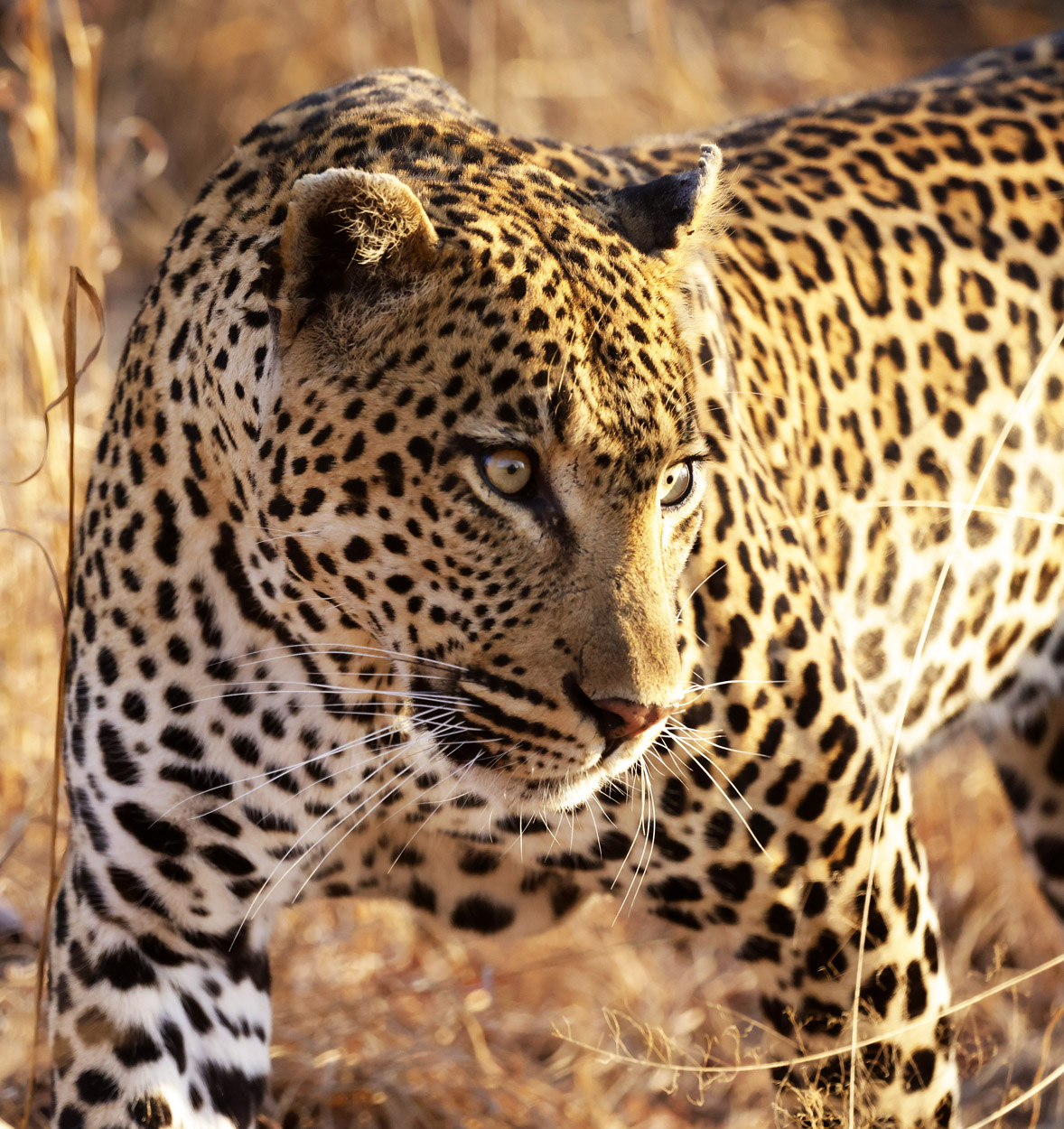
It was now that I saw that we had no wounded female on our hands. This was a giant male leopard! His huge tail was up and thrashing and I saw his balls clearly in that split second. As I screamed at Kevin’s tracker, the giant head came up and the leopard looked straight at me. He leaped off Kevin towards the cover of the hill to my left. Who knows what made him stop. Maybe the pain of his wound or just the fury of battle inside him, but he pulled up short, spun around and came at me. As leopard charges go, it was not a difficult charge to face. The ground between he and I was open and I was ready and could see him clearly. I don’t remember aiming but the .460 roared and the leopard was clubbed to a stop immediately. He never even twitched. He was about six paces from me. The bullet entered his chest just high of centre, and came out the back of his left thigh near the tail. I yelled to find out who was hurt. Peter stood up and Kevin got up slowly nursing his right hand. Ralph and Bee came over while we shredded a shirt and cleaned Kevin’s wounds. I bound his band up tightly to stop the bleeding and made a sling to hold his arm up. On reconstructing the last ten seconds, it turned out that the leopard had been lying all the time in the green grass at the edge of the meadow! I had walked past him three times!


When we had all turned to go back to investigate Bee’s discovery, Peter had walked straight into the cat. As he saw it and yelled “Nansi” (there!) – he hit the ground. My staff had learned this as I hammered it into them over and over -when the shooting starts, they must be out of the way, flat on the ground. As Peter hit the ground, the enraged animal had streaked out of the grass, landed on Peter’s back and sprung at Kevin leaving Peter with two shallow scratches.


Kevin was in pain now with some deep bites to the hand and fingers and various claw scratches on his arm and abdomen. As it turned out later, his finger ligaments were quite badly damaged and he received a good number of stitches – and many painful visits to his doctor. He was lucky, in this instance, that we were all together as I feel the cat would have mauled him longer than the few seconds it allocated him this time. The yelling at Kevin’s tracker had probably pressured the enraged cat into leaving Kevin and going for cover.


We all went over to look at the giant leopard. It was a beast of a male and I kick myself for not having had a good spring scale in the truck at the time. It was definitely one of the heaviest cats I have ever seen. He was in prime, beautiful condition with a few fight marks on his neck and head. He had magnificent mountain-type markings, especially along his spine. It was just pure luck that we had not been offered a shot at the female. If we had, we would never have seen this beautiful animal. This male was the one whose tracks we’d seen the previous day. They returned down the same road, skirted where the boys had slept, followed the southern-most whale, and walked straight into the bait in the early hours of the morning! The female’s tracks went north from the bait towards a pool in the Ingwezi riverbed. This big female was taken two seasons later in the same spot, and she was a beauty. The big male had been hit just above the left hip and through the kidneys into the guts, and then into the right back leg. It must have had its back legs at extraordinary angles on the branches as it sought to tear the bait down. The internal damage had ensured that he didn’t get far. Although the external bleeding was minimal, there was considerable bleeding inside and had we not found him, I think he would have expired that day.


Ralph was happy that we had recovered his cat, but obviously was concerned over Kevin’s wounds. We gutted the cat as it was now quite hot and it was a good hour and a half back to the mountain camp. When we got there we cleaned up Kevin’s wounds with hydrogen peroxide and hot water, followed by a powerful disinfectant and then dispatched him to Bulawayo for proper medical attention.


We took many beautiful pictures of Ralph’s cat before skinning him out. His skull later measured over 17 inches, which put him right up near the top of the record books. Another giant Matobo male had walked his last mile and Ralph finally had his leopard. From that day on, all our hunters and staff, when referring to the three whale hills or giving directions nearby, would say, “lapa – Kevin” (there at Kevin). It seemed a good name for a koppie, and the name has stuck.

Into the Thorns is now available at Good Books in the Woods
www.goodbooksinthewoods.com

jay@goodbooksinthewoods.com

Elephant Impacts on Trees in the Pafuri Region of the KNP

By Richard Sowry. Edited by John Ledger


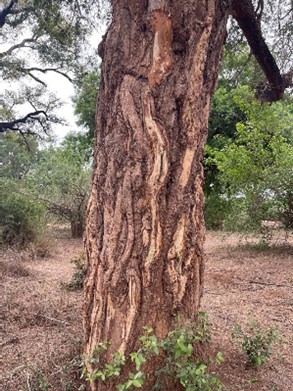
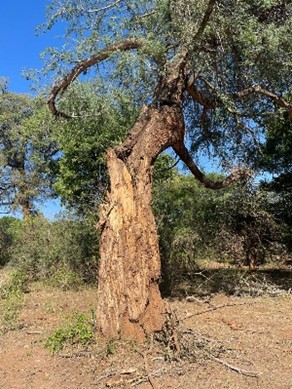
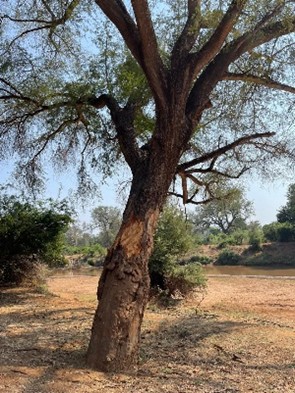
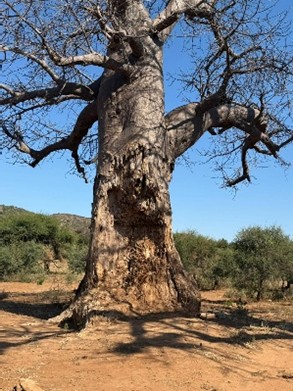
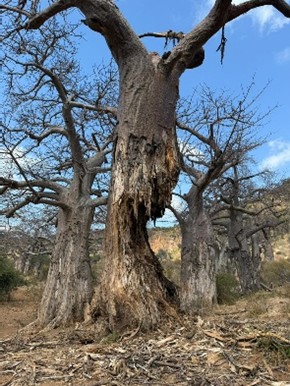
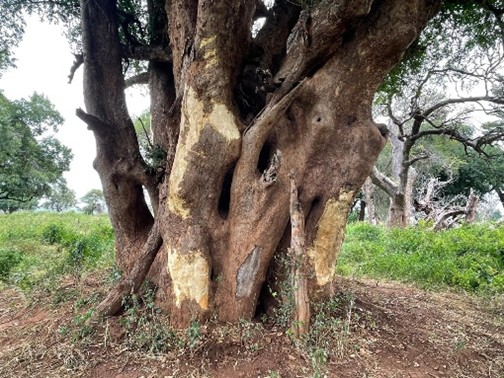
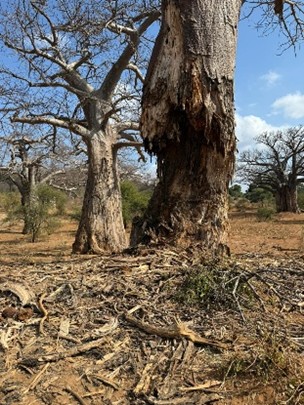
In the riverine forest of Pafuri there is not a single top canopy tree that is not scarred by elephant. Most of these trees are in the process of dying, and the rest are barely coping. The only species of top canopy tree they do not touch are the Sausage Trees, and they are few and far between anyway.


Elephant have also cleaned out the understory creepers and scrub. I have been birding seriously since the early 1990s, and in the late 90s spent a lot of time birding in the Pafuri area. The dawn chorus of bird song during mid-summer in the 90s used to be deafening, it was so loud. Today it is not. You still hear the same species, but there is a representation of only a few individual birds, and it is very far from deafening.


I would like to share some FACTS relating to the issue. Firstly, FACTS differ from BEST AVAILABLE KNOWLEDGE. Best available knowledge is what we find in scientific papers and the like, and it should be continually changing as we learn more. But FACTS remain.


Simply put, Wildlife Management is the ‘simulation of what’s missing yet essential for healthy ecosystem functioning’. To rationalise what’s missing in modern day KNP is easier to assess from the perspective of rather what’s changed, since a time when we believe the system was sustainable. So, for argument’s sake and covering all bases, let’s go back 300 years. There are basically two major issues that have changed in the KNP:


  1. The animals can no longer freely migrate and follow rainfall and food gradients – this in short results in selective and continual feeding without interruption.


  1. Since 1995 the elephant and the hippo of the KNP no longer have a natural predator. For many thousands of years, and before colonial times, the only African predator of elephant and hippo of any significant consequence has been man.


The effect of a predator is that it reduces the population of the prey species and, very importantly, it also changes the behaviour of the prey species. The prey aggregate (herd) and they move in response to predation. No naturally behaving prey species lives and feeds in the same place where its predator lives.


The situation in the KNP at present is unnatural, to say the least. Our elephant population is unnaturally high, and they are behaving unnaturally. Man used to live along the major river systems, and as a result the riverine vegetation was protected from elephant. Today elephant move up and down a river during the day, feeding at will. Historically they would have probably drunk at night and during the day moved inland, away from the river where man lived. They are the largest represented biomass of mammal in the park and they eat approximately 95% of all plant species, so the consequences of them no longer having a natural predator are huge.


It is interesting to note that when I showed Ron Thomson the Pafuri Riverine in 2021, which he had never visited before, he remarked that “This reminds me of the Chobe River when I visited it in the 1960s”. We all know what the Chobe Riverine and associated biodiversity in Botswana looks like to today…


If we do not manage elephant, the riverine forest of Pafuri and the associated biodiversity will not exist in 15 years. Simply, our refusal to fulfil our natural role is not fair on other biodiversity.

There’s More To a DGR Than Sheer Power

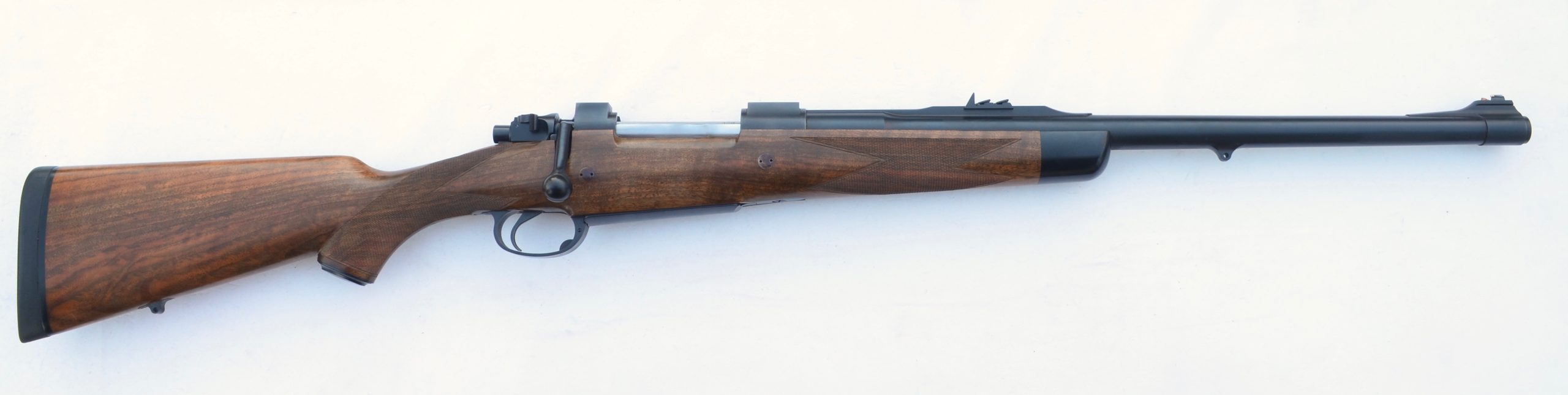
Custom rifle built on an FN Supreme action.  Chambered for the .450 Ackley (ballistically identical to the .458 Lott), rifles in this caliber range lend themselves well to scopes with detachable mounts.  Combined with the wide range of loading options, there is no more versatile rifle in the world.

This article first appeared in Shooting Times in 2019


By Terry Wieland


Riflemen are prone to fads and fashions like everyone else.  In the early 1990s, as interest in British double rifles was reawakening, any double chambered for the .470 Nitro Express was blessed with what was called the “.470 premium.”  This was about a 20 per cent higher price, gun for gun, because ammunition was readily available.


As ammunition for other calibers crept back on the market, interest in the .470 waned somewhat, not least because those with money to afford several doubles became bored with it.  The .500 NE was next up.  When both rifles and ammunition for the .500 became common, interest switched to the .577 NE.  In 2010, I saw a nice Holland & Holland .577 for sale at Puglisi’s with an asking price of $280,000.  He got it, too.


The same is true of bolt-action calibers, but these are rifles that anyone with a serious interest in dangerous game can afford.  For many years, “.458 Winchester” was the answer to just about any question, because it was all that was available.  The .458 WinMag has its problems, however — problems that Jack Lott sought to resolve with the slightly longer .458 Lott.  As the Lott gained popularity, it became a standard, and guess what?  Shooters looked around for something new, something different, something bigger.


Both the British .500 Jeffery and .505 Gibbs enjoyed renewed interest, and Norma catered to all of these with its African PH line, providing first-rate, modern hunting ammunition for rifles that, 30 years earlier, everyone was writing off as obsolete.


There has always been much more interest in dangerous-game rifles than there have been guys who actually hunt dangerous game.  This is understandable.  We can’t all go to Africa and hunt Cape buffalo, but most of us can afford to buy a rifle, work with it, and dream.  I’m often asked what a shooter should buy for his first dangerous-game rifle, with many now evincing an interest in the .500 Jeffery or .505 Gibbs.  My answer is always the same:  For your first DGR, get a .458 Lott.  Learn to load for it and shoot it, and only then look consider something bigger.  In most cases, the Lott turns out to be more than enough.

Just as the .458 Lott is a quantum leap above the .338 Winchester in power, recoil, and rifle weight, so the .505 Gibbs is a quantum leap above the Lott.  The problems do not end there, either.  Brass is more expensive, bullets harder to come by, dies usually special order, and you may even need a bigger loading press to accommodate larger-diameter dies.  These are not minor difficulties, even if money is no object.

Another advantage of the Lott is that if you arrive in Africa and your ammunition does not arrive with you, it’s possible to use .458 Winchester instead.  Not ideal, but better than nothing.  If the local ducca doesn’t have any, your PH probably will.


Power aside, my main reason for preferring the .458 Lott is that a handloader can concoct loads for it that are suitable for everything from white-tailed deer on up.  There are good expanding .458-inch bullets from 300 grains to 600, countless designs in cast bullets, and various solids.  These can be loaded to velocities as low as 1200-1500 fps with lead bullets, or approaching 3,000 fps with light jacketed ones.


This means you could use your .458 Lott for a wide variety of hunting aside from elephant and Cape buffalo, and a lot of use translates into intimate familiarity.


As well, an ideal weight for a Lott is between 8.5 and 10.0 pounds, depending on the scope, sling, and so on.  My custom .450 Ackley (which is ballistically identical) weighs eight pounds, three ounces (unloaded, unslung, unscoped) and handles like a bird gun.  Such handling qualities are exceedingly rare with the brawnier cartridges and rifles, but are a huge and distinct advantage when mbogo comes boiling out of a thicket.

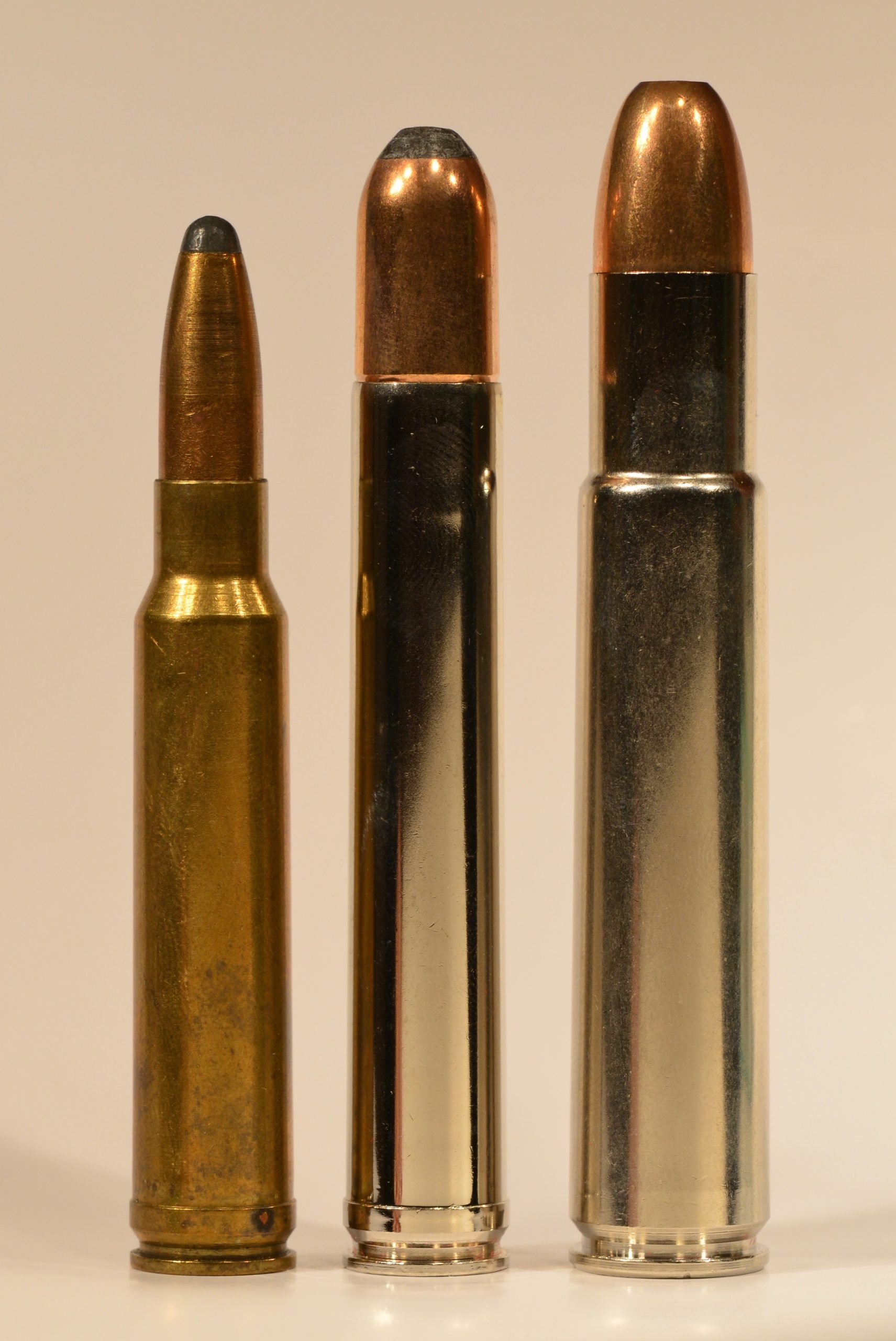
Big bores real and imagined, from left:  For comparison, the .375 H&H, then the .505 Gibbs, .577 NE, .585 GMA Express, .600 NE, an experimental lengthened .600 NE, pondered by A-Square in the early 1990s and mercifully abandoned, the .700 H&H, and finally an industrial-application 4-bore cartridge case.  Only four of these (.375, .505, .577, .600) have any practical hunting application, and one of those (.600) is extremely limited.

Black and Gold Adventure

By Jim Thorn

Just got back from a hunt with PH’s Ross Hare and Johnathan Rademeyer at Monterra Safaris. The goal was to complete the Black/Gold package, and I had the surprise of being able to complete the spiral horn slam, along with a couple of other extraordinary plains-game specimens.


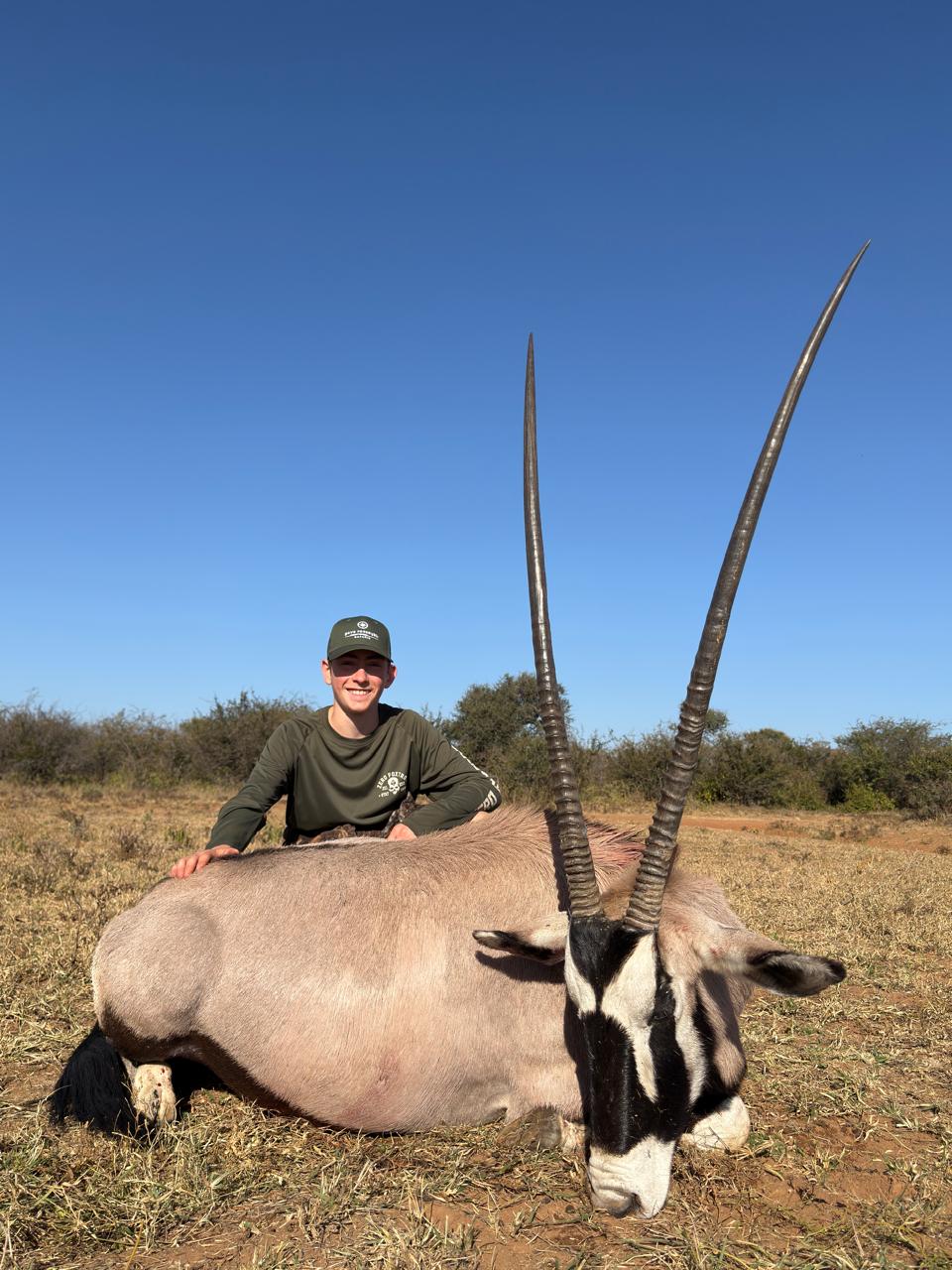
We started off the hunt looking for a golden wildebeest, the “gold” of the black/gold package. So, taking what the bush gives you I also took a very nice gemsbok.


We were able to silently stalk to within about 30 yards of the resting gemsbok before the wind changed and it stood up to look at us. The frontal shot was true and it didn’t run far. I hoped the golden animal would happen the next day.


The following day we began our search for it. True to form and true to taking what the bush gives you, with another frontal shot at about 40 yards I had the black part of the black/gold package, a very nice sable!


Again we were off to find a golden. A new tradition was now established on this hunt – “We take what the bush gives us.”  So, when we said we were going for a golden, instead we were given a monster bushbuck!


With this beauty in the salt, we decided that the next day we would go for anything except the golden wildebeest.


You guessed it! We finally got an absolutely beautiful golden. Besides the gorgeous shimmering coat this guy also had really wide horns.


The black/gold package was complete! Unfortunately for my budget, while we were roaming around in the bush we had seen an exceptional blesbok so we decided to try for it too. We found the right group standing and lying around under some trees and when the right one decided to stand up and walk clear of his companions my shot was true and we had this beautiful blesbok.


I now considered my hunt a complete success and was very happy with the results. The guys at Monterra, however, had other plans. Ross and Johnathan decided that since three species of the spiral horn antelopes had all been taken at Monterra (this was my third safari with them) that I simply couldn’t go home needing an eland to complete the slam without at least trying for it. They made me an offer I couldn’t refuse and will be forever grateful for, so on the last day we tried for the eland and with very little time to spare, the shot was true at about 80 yards and the spiral horn slam was complete. My gosh I am one fortunate fellow!


The green scores we measured at Monterra are unofficial but educated. Truly exceptional.


Needless to say, I can’t speak highly enough of the crew at Monterra. My wife accompanied me this time and they took exceptional care of her as she is not a hunter but loved birding with knowledgeable people, seeing the animals on game drives, and they had a spa day to boot. So, all in all a truly wonderful nine days in the Limpopo Province on the Limpopo River with Monterra.

Big-Bore Madness

Wieland at the Holland & Holland shooting ground in 2009, firing a 4-bore H&H ‘Royal’ then under

construction for an American client.

This article first appeared in Shooting Times in 2019


By Terry Wieland


In 1991, Michael McIntosh dragged me over to a booth at SCI to talk to a jewelry dealer who was letting on that he was going to top the recent .700 H&H with a — you guessed it — .800 Nitro Express.  Standing six-foot-six in his cowboy heels, and festooned with silver and turquoise, this gentleman expounded at length about this project.


Naturally, nothing ever came of it.  Nor should it have.  Alas, the same cannot be said of subsequent attempts by riflemakers, wildcatters, and assorted nut-cases to create something more powerful than anything that has gone before.  Had they perused the literature, or had any real hunting experience, or talked to someone who had, they would have realized that the practical limit of dangerous-game cartridges was reached with the introduction in 1900 of the .600 Nitro Express — and even that was overkill.


Almost 20 years after my surreal experience with the turquoise-and-snake-oil salesman, I visited Holland & Holland and had an opportunity to shoot a new 4-bore double rifle under construction for an American client-collector who ordered it simply to have something different.  It was different, all right.  The 4-bore dates from the 1800s, and they were abandoned for a reason.  At 24 pounds, it was all you could do to hold it to your shoulder.  The recoil was huge but tolerable, and the target looked like a sparrow had flown through it.  Undoubtedly, it would have decked a mastodon.  But a practical hunting rifle?  Absolutely not.


John “Pondoro” Taylor believed the .600 NE, which usually weighs 16 pounds, was too heavy for an everyday rifle and should be carried by a gunbearer, reserved for the direst of emergencies.  In the opinion of Tony Henley, a long-time PH who had used almost everything, the largest practical hunting rifle — and probably the best one ever created for elephants — was the .577 Nitro Express.  It combined maximum power with a weight of 14 pounds that made the recoil tolerable.

Most creators of über-cartridges conjure them up in the comfort of their workshops, and their real goal is 15 minutes of fame as the originator of the “most powerful” cartridge.


In the days of black powder and muzzleloaders, there was some excuse for ultra-huge bores, but even some of those went overboard.  Sir Samuel Baker had a 2-bore single-barrel made by George Gibbs that fired a ball weighing eight ounces.  The recoil was unbelievable.  In one account, Baker described firing it at an elephant, being spun around, and falling to the ground with a nosebleed.  The elephant also fell, and the question was which would get to his feet first to finish off the other.  Baker did, with a 10-bore double rifle.


With more actual hunting experience than any hundred serious hunters today put together, Sir Samuel later conceived the .577 and regarded that the practical limit.  Personally, I’ll take his word for it.


Various people have tried to come up with comparably devastating rounds for bolt actions, and I have fired a few.  One, the .585 GMA 

Big bores real and imagined, from left:  For comparison, the .375 H&H, then the .505 Gibbs, .577 NE, .585 GMA Express, .600 NE, an experimental lengthened .600 NE, pondered by A-Square in the early 1990s and mercifully abandoned, the .700 H&H, and finally an industrial-application 4-bore cartridge case.  Only four of these (.375, .505, .577, .600) have any practical hunting application, and one of those (.600) is extremely limited.

Express, was created by Granite Mountain.  It was so big, it was plagued by ignition problems even using the over-sized Federal 217 primer, and the rifle itself was heavy and cumbersome.  With a charging Cape buffalo, you don’t want cumbersome, and you certainly don’t want hang-fires.


The question I always had was, why bother?  If you can’t drop something with a .505 Gibbs, I doubt you’ll do any better with a .585 GMA, and the Gibbs at least is chambered in a comfortable, usable rifle.


Holland & Holland only created the .700 in the 1980s at the behest of Bill Feldstein, an American collector who could not get a .600 because H&H had made their last one — and sold it for a fabulous sum on that basis — in the 1970s.  The .700 H&H (its proper name) was a stunt and nothing more, although they built a dozen subsequently, and made money doing it.  As a practical hunting rifle, however, forget it.

Facts on the Collared Lion

Let’s look at the facts


There are certainly challenges and tough realities in the world of wildlife management, but facts are important in understanding the situation. When it comes to lions, even more so.


‘Blondie’ was the name given to a collared lion that was recently hunted in Zimbabwe. It was collared by UK-based research organization, WildCRU, that runs the collaring program and has done so for more than 15 years. The hunt for Blondie stirred a media frenzy. The media, anti-hunting activists and most notably, the non-hunting / photographic safari experts, whose livelihood should also be founded on conservation, went ballistic.


Africa Geographic’s CEO sent me a video clip late on a Friday evening about the Blondie hunt. (Screen grabs illustrate the piece above) I wanted to respond because his likes seldom want to engage / hear the facts from the other side. And if they do, it gets twisted. None the less, I watched the clip and asked why he used Cecil’s hunt from 10 years back, as the backdrop to this latest hunt video, particularly when that hunt (Cecil’s) was a legal hunt, no crime was committed, but it no doubt got emotions going for any ill-informed viewer.


When I raised this fact, he was condescending and non-engaging, and cut the communications there and then, saying, “How can I defend the indefensible?”


While I respect his business acumen, I am opposed to his (Africa Geographic’s) convenient and consistent omission of important facts, and his use of sophisticated wordsmithing to drum up support for his travel business. And as a sponsor of Blondie’s collaring, he probably felt a lot more passionate about this, which I do understand.


Too bad, as an aside, that he doesn’t inform the wannabee travelling public about the reality of Madikwe’s elephant overpopulation crisis, how that is destroying the game reserve to which his business is selling numerous safari packages.


In fact, a simple search on his site – “Madikwe elephant overpopulation” brings up no response. As this fenced-in African ‘zoo,’ is opposed to sustainable utilization or management of its wildlife and has been dancing to the tune of photo-only tourism, the game reserve is all but destroyed. That is a fact. The Wildlife Authority is frantically in the throes of preparing the rights to trophy hunt a few, but mainly to destroy, cull, call it what you like, 1000-plus elephants. Does anyone know what that will look like?


Then the likes who claim to be conservationists and abhor the principles of sustainable utilization of wildlife will soon see the global PR disaster for the ‘photo only’ tourism sector. The biggest loser will be the wildlife biodiversity of this once magnificent 185 000-acre African wilderness. Instead of being managed along the way, or the likes of the photo tourism sector speaking up, they kept quiet as they marketed this malaria-free game park while making money. They said nothing. It was against the photo tourism principles, and so anyone with half a brain on wildlife management and conservation knew this was inevitable. When something is now finally having to be done, an article is posted that ‘Hunting in Madikwe is to be introduced’ – which is a crowd-drawing headline.


Lost in the text are all the salient details: 1600 elephant in the park, when sustainably, there should be 500. Some believe it should be 250, but the fact remains – it is 3 to 6 times the carrying capacity and now it is too late.


Having had enough of this, and the fact that he opened the batting only to cut the conversation or debate, I felt it needed a response.


So, I took his article and commented in Red next to each section – which you can see below.


Trophy hunted: Another Hwange collared pride male lion


Blondie, a well-known, collared pride male lion in Zimbabwe’s Hwange area, has been trophy hunted after being lured into a hunting area with bait – leaving behind 10 cubs.


This lion was shot 10km (6miles) outside the park. Not adjacent to the park, because there was a property in between. Lion expert Dr Paul Funston states that lions walk at 8km (5 miles per hour) and to roam this distance is nothing for them. And lions, when there are no other calling males in a territory, are always roaming.


The only reason it was there was because it wanted to leave the park. Or it wanted to be in this area outside the park (which could be and probably was its home range). There was zero evidence that it was lured or baited out of the park – stated as a fact in the attention-grading headline. When in the park, the lion is the property of the park. When in an adjacent property (forestry), or in a community area, it is the property of the community. The reason communities are happy to support this model of quota-based hunting is that they benefit. Period. Hence the management of free roaming lions is complicated.


During the week of 29 June 2025, Blondie was shot and killed by a trophy hunter just outside Hwange National Park, in the Gwaai / Sikumi Forest area (5 miles is not ‘just outside’) Despite wearing a conspicuous research collar (If you look at the animal and its mane in the photo, you can decide if this is easy to see. Oddly enough, in the video prepared for the PR campaign there was no footage of Blondie showing his conspicuous collar, only other lions with collars – insinuating that they can be seen) and being younger than the recommended minimum hunting age of six years, This is a recommendation, not the law. Besides, it is impossible to determine the age accurately between 5 or 6 years this young lion was lured (no evidence) out of a photographic concession and killed in what many are calling a deeply unethical hunt. What is the difference between an unethical, and then a deeply unethical hunt? It should be either legal or illegal.  Yet, sources say the hunt took place legally, with all required permitting in place. The Professional Hunter is allegedly a member of the Zimbabwe Professional Guides Association (ZPGA).


This is the key point. A legal permit has to be, and was approved by the National Parks of Zimbabwe.


National Parks have a duty to look after all the conservation of Zimbabwe.


Governance is the key issue to which all this should be aimed – not drumming up support from the masses, with skewed details, playing on emotions.  


Tour operators do not want to take on the Government because they too depend on the allocation of areas to run their businesses and instead take on the hunters. The hunters are operating within the law – but despite that, the tour operators deem it acceptable.


Blondie was collared by the University of Oxford’s Wildlife Conservation Research Unit (WildCRU), which used a collar sponsored by Africa Geographic, in April this year. These GPS satellite collars are fitted to track free-roaming lions, prevent human-wildlife conflict, and support long-term conservation. Africa Geographic approached WildCRU and the University of Oxford for comment, but we are yet to receive an official response. I can’t comment on why they have not responded but the fact is – WildCRU understands that their collared animals get hunted. They collar lions for research purposes only, not to ensure they become, or remain tourism icons and, according to their research unit head, she was ok with this.


Africa Geographic CEO Simon Espley had this to say: “As the sponsor of Blondie’s research collar, we are dismayed and angered by this development. That Blondie’s prominent collar did not prevent him from being offered to a hunting client, confirms the stark reality that no lion is safe from trophy hunting guns. He was a breeding male in his prime, in the early part of this article, the male was referred to as a “young male”… now he is “in his prime”…  making a mockery of the ethics that ZPGA regularly espouses and the repeated claims that trophy hunters only target old, non-breeding males.”


ZPGA has recommendations and ideals and then the Government has laws. No law was broken. And ethics can be very dubious depending on personal frameworks.


At the time of his death, according to one source, Blondie was 5 years and 3 months old and the dominant male of a pride that included three adult females and ten cubs – seven cubs around one year old and three approximately one month old. Zimbabwe hunting regulations mandate a minimum age of 6 years for lions trophy hunted, focusing on mature, non-pride males.


Now they speak of a ‘mandate’… and regulations.


There is no LAW to hunt a minimum age of 6 years. What is recommended and what is the LAW are two different things.


At just over five years old, Blondie was in the prime of his life. He was not a transient male on the periphery; he was a territory-holder, and a father. His sudden loss is expected to cause turmoil for the pride, with a high likelihood that incoming rival males will kill his youngest cubs.  This is a fact. Such infanticide is common in lion dynamics, especially when coalitions shift. In the chaos that follows, the lionesses may flee the safety of the concession into communal lands, where snares and human conflict await.


Blondie had often been seen on the private photographic concession since 2022 (where hunting is prohibited). Blondie took over the Zingweni pride and sired the current cubs. The pride’s movements frequently followed buffalo herds around Dete Vlei and into the Ganda Forest, outside Hwange National Park’s boundary. A missing fact is that the lion prides move in areas where new photographic tourism companies operate. These companies feel that the lions should remain untouched and never be hunted, whether 5, 7 or in Cecil’s case, well over 10 years of age, that they should remain icons of Zimbabwe’s tourism.


And maybe they should. (The subject of a great article)


But, that is a decision for the governing authority to make… not the Photo operators to keep nailing the supposed unethical unscrupulous hunters. The hunters are running a business and operating in the law.


According to reports from operators in the area, Blondie was last seen in his core range in June 2025. Observations suggest that he was baited out of the photographic concession over a period of several weeks and lured into the hunting area, where he was subsequently shot. The entire pride reportedly followed him during this period.


There are concerns that the Professional Hunter (PH) involved in the hunt was aware that Blondie was collared and that he had dependent cubs.


In the legal world, this kind of language is called conjecture.


It has been reported that, two weeks prior to the hunt, the hunter confirmed seeing Blondie with cubs and lionesses. When approached by AG for his side of the story, the PH declined to comment, other than to say that the hunt was “conducted legally, and ethically.” There is a reluctance to cooperate, because despite facts being presented, this article, penned by the CEO himself, highlights the use of emotive innuendos and conflicting points to support the anti-hunting case. Regardless of what fact is presented – activists against legal hunting will not do anything other than support their cause.

An image posted of Blondie’s trophy-hunted body on social media. The image has since been removed.

Blondie was the last known descendant of the Somadada pride, which had previously moved from Hwange into community areas. He had since established a stable pride in an area where resident lions have historically been scarce, due in part to conflict with local communities and previous hunting pressure.


Stakeholders have raised questions about the ethics of the hunt, specifically concerning the lion’s age, his status as an active pride male with dependent cubs, and the presence of a research collar.


AG reached out to the Zimbabwe Professional Guides Association for comment – we are yet to receive a response. The reason they don’t and won’t is because even if facts are delivered… HOW they are delivered or presented is not within ZPGA’s control.

The photographic operators in the region report that there are few, if any, established lion prides within the hunting concessions themselves. Correct. As a result, male lions are often drawn from adjacent photographic areas or park lands. They wander, roam, in their huge territory. Conservationists and local stakeholders continue to call for a review of lion hunting quotas along the boundaries of Hwange National Park, and for clearer ethical guidelines in such cases.


As mentioned above, this is a case for the government to review and do something because such hunters are merely operating within the law.


Hwange National Park’s lion population has long been under pressure from trophy hunting operating from adjacent hunting concessions. These concessions frequently lure pride males out of protected photographic tourism zones – often using bait – to make them available to hunters. Known lions like Cecil, Xanda, Mopane, Sidhule, and others have been trophy hunted just outside park boundaries, despite having research collars or being active pride males, leading to major demographic disruption within local prides. Studies indicate that from 1999 to 2012, human activity caused approximately 88% of male lion deaths in Hwange, mostly through trophy hunts, resulting in skewed age-sex structures and affecting cub survival and pride stability. Although local lion numbers rebounded when hunting quotas were reduced, renewed hunting pressure has coincided with renewed population declines and ongoing conservation concern.


Sadly, the travel and wildlife media platforms, some of whom have their own behind-the-scene travel businesses, do not want to man up and deliver the facts.


Hard as they are to accept – there is a reality out there. Parks can only support a sustainable number of animals.


In the big tourism photo game reserves around the Kruger National Park, many Game reserves are happy to take the money the hunters provide. Some, by offering hunts on the property without telling their photo tourism clients.  Some by selling off the animals to be hunted elsewhere (avoiding the ‘Not in my back yard’ stigma), but in both instances – never bothering to explain the cold hard facts and challenges of wildlife management to the very people they should be…the photographic tourists coming to enjoy the game reserve naively believing everything lives in harmony.


The greatest National game parks in South Africa have been selling off excess game for decades. Surely, we all deserve to know the facts.


The challenge is that photo tourism activists, which is the only way to describe them, are against any hunting of game. And having businesses founded on the conservation of wildlife, this is extraordinary. 


They are on a crusade to stir up emotion and, ideally, action. Action in the form of signing something, sponsoring something, or selling something (in this case travel itineraries).


Photographic tourism is a huge business in southern and East Africa and it should understand, respect, and work with the legal hunting industry for the good of all wildlife.


But in general, sadly, they do not. They are arch enemies. And so the fight, it appears, is gaining momentum. 

Ammo Spotlight: 6.5 Creedmoor

This drawing of the Creedmoor Range depicting the venue and the crowd attending a day of competitive shooting between American and British riflemen appeared in the 6 October 1877 edition of The Illustrated London News. In those days, society did not frown upon firearm activities.

By Pierre van der Walt

Cartridge History

American popularity makes or breaks cartridges and calibres. I have always been amazed at the apparent ignorance of Americans about the world of cartridges beyond the .30-30 Winchester, the .30-06 Springfield, .308 Winchester and the .223 Remington. A typical example is 6,5mm cartridges. Americans overlooked the potential of this calibre and its cartridges for 113 years before the penny finally dropped for them. Although cartridges such as the .264 Winchester Magnum and the 6.5 Remington Magnum had been around since 1959 and 1966 respectively, the 6,5mm calibre just did not gain any US traction.


Fortunately, the Americans eventually discovered the existence of some calibres and cartridges beyond the walls of Springfield, Remington and Winchester. This is an excellent development, because for all other American shortcomings, American buying power has been the decisive factor in the survival of the firearm and cartridge industries.


The 6.5 Creedmoor is an example. It emanated from a discussion between Hornady’s Dave Emary and High-Power National Champion, Dennis DeMille on the problems experienced by 6mm wildcat users at the 2007 Camp Perry National Matches. They concluded that a modern, SAAMI regulated commercially produced cartridge that was capable of winning National Matches was needed. The 6mm calibre could obviously not achieve that. Emary and his engineering colleague, Joe Thielen, opted to step up from the 6mm to the 6,5mm calibre with its higher ballistic coefficient potential. Their goal was to create a short-action cartridge capable of supersonic velocity out to 1,200 yards while adding the minimum recoil, and they succeeded.


The Creedmoor name is steeped in long-range tradition. Let us step back in history to the post American Civil War era. The statistics indicated that Union Army soldiers only hit one Confederate soldier out of every thousand shots fired during the war. This was a great concern and it was decided to establish an organisation dedicated to the improvement of American marksmanship. The organisation, dubbed the National Rifle Association of America (NRA), was established in New York on 16 November 1871. During 1872, the fledgling body succeeded in convincing the New York Legislature to contribute US$ 25,000 to purchase 70 acres (28,3 ha) of farmland from a Mr Creed, for development as a long-distance

Technical Specs

First Regulator SAAMI
Introduced  2007
Country USA
Relative Case Capacity 53.5 gr water (3,474 cc)
Case Trim Length  1.912” (48,57 mm)
Expansion Ratio  7.8
Groove Diameter .2640” (6,71 mm)
Bore Diameter .2560 (6,50 mm)
Groove Details 6 x .0900” (2,29 mm)
CAB-Ratio 71.8
Minimum Barrel Area  0.0536”² (34,58 mm²)
Std Proof Barrel Twist 1:8.0” (1:203 mm)
Max Average Pressure 62,000 psi (427Mpa)
RCBS Shellholder 3


Creedmoor 6.5 bullet

rifle range. When a Colonel Shaw, one of the NRA range committee members first saw the piece of land, he said that it reminded him of a moor. So, it became known as Creed’s Moor and later, simply Creedmoor.


The Creedmoor range was officially opened on 21 June 1873 and soon hosted historic competitions such as the famous one between the NRA and the Irish Rifle Team (which included the eminent John Rigby) in September 1874.

 It is therefore rather fitting that Emary and Thielen’s dedicated long-range match cartridge, the first commercial rifle cartridge ever specifically conceived and designed for extreme range competition, was dubbed the 6.5 Creedmoor.


It took a while before the 6.5 Creedmoor captured the imagination of the American shooting fraternity, but when the 6,5mm penny finally dropped, it did so big time. Today the 6.5 Creedmoor is the best-selling long-range, match cartridge on the planet.

Characteristics

The 6.5 Creedmoor is an indirect sibling of the .308 Winchester. In 1982 Winchester introduced the .307 Winchester cartridge as a rimmed version of its .308 for the Winchester M-94 Big Bore lever action. The concept did not catch on, but around 2007 the Thomson Center company requested Hornady to create a .30 calibre cartridge for its then new Icon bolt action rifle. Hornady’s Dave Emary is said to have modified the .307 Winchester case by thinning its case walls, shortening it and turning it into rimless configuration to create the .30 TCU cartridge. Both the .307 Winchester and .30 TCU have now fallen by the wayside. The 6.5 Creedmoor is said to have been created by necking a .30 TCU cartridge down to 6.5mm by means of a 30° shoulder. I find this a bit strange, as it would have been simpler to use the .308 Winchester case.


The 6.5 Creedmoor has 0.37° body taper and a 30° shoulder, as opposed to the .260 Remington’s 0.69° body taper and 20° shoulder. Despite the Creedmoor being 0.115” (2,92mm) shorter than the .260 Remington, these features, combined with thinner case walls resulted in the .260 Remington beating the Creedmoor by just shy of 4% in the water capacity stakes. The 6.5 Creedmoor has the advantage of a 107.6% of calibre neck as opposed to the Remington’s 97.9% neck.


This all sounds as if the 6.5 Creedmoor is way ahead of the .260 Remington and in factory format it does indeed lead, but there is a lot that can be done to ‘improve’ the .260 Remington. For example, if both cartridges are loaded to the same overall length (2.825”) and the same pressure level (62,000 psi – 428 MPa), the performance outcomes actually favour the .260 Remington. The margins are so small however that I have come to consider the two cartridges identical performers.

Dave-Emary-Creedmoor-Hornady

Dave Emery has since retired, but he was one of the conceivers of the 6.5 Creedmoor and played a crucial role in its development. Dave was also involved in the design of several other cartridges during his tenure at Hornady Manufacturing.

It is commonly claimed by retweeting gunwiters that the tighter twist of the 6.5 Creedmoor and its ability to stabilize heavier bullets than the .260 Remington is what gives it the edge. That may be so when used across bush-ranges (≤ 150 yards) and when using 156 – 160 grain bullets. Truth is – nobody uses the Creedmoor in that fashion. The Creedmoor is used across extended ranges in both match and hunting application. It is so rare to find any hunter using bullets heavier than 143 grains for any application, that it can effectively be discounted as an advantage or consideration.


The CaB-Ratio of the 6.5 Creedmoor is 71.8 and the Expansion Ratio 7.8. That is middle of the road for both features and translates to reasonable barrel life. The Creedmoor’s CIP ‘S’ measurement or gas turbulence point is inside the case neck – even if barely so. If that is indeed beneficial as claimed by some, I find the position too precariously close (0.03” – 0,76mm) to the mouth to render a truly tangible benefit. An aspect that counts in favour of the Creedmoor is that it usually requires less of a given propellant than the .260 Remington for comparable performance. I compiled a VC Comparison table from the load data tables. According to the data used the Remington requires 2.1% more propellant to achieve a 3 fps (0.11%) velocity advantage. The Creedmoor’s conversion of propellant to velocity (Velocity ÷ Charge) ratio is 1.9% better in the example used. All this means that a 6.5 Creedmoor is the more efficient and that Creedmoor barrels should last to around 2,000 shots in competition and 3,000 for hunting use.

Bullet Propellant   260 Rem 6.5 Creedmoor  
Weight   Type Charge  Velocity V/C  Charge Velocity  V/C
160  H-4350 43.0   2538   59.0  40.6 2500 61.6
150 H-4350   42.0 2635 62.7  41.2 2638 64.0
140 H-4350 42.2 2755 65.3 42.3 2731 64.6
130  H-4350 42.7 2816 65.9  43.0 2800 65.1
120 H-4350 46.5 2960 63.7 45.0  3022 67.2
Average    43.3  2741 63.3  42.4 2738 64.5


Performance & Application


Handload Performance Figures at 100% Bullet Expansion (24.0” Barrel)

Bullet Velocity Muzzle RTP RTP RTP RTP Recoil
Weight  Threshold Energy Muzzle 100 yd 200 yd 300 yd 8 lb Rifle
160-grain 2,575 fps 2,356 ft/lb 35.1 30.7 26.6 23.0 16.4 ft/lb
156-grain 2,625 fps 2,387 ft/lb 35.6 31.6 28.0 24.7 16.6 ft/lb
150-grain 2,700 fps 2,429 ft/lb 36.2  32.0 28.2 24.7 16.9 ft/lb
143-grain 2,775 fps  2,446 ft/lb 36.5 32.0 27.9 24.3 16.9 ft/lb
140-grain 2,800 fps 2,438 ft/lb 36.4 31.7 27.5 23.8  16.9 ft/lb
135-grain  2,850 fps   2,435 ft/lb 36.3   31.6 27.3 23.5 17.0 ft/lb
130-grain 2,900 fps 2,428 ft/lb  36.4 31.1 26.7 22.7 17.1 ft/lb
123-grain   2,950 fps 2,377 ft/lb 35.5 30.1 25.3 21.2 17.4 ft/lb
120-grain 2,975 fps 2,439 ft/lb 36.4 30.7 25.7 21.4 17.6 ft/lb
110-grain  3,125 fps 2,399 ft/lb  35.6 29.1 23.7 19.1 17.6 ft/lb
100-grain 3,225 fps 2,310 ft/lb 34.4  27.2 21.3 16.5 16.3 ft/lb

 Averaged CSM = 5.29 lb (2,40 kg)

The bullets used for the calculation of the RTP (Relative Trauma Potential), and the Green-Band are quality hunting bullets, not extended range, high ballistic coefficient paper punchers. The hunting bullets used, drop below 2,600 fps at the end of the Red-Band, below 2,200 fps at the end of the Green-Band and below 2,000 fps where the Amber-Band ends.


The 6.5 Creedmoor is a great extreme range match cartridge, but for hunting it’s just a 350-yard option and can be stretched to 500 yards given a carefully selected bullet. That disregards my half-second time of flight principle. The needs of hunters differ massively from that of the extended range target shooter. The latter is not at all concerned about terminal ballistics. Their concerns are with external ballistics, not terminal ballistics. Sport shooters want to minimize time of flight, achieve the flattest trajectory possible and extend the supersonic velocity of the bullet as far as possible.


Whereas the 140-gr hunting bullet used in the tables fall below 2,000 fps at around 475 yards already and goes subsonic around 1,225 yards. A Berger 140-gr Match Hybrid Target bullet will, for example, only do so at around 585 and 1,575 yards respectively, depending on altitude and atmospheric conditions.


Hunters are concerned with reliable expansion, bullet integrity, wound channels and venison destruction. It is so that Karamojo (Walter Bell) hunted elephants with a 6,5mm cartridge in days gone by, but let’s be honest; none of us is Karamojo Bell and times have changed. We should use cartridges within more realistic parameters.


A realistic approach is that he 6,5mm cartridges are small game cartridges best suited to species weighing up to 330 lb (150 kg) on the hoof.

Handloading


Hornady, Peterson, ADG and Lapua are the leading manufactures of cases for the Creedmoor. Hornady’s have standard large rifle primer pockets while Lapua offers both large and small rifle primer pockets.


I am not convinced small primer cases indeed deliver better precision than large primer cases, but as far as I’m concerned, that is only relevant for extreme range precision. Even competitive shooters are at odds about the matter. When you investigate this aspect, it becomes obvious that small primer preferring shooters are pushing the Creedmoor beyond specification. So, we are facing the same

The other big name in the development of the 6.5 Creedmoor was Joe Thielen, also of Hornady. Here Joe is with a nice nyala bull he bagged.

situation with the Creedmoor as the 6mm situation that led to its creation! The high pressures generated by pushing the cartridge beyond specification stretch the primer pockets rather quickly. To strengthen the case head and improve case web integrity, Lapua opted to leave more brass in the area by opting for the smaller primer option. I remain a sceptic.


What I can confirm is that case volumetric consistency and case neck tension are major contributors to long-range precision. Lapua cases are extremely consistent out of the box and should be case of choice for the precision shooter. To extract the utmost precision from the 6.5 Creedmoor, rigorous case classification of neck wall consistency and water capacity should be applied. That must be followed by dedicated case preparation steps such as primer pocket uniforming, flash hole deburring, neck turning and regular annealing. So are the use of a top-class press, competition dies and loading techniques.


The 6.5 Creedmoor works with a variety of slow-burning propellants in the H-4350 to H-4831 bracket with all bullet weights. Vihtavuori is the one company that developed a dedicated 6.5 Creedmoor propellant: N-555. It burns between the two Hodgdon/ADI propellants mention above.

Bullet  Propellant  Min Max Max Barrel Data
Weight  Type Load Load Velocity Length  Source
160-gr Bullet Accurate AA-4350 37.0 39.8 2450 24.0” Hornady Handbook. 9th Ed. 2012
Alliant Rel-15 34.0 37.2 2450 24.0” Hornady Handbook. 2021
Hodgdon H-4350 37.5 40.6 2500 24.0” Hornady Handbook. 2021
HodgdonVarget 33.4 35.2 2400 24.0” Hornady Handbook. 2021
IMR-4350  37.7 40.5 2600 24.0”  Hornady Handbook. 2021
Norma URP 37.0  39.9 2500 24.0” Hornady Handbook. 2021
Norma N-203 33.6 36.7  2450 24.0” Hornady Handbook. 2021
Ramshot BigGame 36.8 40.2 2500 24.0” Hornady Handbook. 2021
Somchem S-385  41.5   44.0  2600 24.0” Handload. Not pressure tested
Somchem S-361  41.5 43.6 2526  24.0” Handload. Not pressure tested
Somchem S-365 39.9 41.8  2600  24.0” Handload. Not pressure tested
Somchem S-355  34.1 36.4 2525  24.0”  Handload. Not pressure tested
Winchester WW-760 40.0 42.9 2550 24.0” Hornady Handbook. 2021
Winchester WW-748 34.4 36.5 2400 24.0”  Hornady Handbook. 2021​


Bio

Pierre van der Walt grew up on a farm and began hunting from a very young age. He was just ten years old when he took part in his first lion hunt and captured a cub to keep as a pet. During the Angolan War, he served as a combat officer, and subsequently qualified as both a lawyer and a professional hunter. He published his first firearm article in 1992 and has since become Africa’s most prolific outdoor writer. In 2023, he was awarded the John T. Amber Literary Prize by the US publication Gun Digest for an article on the history and evolution of Czech hunting rifles. He has published four books that are internationally recognised as definitive works on hunting cartridges within the African context, and co-authored The Complete Professional Hunter’s Handbook, which is used as the official manual for professional hunter training in South Africa.

What was said about –


African Small Game Cartridges

African Small Game Cartridges is the third book in the author’s highly acclaimed series on hunting cartridges for Africa. Just like his previous two books (African Dangerous Game Cartridges and African Medium Game Cartridges), African Small Game Cartridges, is the most comprehensive ever discussion of the cartridges covered.


Like the previous books, it is destined to become yet another reference standard, which will serve the international and African hunting, shooting and reloading fraternities for decades. A generous part of African Small Game Cartridges is dedicated to relevant topics such as barrel life, understanding riflescopes, suppressors, and ballistic coefficients.


This coffee table quality reference work extends 480 pages with 350 excellent full colour images and countless performance tables of Africa’s 33 currently most popular .172, .224, 6mm, .257 and 6,5mm hunting cartridges. It takes readers on a grand tour of their history, specifica tions, design features, performance and field application, as well as the reloading quirks of each of these cartridges. African Small Game Cartridges provides unequalled data – around 7,200 loads for American, Australian, African, European and Scandinavian propellants.


International experts have made the following comments about this book


Johan van Wyk (Australia),Editor of SA Hunter magazine

Hunters and shooters are constantly bombarded by marketing onslaughts from all corners, each pretending to be punting the greatest cartridge or item. While progress cannot be halted, we need to sort the wheat from the chaff, especially for the more novice amongst us. With two authoritative books already under his belt, Pierre van der Walt is well qualified to not only steer the inexperienced in the right direction, but to also provide plenty of food for thought for the experienced. I unreservedly give African Small Game Cartridges the thumbs-up. It is well researched and a worthy addition to any shooter’s gunroom.


Mats Bergholm (Sweden) Weapon Systems Expert – Swedish Defence Materiel Administration (FMV)

Pierre van der Walt has done it yet again! His first book, African Dangerous Game Cartridges, is the definitive tome about calibers for Africa’s biggest and deadliest. This book, African Small Game Cartridges, Pierre’s third, is nothing short of a masterpiece. It covers the tiniest ‘African’ calibers, but it is as fascinating from a northern European perspective. The calibers presented also cover calibres used for northern European game hunting, from grouse to elk and non-Africa focused hunters world-wide will benefit equally from this book’s overabundance of information. It fits just as well as a coffee table book in a Swedish moose hunting lodge as it does at a game lodge on the banks of the Limpopo River.


Ira Larivers (Zimbabwe) Editor African Hunter Magazine

Unequalled! The subject matter in this book fills a gap in Africana and international literature. The fact that it was written by the master of the genre, Pierre van der Walt, makes it essential reading. Apart from crucial calibre choices, he also covers many other important topics. Everything is very well presented. It includes a detailed appraisal of the 33 Africa popular small game cartridges, plus some lesser-known gems such as the .224 African. African Small Game Cartridges offers unprecedented cutting-edge information and a myriad of high-quality photos in a lasting format. Don’t miss out.

A Zimbabwean Buffalo Hunt

By Roger Moore


It was the first day in a 10-day safari in early September 2009.  My youngest son and I were in Zimbabwe to hunt Cape buffalo and plains game.  It was Jordan’s first safari and my first hunt for dangerous game.  Jordan took a very large Cape eland with spiral horns of 41 inches around the curves.


We left camp with PH Collen Van der Linden and a few local trackers.  We spotted a herd of buffalo and followed to see if one of them was a shooter.  We stalked as quietly as we could.  The ground was littered with a million dry leaves that sounded like walking on big corn flakes.  The herd led us through heavy cover for a couple of hours.  One learns that as the morning warms, the wind begins to swirl and you get busted as the game catches your scent.


We went back to the hunting truck and drove to a dry riverbed for lunch and talked through a plan for the rest of the day.  We decided to try a different area and headed to it.  We were quiet as we drove a little faster than normal and when I looked out my door and saw a small bunch of buffaloes, I asked Collen to stop and started glassing them.  There were seven or eight buffalo – all of which were bulls.  They were walking along parallel to us going left to right about 160 yards away.


I scanned the herd and the bull on the far right looked like a shooter.  “You’ve got to be kidding,” Collen said, “That’s the smallest buff of the bunch!”  I looked up from my binoculars and he was glassing a herd of about fifteen bulls on his side of the truck 180 degrees opposite of where I was looking.  I pointed out the ones I was looking at and he said, “You’re right, the front bull is definitely a shooter.” Jordan had my Winchester model 70 in .416 Rem Mag in the back of the truck.  I got out, had him hand me the rifle and turned around to find the buffalo stopped and looking us over.


I bolted a 400-grain soft point into the rifle and set it on the sticks.  100 percent of my attention was on the furthest right bull and settled the crosshairs on his shoulder.  Collen advised me to hold off since another bull was coming up just behind the bull I was focused on, and we didn’t want a pass through.  It seemed to take forever but when the bull behind the one I was set up to shoot cleared and I heard Collen yell, “Don’t shoot!”  I straightened up and looked at him as the bull I had cussed while waiting for him to clear, stopped broadside and turned his head to look at us just as Collen yelled, “That’s the biggest buffalo I have ever seen!  Kill him now!”


I had gotten the rifle back on the sticks and one-third up from his belly and in the middle of his shoulder.  As the trigger broke, the bull hunched up and began the run on three legs, typical of a good hit.  Collen yelled, “Shoot him again!”  As the buffalo continued trying to put distance between us, I hit him a second time about one inch from the first bullet hole.  He continued without even wincing.  I bolted a 400-grain solid into the barrel as preloaded and swung along with him until the rifle roared again.  That shot seemed to not even faze him.  Collen said, “Run one up the base of his tail.  Get him on the ground!”  With the fourth shot he went down.


With the adrenalin going full bore and we were walking up to him, we realized that we had walked in between the two herds of bulls!  On our left we had six or seven bulls out of which I had shot my bull, and on our right we had fifteen or more bulls now about fifty yards away!  To say we kept an eye on them would be an understatement.  We were sandwiched between twenty-five or thirty buffalo all of which were mature bulls!


When we got to my fallen bull, Collen walked up to him and kicked him in the rump.  The bull started thrashing around and got back on his feet!  Collen said, “One more time.”  With that shot, he went down again.  We gave him a few minutes before Collen walked back up and kicked him in the rump again. He began thrashing around again but didn’t regain his feet.  With the fifth shot up through his brisket, he was down for the count.  He gave not one but two death bellows before we went up to put my hands on him.  He had three .416s in his right front shoulder within one or two inches of each other.  The first two were perfect round holes but the third shot on the move had a rectangular hole about an inch and a quarter long.  I had been so focused on swinging with him, I never noticed a six-inch mopane tree that I had fired that third shot through, setting the bullet tumbling.


After pictures, Collen brought out his cloth tape measure which told us the boss were 16¼ inches front to back and the outside measurement was 53 ⅝ wide. My best trophy on the first day of the safari.


We caped him and sent the cape and skull to my taxidermist in Denver, CO.  I ordered a pedestal shoulder mount and never saw the horns again.  The shop went out of business and all the trophies disappeared.


Late last summer, I read Richard’s article on the replication of the kudu in the Afton house, reached out to him, and asked if he could arrange a replica of my bull from photos and measurements.  They did a fabulous job of crafting and copper plating him. 

Tim, the taxidermist, was more of an artist than a taxidermist.  If you need a replica of a trophy, reach out to Richard Lendrum at the African Hunting Gazette.

Ed’s Note

It’s incredible how some people could not give a damn and just close business and not apologize (at the very least) to their client about their trophy.


Anyway, we have a stunning copper-plated buffalo skull on display at Afton, this is seriously a monster. Kind of thinking we should have kept it!


Into The Thorns

Chapter Six

Baiting


If you have ever sat around a group of bass fishermen after a long day on the water and listened to their numerous theories, and if you’ve heard all about the merits of the ‘fuzzy’ or ‘purple oil worm’, then you will know what it is like to sit around the fire in the evening with leopard hunters. Every hunter knows the correct way to outwit the big cats. Every hunter will have the remedy to rectify a problem situation which is not bearing fruit. Everybody has all the answers!


The sceptical layman observing one of these sessions must be forgiven for concluding that these intrepid cat hunters are out-and-out blowhards! The fact is the leopard is hunted in many different types of terrain – mountains, jungles, savannah, desert, semi-desert, rocky areas and thornveld. He is hunted in wilderness areas, populated areas and cattle ranches. All these different types of habitats have influenced different methods and different tactics. What works between the Masai villages in northern Tanzania will not work in the granite hills of the Matobo. Coupled with the factor of widely varied terrain, is the human element. Because buffalo are the most plentiful of the dangerous game animals, it follows that they are hunted more than the other dangerous game species. But not far behind the total days spent hunting buffalo, are the days spent in pursuit of the leopard. We are not talking about the number of hunts brought to successful conclusion, we are talking about the hunting effort itself. In Zimbabwe between four and five hundred leopard export permits are made available each year. About two hundred to three hundred leopard trophies are actually exported. I would guess that if one half of leopard hunts are successful, we would be very generous in our estimations. So if 250 animals are actually taken, we can assume that 500 leopard have been hunted. The minimum number of days marketed for a leopard hunt is 14. Therefore a minimum of 7000 hunting days are taken up in Zimbabwe alone in leopard hunting! Add to that the figures for Tanzania, Mocambique, Zambia, Botswana, South Africa and Namibia, and you begin to get the idea. Add this phenomenal amount of hunting effort to the many varied habitats where leopards are found, and the result is a giant medley, where the tactics that work, are as numerous as the spots on the skins which we seek with such fervour.


I have mentioned elsewhere in this book that these experiences, these adventures, both failed and successful, have not been put together for the purpose of instruction. They have been written purely to share our triumphs and heartbreaks, to show what has worked for us. I have been determined to steer away from the ‘do this’ or ‘do that’ syndrome that we see so much of when cat hunting has been written about. What I describe in these chapters may be perceived by others in our game as wrong, or a complete waste of time when transposed to their areas. But that is the point. This is all about what we do, and what works for us. And of course, what hasn’t.


So many of us have, or have had, preconceived ideas about the leopard. Yes, the leopard is the supreme master of the ambush. He is the dispenser of violent, sudden death. Yes, he is powerful, cunning beyond belief, and he is a successful hunter. But leopards, quite surprisingly, are not fussy when dinner time arrives. He has no airs and graces. He is a scavenger. Unlike his cousin the jaguar, and unlike the cheetah, the leopard will consume someone else’s kill. He will eat animals killed by fire, wire snare or drowning. He is a survivor. He will, when he has to, eat meat that would sicken a maggot. Lion and hyena, to varying degrees, are the same. This seems to be the situation in most ‘wilderness’ areas – large tracts of land that have been set aside purely for the benefit of wildlife. East Africa’s Serengeti and Masai-Mara, Zimbabwe’s and Zambia’s huge National Parks and Safari areas, South Africa’s Kruger National Park. In these areas the leopards have not been significantly influenced by man. Their natural prey is abundant. Obviously some seasons are more bountiful than others. When the antelope have their young, and the grass is green and high, providing plenty of cover for a stalking cat, it is the season of plenty. But when the winter months arrive and the leaves fall and the wind and frost lays the grass down, the leopard has to work harder. His menu of acceptable foodstuffs grows to accommodate his hunger. This is how we understand the scheme of things for the leopard in unspoiled wilderness areas.


But the fact that the leopard is such an adaptable predator, the fact that he can exist cheek by jowl with man, has changed what we accept as ‘normal’ behaviour for his kind. He has changed. In many parts of his natural habitat he has evolved, changing his habits in order to survive, both by utilising what man has to offer on one hand, and by avoiding contact with man on the other. He has adapted his skills and hunting habits in order to avoid the people he lives near, and he has had to accept a very different menu of foodstuffs than his cousins in the wilderness. He has learned about dogs, wire, steel traps and poison. He knows well the pitfalls and opportunities presented by cattle and goats. He knows the smell of man, of tobacco, of vehicles, diesel and petrol. This leopard, the private ranch leopard, is a very different quarry than those who live in the wilderness areas. He has developed into a far more cunning and altogether more difficult adversary.


Because of this sophistication, baiting our Matobo leopard is a far more detailed, complex, and important part of the hunt, than it is when trying to outwit a cat in a wilderness area. The hunter cannot just hang meat haphazardly out in the bush and sit back waiting for success. He has to outwork, outthink, and out-luck the most adaptable chess master of them all. Baiting cats in our areas is approached with three main aspects in mind. These are where to place the bait, what kind of bait to use, and presentation of the bait.


Where to Place the Bait

In both the mountain camp and the project camp, we have large I :50 000 maps pinned to cork boards in the lounge area. On these maps we record all pertinent information about our leopards. We mark fresh track sightings, actual leopard sightings, tracks reported by cattle workers, nocturnal calling, calf kills, natural wild kills, and places where we have been able to work out approximate home ranges.


It was not long before we knew most of the big males on our area by name. We usually named these big boys after a river or koppie in their home range. The result of all this was that we were able to cut down the time wasted at the beginning of a hunt looking for tracks. We already knew where several large males lived before the hunt even started.


Pre-scouting and constant map updating took care of any debate about which areas we should commence operations. The next step then was to select the actual spot, the actual tree where the bait should hang. Some of this has been covered in the other chapters, so the reader will have to bear with, and forgive any information repeated here.


After years spent following both lion and leopard tracks, sometimes by vehicle but mostly on foot, from the northern Tanzanian border to the western areas of Zimbabwe on the Botswana boundary, if there is one thing I learned that is true for all the cats, it is that, like us, they will take the easy road whenever possible. The leopard takes cover during the day in the deep shade of the high rugged koppies but at night he goes about his business on footpaths, dirt roads and sandy dry streambeds. I would guess several factors influence this, the main ones being comfort and ease of movement, quietness, due to the absence of noisy grass and bushes, and lastly, good visibility. Some years ago we picked up a very large leopard track on the eastern side of AJ’s land, on the Ingwezi river. We decided to follow the track as far as we could, and if and when it went into good cover, we would ‘flood’ the area with baits. The track climbed out of the Ingwezi riverbed and headed exactly west toward Botswana. After walking about five miles on this track, which stayed on the dirt farm road, I sent George back for the Land Cruiser. When he arrived, Peter seated himself on the left-hand side of the bull-bars so he could see the footprints and we set off slowly, expecting the track to pull off the road at any time. We followed that animal in a straight line for about 17 miles! We were amazed. If I had seen that track in the morning in the Ingwezi, and then on AJ’s western boundary later on, and we had not followed it, I would have said it was a different animal. We found where the big cat had killed one of AJ’s weaners and we built a tree hide and sat for him, but that turned out to be one of the hunts filed under ‘screw-ups’. Whether that big leopard travelled such a distance during the night to take care of boundary marking or social obligations, or just hunting, we will never know, but he did it comfortably, straight down a well-used dirt farm road.


Even though the Matobo cats will hunt down, or walk along river beds, roads, paths and fence lines, he will not eat his kill in the open. He kills an animal then drags it into thick cover where he will settle down to feed. Often we have found where a leopard has killed, dragged his meat a considerable distance into cover, fed on it, and stashed it under leaves and grass. He has then returned the following night and dragged the kill off once more – most times up into a thick rocky koppie.


Whether a hunter is operating in a wilderness area or on private ranch land, leopards make it clear that they are happier and more comfortable feeding in dense cover. I have found that the thicker the cover surrounding a bait, the quicker the leopard will come to feed in the evening. This is a crucial factor when hunting leopard on a government concession where you have to shoot the leopard without the use of a light. If the leopard has to cover large open areas in order to get to the bait tree, he will do it very late into the night, if at all. He will not cover that open ground in the daylight.


With these two factors influencing the leopard’s behaviour – the fact that he uses dry riverbeds and paths to travel, and that he prefers to feed in thick cover, we place most of our baits on the edges of the riverine bush and at junctions. River-road junctions are a very productive spot as long as there is good cover nearby. Fence line river junctions and to a lesser extent fence line road junctions, are used a lot by our hunters. River junctions – where a tributary enters a main riverbed – are also excellent areas to hang bait.


Where a pathway or road, or even riverbed, cuts through a pass in a hill range, there is an excellent possibility of finding leopard sign. If these particular koppies look like they would have sufficient cover to hold a recently satiated leopard, then this would be one of the few times that we would use a drag. The idea would be to attract the leopard’s attention as he uses this pass through the hills, and then draw him away into a position where it would be favourable for the hunter to set up a blind. We don’t want the cat to feed on a bait then lie up where he can watch us build the blind, so this drag, hopefully, will be found by the cat when he utilises the pass in the hills, and if we can get him to follow it to the bait, we are in business.


With these basic principles in mind, where the leopard walks, with dense cover nearby, another important aspect joins the mix, and that is wind direction. Wind direction is of paramount importance when building a blind and when considering a leopard’s approach to the meat once the hunter gets him feeding.


Wind direction also influences where one puts the bait initially. If a riverbed flows from the north to the south – as most of ours do – and the prevailing breeze is from the southeast – as ours is – then it does not make sense to place the bait on the west bank of the river. Especially if the cover is a fair distance away from the streambed. The leopard will walk down the streambed oblivious to the tasty smells wafting away from him. It therefore follows that the bait needs to be in dense cover on the eastern bank of the riverbed and the blind will be downwind, in cover, on the western bank. The influence of wind, here has been described in black and white, in basic terms, but I have always believed that an old male leopard, living in a 12 000 acre home range, will find your bait no matter which riverbank you put it on. It’s his own back yard, and he knows it intimately. He may have lived there longer than a decade, and he is very aware of what is happening at home. But placing the bait where he will smell it when using one of his normal trails, will accelerate matters, and this is important when you only have two weeks to lure your cat in for the shot.


Unlike cats that have adapted to extremely dry climates, as in the Kalahari in Botswana, our Matobo leopards drink regularly. With plenty of watering points available, such as rivers, dams, cattle tanks and granite dwala catchments, these cats can be quite choosy when deciding where to slake their thirst. Understandably, they will drink where the water is clear and unsullied by cattle or game activity. These regular drinking spots are also baited successfully, especially if there is a good thick cover upwind of the water. As the streams and granite basins dry up in the winter months, it becomes easier to identify a cat’s favoured hole, and in a really dry year we will bait just about every well-vegetated watering point in a big cat’s home area.


Apart from streambeds, junctions and watering points, another situation which influences our baiting tactics is ‘funnel’ meadows or valleys. If a valley, or sunken meadow, lies on an east-west line, and if the mouth of the valley makes a pass, or funnel, through a ridge, or hills, on its eastern side, then any rotten meat placed in this spot will stink up the whole valley to the west every time a prevailing breeze blows. And a hungry hunting cat will find this bait very quickly. Thanks to gunfire my hearing is poor, but my sense of smell is acute. Usually when driving around in the open hunting vehicle I will smell something rotten in the bush before anyone else on the truck. We will always investigate these smells in the hope that it may be a stashed leopard kill. When the breeze is right I can pick up the tainted smell of a rotten bait a good 500 yards away in one of these “funnel” valleys. A super-predator like the leopard must be able to smell it a lot further away than I can.


If you are fortunate enough to find a ‘throne’, it can be another ace in the deck when trying to close accounts with a big cat. Matobo leopards, especially a dominant male, will have several places in his territory where he lazes away most of the daylight hours. Because of the abundance of granite koppies in our area, many of which have high promontories, the cat’s throne or favoured lookout/sleeping position will be high up in the rocks, and worthless to us for the purpose of baiting. But occasionally we find a large tree well hidden in the thick stuff which just reeks of leopard. These throne trees are usually scratched where the big boy has been cleaning his claws and marking his territory. This is an excellent place to hang a bait – he will definitely be coming back to this favoured spot. We found in the Zimbabwe lowveld, where koppies are not so plentiful, scratch trees, or “tree thrones” are more common. Several times we have spotted leopards in the early morning or late evening stretching themselves or just gazing out over their territory, way up in the upper reaches of the bigger koppies. One such prominent look-out is situated about 900 yards in front of our mountain camp, and we have twice seen a large female calling from there.


All these factors influence where we place the bait, but if the hunters have had the time to do their homework, then at least one, possibly more, big male leopard’s home ranges and patrolling routes will already be known, and these routes, his watering points, his scratched thrones, his paths through the hills, must all be baited as soon as possible.


What Kind of Bait?

Whether you are listening to hunting talk or just reading about leopard hunting, you will get the idea that the best baits for leopard are warthog, impala and zebra in varying orders of preference. Impala and warthog are both prolific breeders and most hunting areas enjoy good numbers of both species. For this reason the quotas offered on these animals are generous, and generally speaking, neither species is overly difficult to find. It follows then that these will be used more for baiting leopard than other game and because of their ‘manageable’ size, are probably killed by the leopards in greater numbers than the larger species. Zebra too are common and widespread throughout most hunting areas. A zebra will provide four good-sized leopard baits, and because the meat is very fatty and oily, it does not dry out quickly in cold windy and dry conditions like most other meat will. It remains moist, and lion and leopard both appear to favour it.


But the truth is, a leopard will generally eat just about any meat presented in good condition in thick cover. I have taken cats on elephant, buffalo, giraffe, steenbok and nearly every type of game animal inbetween. Not all private ranch land or communal lands hold populations of warthog and impala however, and this is the case in most of the Matobo range. But these leopards do not go hungry. Every koppie is a larder for these opportunists, providing several different varieties of prey.


The prime food for the leopards in our areas is the rock hyrax, or dassie, as he is known locally, and there are plenty of them. These small interesting animals thrive in the granite hills of the Matobo range. They live together in colonies of sometimes up to thirty animals and their numbers are often made up of two different species living happily side by side. In appearance the dassie resembles a tail-less beaver and they weigh about eight to ten pounds. Dassies spend hours basking up on the rocks and when it becomes too hot they move back into the ample shade thrown by balancing boulders. At night and in bad weather they move into tightly-packed huddles in the crevasses for warmth and protection. Apart from the leopard, their main threat is from the majestic black eagle, several snakes, and the eternal enemy – poachers. The rural Africans use the dassies’ skins to make warm karosses (blankets) and they relish the meat as well.


Other animals which live in and around the koppies, and that are preyed upon by leopards, are klipspringers, duikers, kudu, bushpigs, francolin and small cats. Klipspringers are dainty antelope weighing about 30 pounds. They are a yellow-grey colour and only the male has horns. Klipspringers live in small family groups of two or three, and they bound up and down the granite rocks like rubber balls. Their feet are quite pliable and rubber-like, and these unusual antelope appear to be standing on their toes like ballerinas, as they perch on top of the boulders. The common grey duiker is hunted by the leopard almost throughout the whole of the leopard’s range. They are also small antelope and also brown-grey in colour, but unlike the klipspringer they  do not need the rocky outcrops to survive. They are very adaptable animals and can survive throughout a wide range of habitat. They are normally found alone and occasionally in pairs.


Bushpigs are ferocious nocturnal animals which travel in groups from two to twenty. They vary in colour from red-brown to yellow and almost black, with a white ridge or mane running over the crest of the shoulder and down the back. These pigs usually spend the daylight hours hidden away in thick bush up in the koppies, and they commence foraging in the late evening.


Kudu are common throughout ‘koppie country’ where poaching is not out of control. Any young kudu up to a year old is easy prey for the leopard and we frequently find their carcasses hidden away in the thick stuff.


All these species are available to any leopard prowling the hills. Obviously the hungry cat will take other game like young zebra, impala and wildebeest, but I mention these to illustrate the abundance of prey inside the koppie ranges.


For more than a hundred years a kind of guerilla war has been fought in these bush-choked granite hills. The battle between the cattle farmer and Panthera pardus. South western Zimbabwe is dry country, but it is good cattle country and even before the white settlers arrived, various black tribes grazed their herds throughout the Matobo range. And they suffered too. Leopards love to eat cattle; and cattle viewed in nature’s food-chain, are simply not designed to be a permanent link. Even though the Brahman mothers will aggressively defend their young, cattle are ill-equipped to increase their numbers in these areas unless they are carefully looked after, and the predators’ numbers are thinned. They are simply too vulnerable and lack natural raw cunning.


The African cattle owners pen their beasts at night. If one of these locals owned ten cattle he would be considered well-to-do, so the death of just one calf, 10% of his herd, would be disturbing news indeed. But any farmer, black, white or yellow, who wants to breed cattle as a commercial venture, has to leave his cattle out at night, as 50% of the beasts’ grazing will be done after the sun has set. The large scale rancher cannot afford to halve his cattles’ fattening time by penning them at night. When calving season arrives the commercial cattle farmer tries to keep his cows with calves at foot, near his homestead, in the hope that the calves will not be as exposed to leopards as much as they would be out in the bush. But grazing becomes limited around the homesteads and sooner or later the gambolling young calves end up in the dark hills.


A rancher with approximately 300 cattle will lose between 20 to 30 calves a year to leopard, hyena and cheetah. Our hunting areas cover five large commercial cattle ranches, 21 small scale cattle ranches and huge areas of African communal land, all with plenty of young calves living deep within leopard country. The result is that the cattle farming greatly increases our success in hunting the big cats. We may have 10 or 15 baits out for a client, but at certain times of the year there will also be 500 or more succulent young calves walking around ignorant of the fact that they too are actually live bait.


Forty percent of our leopard are shot off of natural calf kills. Seventy percent of our giant ‘Super Cats’- males over 160 pounds, which are normally the grizzled, wise old cattle killers, are taken off calf kills.


When we first moved into the Marula area on a permanent basis, we were still in the mind-set of going out with the client on the first day, driving around continuously, blasting away at any impala we could find. The problem was, the impala were just not available in the numbers that we were accustomed to in the south eastern lowveld. It was now a time-consuming frustrating exercise which never seemed to produce enough bait animals. To make matters even more difficult, this area had been under severe poaching pressure, both by vehicle and by dogs and wire snares, so the impala were not only scarce, but they were damned skittish too. We soon realised that we would have to find an alternative bait source.


If a client had a zebra on his list, we tried our best to complete this task on the first day. This would provide us with four good-sized baits without delay. But zebra (and wildebeest) hunting is no walk in the park in this area either, and sometimes it would take us several days in which to hunt one successfully. Most of the time we had to track these animals down on foot – no easy task when they spend so much time grazing through springy tough grass in the vlei areas. One problem encountered when baiting cattle ranches or communal land, is bait theft. Hungry poachers, or indeed any travelling native who comes across an impala or piece of beef hanging in a tree, will take it, not only wasting the hunters’ money, but upsetting the overall baiting strategy. Because the locals in western Matabeleland don’t eat zebra or donkey, we have to secure some of that meat when baiting a problem area.


One of us came up with a plan to try use the locals’ livestock in the communal lands for bait. This turned out to be a boon for these subsistence farmers. They were now able to get rid of old, lame, sick or just ‘for sale’ animals without having to walk them long distances to market. We started off using donkeys and goats, and with experience, we found that we achieved more hits on these baits when they were divested of their skin. I do not know why this is. We’ve thought about it, debated long and hard over the campfire about it, but I haven’t heard a convincing theory yet. During these years of goat and donkey baiting we continued to take impala as and when they presented themselves during a hunt. We were taking leopard, but not with the same success that we would enjoy later on when we had to reshape our business into ‘total’ leopard hunting.


Once we started using the natives’ livestock for baiting, I noticed curious differences in our information-map records. After looking at all our information of known big male movement and chatting to our PHs about them, we were able to deduce that most of the large males moved off our properties, into the further reaches of their home territories as soon as we started driving around blasting away at impala! It seemed they were shy of all the activity and gunfire. Now that we were utilising livestock shot far away in the communal lands, our known resident big males were staying put. It was great news and our success rate improved immediately.


With hindsight, of course, it is pretty obvious – if we needed ten impala for bait, more often than not it meant that about 15 shots were fired. Add that to the amount of vehicle activity, and the big cats were slinking off to quieter hunting grounds. Graham finally provided the solution to our baiting problems, and thereby helped push our success rate to where it had never been before. One year the guts fell out of the beef market. Rather than sell his cattle at a deflated price, with transport costs to consider too, Graham asked if I’d be interested in purchasing his sale stock for bait. We looked at the figures and found that this would suit both of us.


Instead of driving around for hours looking for impala, we could now fire one shot right near the homestead and have four large fresh baits immediately. One old dry cow would provide us with four big baits whilst younger stock would give us three. Beef is denser than an impala carcass and stays fresh longer. Add to this the benefit of the inside fillets, backstraps and tail for our use in the camp, the guts, head and feet taken for consumption by our staff, and it was a winner. The leopard went for this diet like they were born to it.


Another big plus for us moving onto using beef for bait, was when we had to “flood bait” an area urgently. Our standard method of baiting is to hang meat near rivers, paths and roads, in thick cover in an area frequented by a large male. But often during a safari we come across a large track in an area where we have no bait; where we are not expecting to find sign of a large dominant male. If the track is fresh from the night before, we track the spoor as far as we are able. In most cases the track will leave the road or game trail and disappear into the depths of a koppie range. It is likely that the cat moved up there at first light and is whiling away the day in thick cover. If we are able to get our hands on sufficient bait before nightfall, we put up as many baits as we can, ‘surrounding’ the area where we think the leopard is laying up.


This goes against my practice of not baiting against, or in big koppie ranges, but when I find a giant leopard track on day ten of a fourteen day safari, I will try anything at all that might put us into position on a big cat. Often, the following morning, we find that one of these ‘desperation’ baits has been eaten by the fellow with big feet. We immediately take down all the other baits placed nearby. If we leave them up, there is always the risk that while we are sitting at the eaten bait waiting for the leopard, he has stumbled onto one of the other baits and is happily dining on the fresh beef. The availability of cattle was crucial in providing enough meat in a hurry when we needed to action this “flood baiting” plan. If I had to pinpoint just a handful of factors that changed our leopard hunting success from around 50% to above 80%, baiting with cattle would be one of them.


A myth, or misconception that many people believe regarding Matobo leopard behaviour, is that baboons are the leopards’ favourite prey. I don’t know how that idea originally came about. Possibly because there are so many baboons throughout the Matobo range, people assume them to be an abundant source of leopard food. We have hunted in the Matobo hills for many years and not once has any of us found the remains of a baboon eaten by a leopard. Because we haven’t found such evidence doesn’t mean that baboons are never eaten by leopards – but it is definitely not as common as people believe. I watched an episode of National Geographic on television once where an average sized leopard attacked a female baboon at the edge of a large troop at a waterhole. Before you could say ‘bad idea’ nearly the whole troop had ganged up, and screaming and barking like mad things, they went for the leopard with their long canines bared. The cat snarled a few times and made a half-hearted rush at the enraged apes but his heart was not in it and he retreated into the long grass. The adult male baboon is a very strong adversary. Graham and I weighed one once, which had been shot by a hunter named Chris Cagle. This animal weighed 87 pounds, most of that was pure muscle. The teeth are a good two inches long, often longer than a leopards! Of course the world heavyweight baboon champion is not going to win a fight with an adult male leopard, but their large troops are a serious deterrent. I have no doubt that a wounded, sick, or in fact any ape that strays too far from the group, will be snaffled in a heartbeat by a hungry leopard, but I do not believe that they are ‘favourite prey’ at all. Baboons are unbelievably alert animals and always have a sentry or two on duty. It would be a difficult task to sneak up on them unannounced, even for the master of stealth.


Having said all this about our distant relative, the baboon, we have actually taken several leopard off baboon baits. In the mid eighties we were operating on three ranches in the Mberengwa area owned by the Knott brothers. These areas were tough to hunt. The country around Mberengwa is mountainous and extremely well vegetated, and to make matters worse it had been wellhammered by poachers. There were limited populations of big kudu, zebra, impala, bushpig, warthog and duiker, but the main reason we built a camp there was leopard. The Knotts had been fighting a similar war to the Matobo ranchers. One animal, however, which was abundant here was the baboon. There were plenty of them and they came to hate us. My brother Sean was in his early twenties in those days and still playing rugby for Zimbabwe, so he was physically very fit. In order to chase troops of baboons through mountainous country you have to be fit – these animals cover ground at a serious pace when under pressure. Because of the scarcity of game we had to resort to hunting baboons for bait.


This was long before we began to specialise in leopard hunting and we had yet to move on to the beef bait strategy. Our hairy friends found that their free-and-easy days foraging around the ranch at leisure were over. I think the leopard in the Mberengwa area preyed more on baboons because of the scarcity of small and medium sized wild game. Thanks to Sean’s tenacity we were able to bait extensively with baboon and we took some fine leopards in the two seasons we operated there. On the Knotts’ ranches were several abandoned asbestos mines which had shut down in the sixties and seventies. These interesting sites were strewn with disused and broken equipment and the bush was steadily reclaiming the land. We found leopard sign around one particular mine and we set a baboon bait on a pathway between two massive asbestos-dust dumps. I hollowed a small cave out of the dust high up in one of these dumps and took two very nice leopard out of that spot. The first was taken by Hank Sumpter from Kansas and the second by Dave Faust who hailed from Alaska at the time. I often shudder to think what American lawyers would have written to me if my clients had gone home coughing! Fortunately Dave and Hank both became close friends of ours and never developed asbestos-related chest problems!


I should mention here that we have found that a leopard will not feed on a bait indefinitely. As stated before, a hungry leopard (or lion) will eat meat in poor condition. But I believe his body needs the many nutrients which fresh kills give him – blood, heart, liver, and fat, so even if he does eat your rotten bait, he will soon leave it and move on to hunt something fresh. When we are trying to keep a leopard on bait for a client who is still to arrive, we try to give the cat a whole fresh ungutted impala rather than another piece of drying, bloodless meat. That way he usually stays around a little longer.


Presentation of the Bait

We found out pretty quickly that hanging meat haphazardly in any old tree was not going to work in the western Matobo hills. What worked for us on government concessions and in the south eastern lowveld was not going to work here. When we first moved our leopard operations to the Ingwezi river camp on AJ’s ranches, there were still lots of leopard on these areas that had come through the hazardous times of traps and poison. With the introduction of safari hunting, these were the veterans and they were very hard to kill. As we gradually outwitted these cats, or as they died of natural causes, their offspring also grew up learning about people, cattle and ranch activities but they were spared the dangerous lessons on steel and poisoned meat. With the advent of safari hunting, these leopards now had a value. Traps and poisoning were over. These ‘new’ cats were easier to get onto bait and our success percentage climbed. But compared to uneducated concession cats, they were still at the top of the class.


Once the correct spot and the correct bait have been selected, all that remains is the securing or positioning of the meat. So many hunters have said to us, “come on, I can see how you have to select the correct area, where the leopard will find the bait, but surely once you have that spot you simply put up good fresh meat and the job is done!”. Not true. Learning the hard way – at ‘Murphy’s school of hard knocks’ – we have lost leopard opportunities which could so easily have resulted in success if we had known better.


We learned to address three main aspects when presenting the bait. We had to present the meat that the leopard liked, that he would want to come back to. We had to secure the meat in such a way that we would see the leopard clearly

when the light went on, and last, we had to ensure that other meat eaters could not steal the bait or ruin the hunt at a crucial moment.


I have mentioned before that under certain circumstances, when a leopard is famished, he will eat bait in any condition – dripping with maggots, meat that’s dried in the cold wind so that it resembles wood, and sometimes even meat that has been tainted with fuel! Graham and my wife’s cousin, Neville Rosenfels, has an American friend who comes out every year to visit and do a bit of unguided hunting. A few years ago these two ended up sitting in a hide which was no more than a casually erected light grass screen. Their ‘bait’ which had been fed on, was a cow that had been doused with diesel fuel and burned. I do not know the circumstances that led to this strange arrangement, but that night they shot a large male leopard! I was incredulous when I heard this story. I can assure you this is the exception to the rule, and it reinforces what I mean about the leopard being able to eat anything when really hungry. Unfortunately we rarely come across one of these desperate hungry old cats when we really need him.


In order to save time we always hang a piece of what my trackers call ‘smelling’ in the same tree as the bait. This ‘smelling’ is usually a piece of an old rotten bait from a previous hunt, or it is a piece of meat actually rotted prior to the hunt, specifically for this purpose. In this way we have good smell drifting through the bush as soon as we hang the fresh bait. In the winter months it can take up to two weeks for a bait to start stinking, so this smelly piece of bait, coupled with our practice of pre-baiting, gives us an advantage of time in hand. Flies, and consequently maggots, are not nearly as active in winter as they are in hot months and the bacterial breakdown of the baits is slow. In October, when it’s hot, our baits only last about a week before they have been reduced to disgusting green and black slime. In the winter months some baits will last up to three weeks, saving the hunter bait money, but hanging a piece of “smelling” alongside the bait is very important.


I have mentioned here “pre-baiting”. Perhaps this would be the best place to briefly mention this practice. Our piece of “smelling” certainly accelerates matters, but two weeks is sometimes not really enough time in which to coerce a big educated private land leopard onto bait. We give our clients the option of paying for pre-baiting. Not long ago my company carried out this function as a courtesy to the client, at no charge, but costs in Africa have entered the ‘ridiculous’ column and this service now has a reasonable fee attached to it. We usually commence baiting a week before the hunter arrives, in effect turning the hunt from a 14 day into a 21 day safari, as far as the baiting is concerned. It is certainly an influencing factor and one more arrow in the quiver.


So into the tree goes a piece of ‘smelling’, and the bait itself. We always try to imagine that the leopard, when he finds the bait, is not starving. We imagine him, standing there, having followed his nose to our bait, suspicious, looking carefully for signs of people, or of another leopard. We want him to feed. We want the bait to look appetising. I have mentioned previously that we don’t spend much effort in ‘dragging’ for our leopard. Drags, to be effective, would have to be done every day, or at least every second day, as the smell left on the ground burns off in the sun and the wind. In our situation, with 15 or 20 baits to check, there is simply not enough time, and not enough guts at hand to drag. Secondly, if we have sufficient stink on the meat, then the leopard is going to find the bait anyway. We’re baiting in his backyard and if he’s in the area he will find the bait. I mention dragging briefly here because it reminds me of one young PH who had accumulated all his experience on a government concession before finding himself in the university of educated leopards. This fellow, as he had been taught, would shoot impala, open up the guts, and drag the impala behind his vehicle before hanging it. The end result was a sand and dirt-filled carcass. Not ideal for the sceptical leopard trying to decide whether to hunt down a tasty hyrax or get stuck into some venison and sand. If enough of a gut pile was handy and a hunter had time, certainly it would not hurt to lay out a fresh drag every other day, but we avoided dragging the meat itself at all costs. We want it clean, fresh and appetising.


In the mid 1980s when we were still hunting the lowveld area on the Bubye river, I was guiding Pete Olarian, a hunter from Kansas City. We bad some maggot-infested impala bait on which a leopard had taken a perfunctory nibble. We shot a fresh impala and hung it next to the old one. While we were sitting for the cat that evening, he came in, exerted serious power, and ripped the rotten bait down, dragged it away a distance of about ten yards, discarded it, and then returned and fed on the fresh impala. I was very surprised by this action and wondered if the rotten mess irritated the cat in some way, or if he was trying to preserve the fresh meat longer, by getting rid of the maggots and flies. Whatever the reason, it did demonstrate that leopard obviously prefer fresh meat and will actually waste, or discard rotten meat for fresh. Still on the aspect of trying to present a ‘good’ or attractive bait to the leopard – when we offer impala to the cat, usually the skin is left on. Impala skin is thin and no problem at all to the leopard. Buffalo and cattle skin, however, is a different story. After about a week, these skins dry hard, like a shield, and the only animal which could bite or rip through it easily would be a hyena. A hungry determined leopard will force his way under this hard skin in pursuit of a meal, but once again, we’re trying to make things as easy as possible, so we remove it.


In 1987, when I first started hunting on Matetsi Unit Two, near Victoria Falls in north western Zimbabwe, there was a resident bushman tracker there who had grown up in the area. We commenced a lion safari by taking a very nice buffalo bull which we cut up for bait, leaving the skin on. This old bushman tracker told us that these lion in ‘his’ area, preferred baits without skin, and we should remove it. I of course knew everything and left the skin on. A week went by, and when, for the third time we found where a big lion had nibbled away just a small piece of exposed meat and then left, I began to think that maybe there was something in what the old bushman had told us. We stripped the skins away exposing soft pink buffalo meat, and several days later shot our lion. There are few things worse for a young professional hunter who is trying his best to impress his client than getting dismissive ‘I told you so’ glances from a native tracker. I can only think that in an area of plentiful game – like Matetsi – lions do not have to work too hard to secure a meal and maybe they couldn’t be bothered wrestling with a hard dried old skin when they can secure a fresh meal without too much effort.


When ensuring the meat is attractively presented, we will try to secure the bait with wire as inconspicuously as possible. We try to avoid long pieces of shining wire sticking out from where we have tied the meat, and we also try to rub the wire or even hide the wire with fresh guts in order to try to help entice the leopard into the first feed. Another lesson learned long ago at Murphy’s school was to make sure that the bait was tied around the leg bone itself, as opposed to through the meat and sinew cord only. All your hard work can be undone when the big cat rips through the sinew and disappears into the hills with your bait where he can dine at a place of his choosing.


In certain circumstances where we know we are dealing with a leopard who is wary of wire and steel, we try to shoot a mature impala ram for bait and then force the head and horns between branches so that the carcass cannot be dragged away. This takes some muscle and some bush engineering, but it can be done, and there is no wire alerting the suspicious cat.


Once a leopard has fed on a rotten piece of meat we do our utmost to ensure that a fresh piece goes up right away. We have had situations where we have been reluctant to tamper with a feed, and left the rotten meat alone, the leopard has come in, nibbled a little, decided the bait is not so tasty, then left. A good fresh piece of meat will usually keep the cat interested and in position long enough for the shot.


On just about every safari we come across a situation where a leopard comes right up to the bait but does not feed. There is no way of telling why the cat chooses not to eat. Maybe he already has a fresh kill somewhere and his belly is full, maybe he is wary, suspicious of the set-up. Possibly day is breaking when he finds the meat and he intends to return at night. Who knows? In these situations we use urine, and sometimes the whole bladder from a leopard we have taken previously. About half the cats we take have a usable amount of urine in the bladder, and this we bottle and store in the freezer, marking on the bottle the sex of the cat, and date and place at which it was killed. When we are faced with the problem of the cat that arrives but does not feed, we take the urine and rub it all over the bait tree, the bait itself, and around the base of the tree. There is no way in which we can measure the success of this manoeuvre, sometimes the cat will tear into the bait the following night, sometimes he just doesn’t come back, but I believe that this new leopard smell does distract a hesitant feeder from worrying about the man-aspect of the set-up and I believe it entices the cat to feed.


When presenting the bait, the second aspect which we take into account after the ‘attractiveness’ of the bait, is the situating of the leopard, or in other words – where do we want the leopard to be?


On government concessions, as described before, no hunting at night, or with a spotlight is permitted. The leopard must be shot very early in the morning, or late in the evening. Even though the law states that ‘last light’ is thirty minutes after the sun has crossed the horizon, every second of visibility must be squeezed out of the situation. If you are hiding in really thick bush, it will be darker in there at 18.25 hours than it will be in open savannah. Unfortunately, the bait and blind will more often than not be in thick bush, because that is where the leopard feels more comfortable and will most likely hit a bait in the first place. Because of this light problem, or more accurately, the lack of light, the hunters have to do all they can to silhouette the cat against the sky. I’ve read in many articles how the leopard is silhouetted against the red sky after the sun has set. This is not always true, certainly not in Zimbabwe because the prevailing wind is usually from the south-east, which means the hunters are facing south east, not the western evening sky. However, whatever the direction, it is necessary to put the bait quite high up. One must remember that if the blind and bait are situated in dense bush, it would be necessary to get the meat nice and high in order to avoid any background ‘clutter’ of tree limbs and leaves behind the leopard. It is surprising how late in the evening a hunter can see when looking from thick hidden shadow up into an evening sky. One problem here is that even though the cat can be seen clearly in silhouette, often the crosshairs of the scope cannot, and it is necessary for the shooter to know his scope well. If a leopard is wounded and makes off into the bush on a concession area, it is going to be devoured by hyenas or lions during the night. Another factor which comes into play when considering silhouetting a leopard, is to position the bait in such a way that the leopard will feed whilst standing sideways. This is not such a crucial factor on our Matobo areas because we have the benefit of a spotlight, and we will shoot at the cat in whichever position he presents himself. The cat, silhouetted sideways at last light in a concession area will offer the shooter an easier chance at the heart and lung area and a little more leeway in trying to centre his crosshairs. Also, because of the danger of the leopard running off and being eaten by hyenas, it is preferable, in a concession area, to anchor the cat right there, and this can only be done by not only taking out the heart, but by breaking one, or both shoulders. This is easier done with the cat standing sideways.


In our western Matobo areas, even though we have the benefit of the light, we still have to pay a lot of attention to where the leopard will be when he is feeding. When we are shooting at a cat which is eating a ground bait, we have to make certain that there is no boulder, stump, or ‘dead ground’ that the cat can disappear behind when the light goes on and the seconds are ticking away. Contrary to what some people say, the leopard is not comfortable in the light and will usually only offer the shooter up to five seconds to shoot, so those five seconds need to have the cat situated where he can be seen. The old adage “the poor animal freezes like a deer in the light” is pure hogwash.


For obvious reasons the leopard cannot have a great big branch hiding his vitals from the shooter whilst he is feeding. Valuable time will be lost whilst the hunters have to wait for him to move. When we have a bait hit, I will finish the construction of the blind and set the hunter’s rifle in the sandbags. Once that has been done, I empty the shooter’s rifle and seat him in the shooting position. I then climb the bait tree and position myself in various poses in which we may see the leopard. In each pose I point to my body where the shooter should fire if I were the leopard. In this way we can check that there are no obstructions in the way and the shooter gets a better idea of what to expect. When we’ve finished this exercise I like to rub the tree where I have been climbing with some bloody meat or guts to help disguise any scent I may have left there.


Occasionally we will come across a leopard that will not take a bait which has been secured in a tree. These cats may have had experience with wire snares before. The rural folk often set snares for leopard which have taken their livestock. Usually the dead calf or goat, or part of it, is placed at the end of a gently-angled tree trunk and then a snare is set over that trunk. The leopard pushes his way forward until the snare tightens where his neck meets his shoulders, and a horrible death ensues. So it is not unusual to find one of these “wire-wary” cats ignoring our offerings.


When we find an area where one of these finicky males moves frequently, we try to bait him in the normal manner. When we find his tracks at the bait and the bait uneaten, we have to assume that this is a cat with experience of wire or traps and we try what we call a ‘dumped bait’. We shoot a large male impala and hide the animal under grass or a bush in the riverbed or near a path where the leopard is walking. We cover the meat in order to hide it from the vultures during daylight hours. The impala is not gutted, nor is it tied down in any way; we try to leave it in as natural a state as possible. Often a cat who will not take a secured bait, will drag the impala away, like it was his own kill. Although this method works well, it is full of pitfalls and potential foul-ups. When we find, or are called to calf kills, we are faced with the same problems. The leopard normally drags the dumped bait, or the calf, into the koppies; or failing that, into the thickest bush he can find. So now the leopard has unknowingly dictated where we have to put the blind, and many times there is no suitable blind position. We have to make the best out of a bad situation. There is no choice really, after all, this is a cat who won’t eat a conventional bait, and we have to try every trick we can in order to be there if and when he comes into one of the ‘dumped’ baits which he has dragged into heavy cover. We learned that it is imperative when trying this method, that a large impala is used. A giant male leopard can pick up a ninety-pound impala in his jaws, raise his head back, and carry it away leaving nothing but his pug marks. We need drag marks in order to relocate our dumped impala, and drag marks made from a heavy impala are easy to follow.


When hunting on concession areas where the leopard (and lion) are feeding at night, one way in which they can be coerced into feeding during daylight hours is by utilising a slight variation on this “dumped” or “free” bait method. Because of the numerous hyena, the bait is draped over a branch or branches, well out of hyena reach but is not secured in any way. The cat comes in during the night and the bait is either knocked to the ground by mistake, or it is dragged away to another site of the cat’s choosing. The next morning the drag is followed and when located, a blind is built. The cat will usually come early into a situation such as this. Care has to be taken when approaching this relocated bait though, especially in the case of lion, because the cat may very likely be there guarding his meat. Not only could the hunter be in a very dangerous situation, but he could be scaring the cat enough to jeopardise its return that evening.


With the crucial aspects of presenting the leopard with meat that he will eat, and that he will eat in such a way that will enable us to get a clear shot at him, one final detail often presents problems, and that is the attention of other bait-eaters. Not only will these animals waste the hunter’s expensive bait – especially as is the case with honey badgers and hyenas, but they can create a  false-alarm situation, where the hunters turn on the light, and end up spooking the leopard which is nearby.


When “dumped bait” is used in a ground role, there is simply nothing to be done if one of these other animals finds the meat. It is unfortunately a necessary risk. Ground baiting with “dumped bait” is, after all, a desperate measure anyway, and most hunters will accept the consequences. Bushpigs, hyenas, badgers and jackals will often destroy a dumped bait in a single night. Sometimes there is a bit of meat left, but the whole “dumped bait” principle will be ruined. You want your leopard to find a natural-looking, large dead impala, so he will drag it away and stash it. You don’t want him to find a jackal-ravaged leg bone.


But the unwanted attentions are not limited to ground baits. Honey badgers and genet cats climb well and will feed on baits. Genet do not take enough meat to jeopardise a set-up, but they can trigger a false-alarm. Some PHs – my brother Sean included – utilise an electronic listening device to alert them to the presence of the leopard. They tell me that they can hear the difference between the feeding noises of the genet and the leopard and I can imagine that this would not be too difficult. I favour a warning line connected from the hide to the bait for reasons already discussed. On free-swinging bait, the genet can move the meat very easily, which in turn moves my warning stick, but we usually do not react to the gentle movement by a genet; a leopard will tear into the meat and the warning stick will gyrate in such a way that there is no doubt in anyone’s mind that the big boy has arrived. The problem is badgers, because they too will work the meat over vigorously, and if you’re using headphones, they sound like a feeding leopard, and if you’re using a warning line, the indicator stick will move as if a leopard is eating the bait. This, as mentioned, can trigger a false alarm and unnecessary shining of the light.


In order to get around this problem we have learned to “anti-badger” our bait. These determined animals are not in the same class as leopard when it comes to climbing, but they climb surprisingly well when you consider the shape of their body and legs and the fact that they do not have sharp retractable cat-claws.


If we have a bait hit by badgers, and we don’t want to remove the bait and start again elsewhere, there are two ways in which we ‘badger-proof’ the meat. The first is by using a length of thick (preferably 8 gauge) wire. The bait tree needs to have branches or a trunk which creates at least a three yard gap. Imagine a huge V, or an H that has not been crossed yet. We string the wire between these branches and hang the bait in the centre, equidistant from the two limbs, which create the V. The badgers cannot negotiate the ‘tightrope walk’ of the wire and they will move on. The other way is to cut a straight mopane tree about leg thickness and seven to nine feet in length. The bark is stripped off along with any little nubs or bumps which could help give a badger purchase. This pole is then greased with animal fat from the bait, then secured to the bait tree so that it juts out at about a 45 degree slope upwards. The bait is secured to the end of this pole so that it hangs about four feet above the ground. A leopard can reach it but a badger cannot, and the badgers footwork cannot negotiate the slippery 45 degree slope of the greased pole. It is hilarious to sit on a moonlit night watching these comical stubborn creatures trying every trick they can think of to get at the meat.


Hyena also create problems if the meat is hung too low. I have been surprised many times at the height that a spotted hyena can jump in order to get his teeth into a bait. Brown hyena, common in our western Matobo areas, will eat ground baits or low hanging baits, but they will not jump.


Humans, or more accurately, poachers, can be irritating bait stealers too. Many times we have had hunts ruined by people taking our leopard baits home to eat. When we target leopard which live close to communal land, or ranches where poachers are busy, we have to bait only with zebra or donkey meat. The AmaNdebele do not eat the flesh of these animals. Once I cut the hoof of a cow from a back-leg bait and in its place I wired the foot of a zebra but the poacher who found that bait was no fool. He left the zebra foot in the tree and made off with my haunch of beef.


Another spin-off from poacher activity that can screw up a hunt is the setting of long snare lines which the poacher fails to monitor. Several times we have found leopard tracks, baited the cat successfully, then found that he does not return. When we explore the area trying to see if he has made his own kill, we have found where he has fed on a dead kudu, or impala which has strangled itself to death in a wire noose. Our activity in the area has obviously scared the poacher off, but his deadly snares remain. Occasionally, when this has happened, we have taken down the bait, built a blind at the snared kudu, and have collected our leopard. Out-manoeuvring both leopard and poacher!


Vultures will completely demolish a bait when they find it. Fortunately there are not a lot of vultures in our Matobo areas but on government concessions they are numerous. All lion and leopard baits on these areas should be hung under thick canopy and the meat must be covered with leafy bushes. I have always been interested in the many theories that attempt to explain how vultures find meat. In big game areas they will glide into offal and blood remaining on the ground after a buffalo has been loaded, before the car is even twenty yards away! I read a report of a study carried out in the Amazon. These people were trying to find out how the vultures there located meat which was completely hidden underneath the jungle canopy. They finally decided that the birds could sense the heat which radiated from rotting meat! It is obvious that vultures have incredible eyesight and I understand this to have been scientifically proven. But how do these birds find a piece of meat hidden away for example in thick grass or reed-beds? The heat sensing theory aside, how do they arrive so quickly in such numbers? My tracker, Peter, and several other “bush folk” were not surprised at all by the question and were amazed that we did not know the answer. “They dream” he told me nonchalantly, “they become hungry, they dream while flying slowly in those great circles, and their dream shows them where the food is”. I see. No problem.


I believe that these sharp-eyed scavengers are constantly alert and aware of what goes on at ground level. They have to be in their line of work. They know what crows, jackals, eagles, hyenas, lions and leopards are. They even learn, in some areas, that safari hunting vehicles often produce food. This is most noticeable in Morromeau, in the Zambezi Delta in Mocambique. Consider this: a Bateleur eagle deciding to take a rest, finds your bait. He feeds on it for a few days. Two aggressive fork tailed drongos take exception to this eagle near their nest and begin to harass him constantly. A hungry sharp-eyed vulture, a thousand feet up, notices this commotion and glides slowly down for a closer look. He likes what he sees, and drops down. I believe that other vultures, each flying their own predetermined slow circle, are not only searching the ground but are jealously, constantly keeping an eye on their neighbour, and when he drops, they glide across and drop too. And so the domino effect goes on. They must watch jackal and hyenas constantly. But the staff say it is much easier for them to ‘dream’ the meat. Who am I to argue? I have seen and heard of stranger things in the African bush.

Into the Thorns is now available at Good Books in the Woods
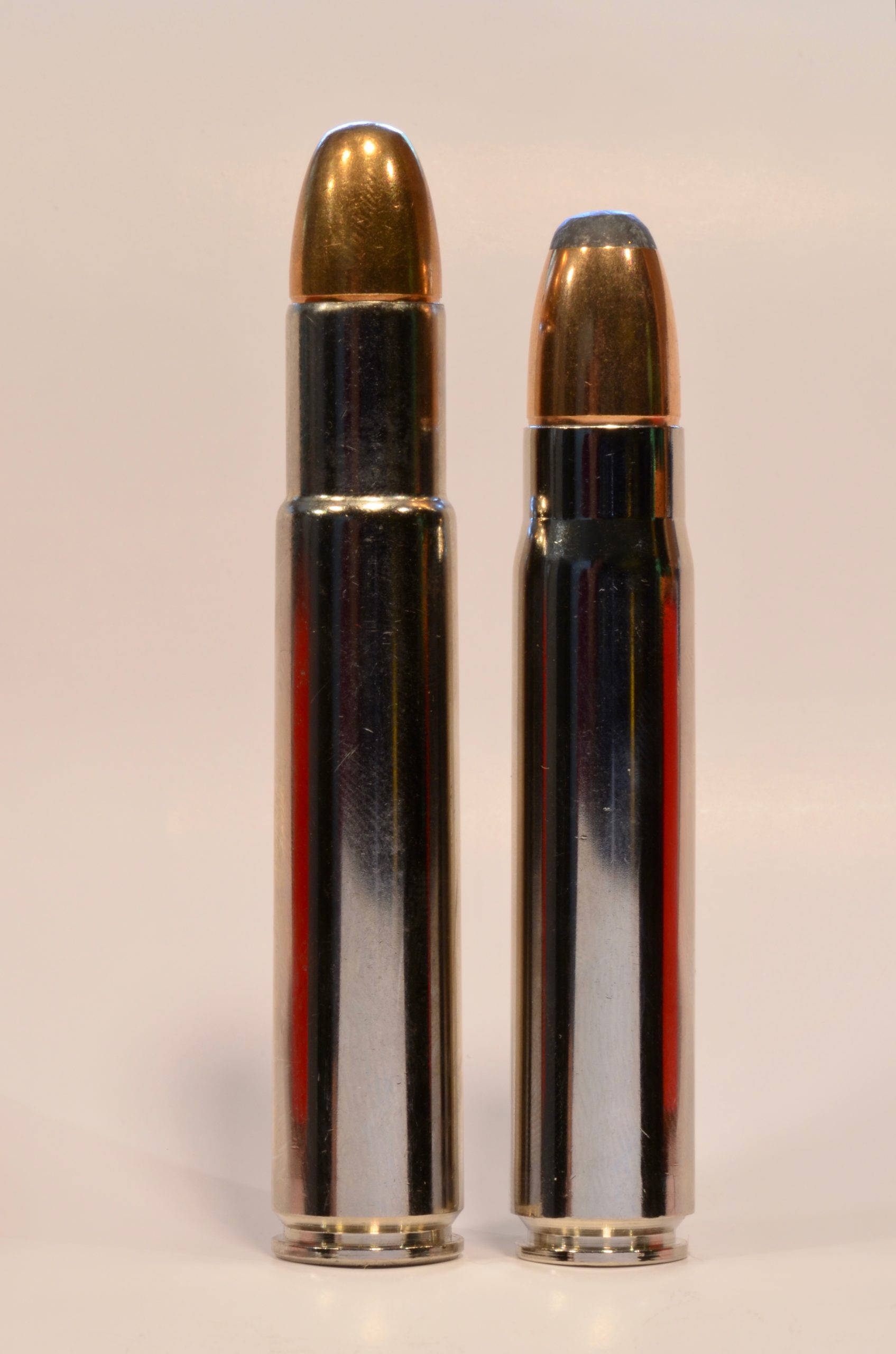
www.goodbooksinthewoods.com

jay@goodbooksinthewoods.com

This will close in 2 seconds
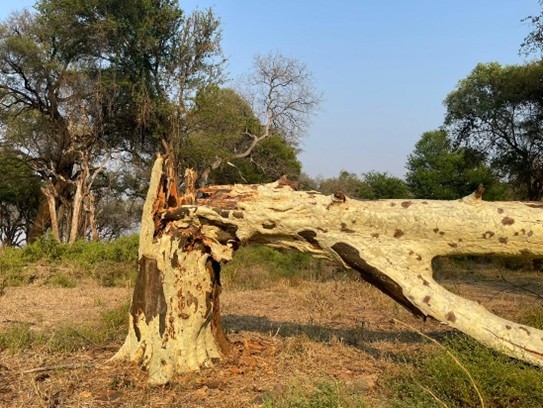
Privacy Overview

This website uses cookies so that we can provide you with the best user experience possible. Cookie information is stored in your browser and performs functions such as recognising you when you return to our website and helping our team to understand which sections of the website you find most interesting and useful.