African Parks to Manage Boma and Badingilo National Parks in South Sudan

Giraffes in Badingilo National Park, South Sudan © African Parks

On 25 August, 2022, the Government of the Republic of South Sudan and conservation organisation African Parks announced the signing of a ten-year renewable management agreement for Boma and Badingilo National Parks, including the wildlife corridors and proposed extension zones in the broader landscape – an area which is well over three million hectares. This commitment by the South Sudanese Government is an important step in the long-term protection of these vital ecosystems and securing lasting benefits for people and wildlife – while ensuring the sustainable management of the largest migration of large mammals in Africa, outside of the Serengeti.


“In signing this Memorandum of Understanding with African Parks, South Sudan has found an experienced partner for South Sudan Wildlife, Parks and Tourism and we look forward to realising the full potential of Boma and Badingilo National Parks and our treasured wildlife migrations and heritage,” said the Minister of Wildlife Conservation and Tourism, His Excellency Rizik Zakaria Hassan.


“We have a long-term vision of using a business approach to ensure that Government and African Parks are accountable for the transparent management and conservation of these landscapes. African Parks will work closely with indigenous communities to assure sustainable socio-economic development and build up the tourism infrastructure to unlock the full potential for these globally significant areas. This is only the start of our relationship, and we look forward to expanding this partnership in the future”.

The Ministry of Wildlife Conservation and Tourism facilitates and promotes the protection of biodiversity, natural ecosystems and wildlife, and ensures sustainable tourism that benefits social and economic welfare of South Sudan. The Ministry is mandated to enter into agreements with other organisations to promote and support the execution of their mandate and ensure the long-term sustainability of its natural assets to fully unlock the ecological, financial and social value of these area for the benefit of the people and wildlife of South Sudan.

Badingilo National Park, South Sudan © African Parks 

Located east of the Nile River, in the vast floodplains of South Sudan, Boma and Badingilo National Parks, and the surrounding migration corridors are home to an estimated one million antelope, including the White-eared Kob, which is one of the greatest features of this landscape. This is complemented by large migrating populations of Tiang (Topi) which number over 100,000 animals, Reedbuck and the Mongalla Gazelle that number in the tens of thousands, as well as a rich variety of other species, including elephant, Nubian giraffe, lion, eland, oryx and ostrich.


Together the Ministry of Wildlife Conservation and Tourism and African Parks will work in partnership over the long-term to secure the sustainability of both parks and the migration corridors by upholding the rule of law, stimulating local enterprise, and optimising the exceptional potential for conservation-based tourism.


Founded in 2000, African Parks takes on the complete responsibility for the rehabilitation and long-term management of national parks in partnership with governments and communities to protect wildlife and restore landscapes. Under African Parks’ mandate, five key pillars are implemented to achieve long-term protected area sustainability. These include biodiversity conservation to restore the landscapes to their full ecological state, community development through education, engagement and stimulating local enterprise, law enforcement to ensure that local laws are upheld, tourism and enterprise to optimise the exceptional potential of the area, and implementing the management and infrastructure development necessary for the accomplishment of the other pillars.


“We are exceptionally proud to be working in partnership with the Government of South Sudan to manage these valuable national assets. We congratulate Government’s leadership in acting to protect these national resources which are the lifeblood of the White Nile system and provide sustenance and livelihoods for millions of people. Boma and Badingilo National Parks are critical landscapes which can lead to transformational outcomes for the people of South Sudan, and the broader region,” said Peter Fearnhead, CEO of African Parks.

African Parks

African Parks is a non-profit conservation organisation that takes on the complete responsibility for the rehabilitation and long-term management of national parks in partnership with governments and local communities. African Parks manages 20 national parks and protected areas in 12 countries covering over 17 million hectares in Angola, Benin, Central African Republic, Chad, the Democratic Republic of Congo, the Republic of Congo, Malawi, Mozambique, Rwanda, Zambia and Zimbabwe. For more information visit www.africanparks.org, Twitter, Instagram and Facebook.

With the addition of Boma and Badingilo National Parks, African Parks will manage 22 protected areas in partnership with 12 African governments. This brings the organisation closer to its vision of managing 30 protected areas by 2030, across 11 biomes, encompassing 30 million hectares of globally significant, wild landscapes across the continent.


This partnership is made possible by the Ministry of Wildlife Conservation and Tourism (MWCT) through the South Sudan Wildlife Service (SSWS), the legal authority responsible for management of wildlife and protected areas in South Sudan.

This important initiative is being made possible by The Wyss Foundation and the generous support of various philanthropic funders.

The Minister of Wildlife Conservation and Tourism, His Excellency, Rizik Zakaria Hassan, with Major General Peter Loro Alberto and Mr Peter Fearnhead, CEO of African Parks African Parks © African Parks 
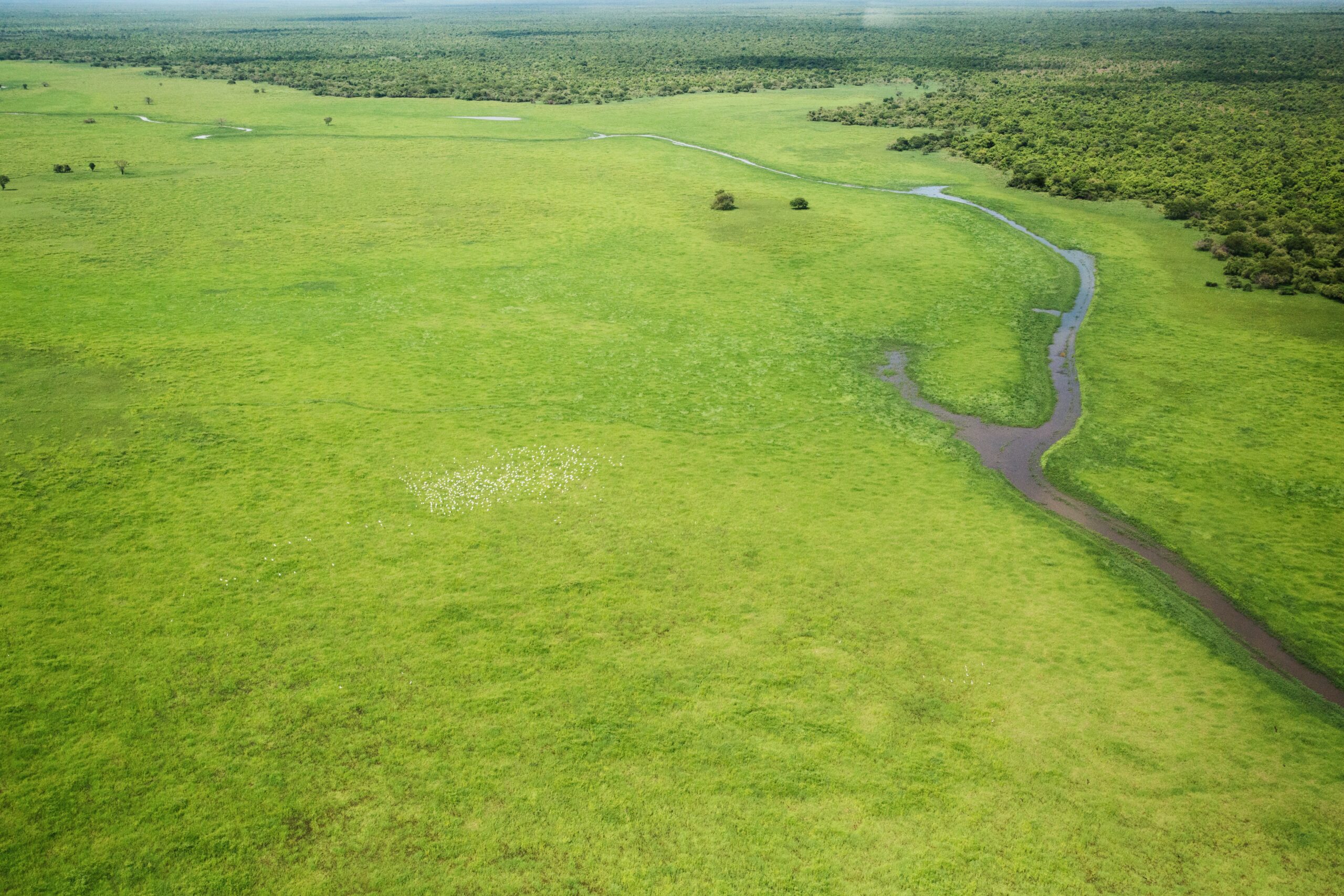
Boma National Park, South Sudan © African Parks

Dr John Ledger is a past Director of the Endangered Wildlife Trust, now a consultant, writer and teacher on the environment, energy and wildlife; he is a columnist for the African Hunting Gazette. He lives in Johannesburg, South Africa. John.Ledger@wol.co.za

Classic and Contemporary African Hunting Literature

Bringing Back the Lions

Mike Arnold (Mike Arnold Outdoors, 2022, 241 pages.)

Reviewed by Ken Bailey


Bringing Back the Lions: International Hunters, Local Tribespeople, and the Miraculous Rescue of a Doomed Ecosystem in Mozambique is a classic tale of resurrection in a contemporary setting. But make no mistake, this is no legend or fable; this is a true account of how a small group of dedicated visionaries were able to bring back to life a landscape that had been used, abused and all but discarded.


Bringing Back the Lions tells the story of Coutada 11, a hunting concession along the Zambezi River delta in eastern Mozambique. In 1994, PH Mark Haldane of Zambese Delta Safaris (ZDS) arrived and found the region in shambles. After 15 years of civil war, the once thriving game populations had been decimated; buffalo numbers had plummeted from an estimated 45,000 before the war to roughly 1,200, waterbuck populations fell from 80,000 to a mere 2,500, and sable were down to just 50 animals. Though good numbers of some of the smaller game like suni and duikers remained on the fringes of towns, the larger game animals, including sable, hartebeest, nyala, eland and zebra, were nearly gone, having been poached relentlessly. It wasn’t just the wildlife that was suffering when Haldane arrived in Coutada 11. The local people, too, were in dire straits; malnourishment was rampant, and there was neither a medical clinic nor a school within reach.


With the diversity and abundance of largely intact habitat, Mark had a vision for restoring the region back to its former self. But unlike many visionaries, Mark also had the determination, commitment and the ability to create willing partners that allowed his vision to become a reality.


As described in wonderful detail in Arnold’s book, the successes in Coutada 11 are almost too numerous to be believed. Haldane understood the importance of building an effective partnership with the local communities and has taken those relationships to unprecedented levels. Today, anti-poaching patrols are conducted by once notorious local poachers, and Haldane purchased a tractor and plow to establish a series of plots where local families can grow maize and rice; he even provides fertilizer annually. Thanks to a meat-sharing plan with ZDS, malnourishment is a distant memory, and today there is a community medical clinic and a school. Many of the local people have jobs with ZDS, and they no longer live in squalor.


As Arnold relates, the wildlife have benefited immensely since Haldane came to the area, instituted anti-poaching programs and invested in reintroductions. Today there are an estimated 25,000 buffalo in Coutada 11, and some 300 sable antelope. And, as the title suggests, in 2018 Haldane released 24 lions into the concession; today there are 60 of them spread among eight prides. In 2021, after a century of extirpation, cheetahs were reintroduced to Coutada 11. They’re considerably more fragile than lions, and it’s too early to tell whether they’ll establish themselves, but so far it looks promising. While it’s highly dependent upon available money and other resources, Haldane and his partners are also considering reintroducing other native species, including black rhino, wild dogs and jackals.


Many of us who hunt in Africa regularly are fond of telling people about the benefits to the wildlife and the local communities provided by our hunting dollars. Most often we talk in generalities because, while we know it to be inherently true, we don’t have a lot of details to support our statements. In Bringing Back the Lions, Arnold has provided us with a detailed example that every hunter can and should be proud of. When we have leadership like Haldane’s, we can make a meaningful impact on the ground, and Arnold takes us through the many benefits and many successes.


If I have one complaint with Arnold’s book, it’s that the photographs are in black and white and, in some cases, not very clear. Further, the photo captions are not below the photos, but summarized at the beginning of the book, following the table of contents. I find this cumbersome and distracting.


Irrespective of that small annoyance, Bringing Back the Lions should be mandatory reading for every hunter and for as many non-hunters as we can influence to read it. It’s a heart-warming story of a modern day conservation success that should inspire everyone with a passion for wildlife. It’s also a lesson in how much can be accomplished by a determined few. In fact, cultural anthropologist and author Margaret Mead could well have been thinking about Haldane and his partners when she said, “Never doubt that a small group of thoughtful committed citizens can change the world; indeed, it’s the only thing that ever has.”

Hunting buffalo in the Eastern Cape

By Ronald Blymire


After having to cancel our 2020 trip we were finally headed back to South Africa. The flight from Washington DC to Johannesburg was uneventful and, as he always is, Mr X was waiting for us as we exited the baggage collection area. We collected our firearms and headed to the Afton House for another great stay. In addition to my wife, we were also accompanied by Shawn Holsinger, Shawn’s wife Kelly and his daughter and son-in-law, Mikala and Cooper.


The next morning, we were back at the airport for the short flight from Johannesburg to Port Elizabeth. And after a very scenic two-hour drive from Port Elizabeth, we were in camp at Molweni just outside of Adelaide in the Eastern Cape. After my first trip with Dubula Hunting Safaris in 2016, I fell in love with this area and my wife Deb and I became close friends with owner/PH Ryan Beattie and his wife Evern.


This trip was very different for me as my primary goal was to accompany Shawn and his family, who were on their first trip, so I had no list of animals like I usually would. My plan was to just take each day as it came and see what opportunities might present themselves. This approach allowed for a very relaxed and successful hunt.


Shawn also had a very successful trip; he took a beautiful Burchells Zebra in the first few days, and thena very nice Blue Wildebeest. Before Shawn’s seven-day hunt was over, he was also able to take a Kudu, Common Springbok, Black Wildebeest, and White Blesbok.

We did a lot of walking in the early days of our hunt and ended up shooting a few cull animals. On day three my tracker, who has amazing eyesight, spotted a Golden Wildebeest so far away I have no idea how he was able to make out more than a speck. During my 2019 hunt, he did the same thing for a beautiful Sable I was able to take.


After a 15-minute ride we were out of the vehicle and the stalk was on. This stalk was especially challenging due to large number of Red Hartebeest and Blue Wildebeest we encountered; however, Ryan was able to get me within 219 meters, and one shot from my Thompson Center Venture II .30-06 took down the antelope. What a beautiful animal and amazing experience.


A few days later we hunted another property for a black impala. After a short drive and stalk, I took a beautiful ram. The property we hunted also had roan antelope, so we spent the next few hours driving and glassing look for a good speciman. We did eventually spot a very nice, mature bull which I was also fortunate to harvest.


Once Shawn and his family returned home, we spent the remainder of the time doing some additional cull hunting as well as trying to find a good-looking, mature male baboon. We were able to locate some nice baboons, but were never able to get a shot.


This was my fifth trip to Africa and third trip with Dubula Hunting Safaris. In May of 2022, I completed my sixth trip and finally decided to hunt for a Cape buffalo bull. After three days of searching, we finally caught up with a group of five bulls, four mature and one soft boss bull. After an hour on the shooting sticks, one of the mature bulls finally presented a shot and I was blessed to harvest my first Cape buffalo.


We already have of our seventh trip with Dubula planned for August 2022. If you’re looking for a place for your first hunt, or perhaps and new place to hunt, I would encourage you to hunt with Dubula Hunting Safaris. You won’t be disappointed. 

The Magical, Mystical Karoo

By Johan van Wyk


I suppose we all have a favorite hunting ground, a place where the days are longer, the sun always shines, and the hills are not too steep. I grew up in what I known as Bushveld country, generally flat terrain with the odd kopje covered in thick shrub mopane or thorn trees. It was in such terrain that I cut my hunting teeth and learned to hunt, and the Bushveld will always occupy a special place in my mind, particularly the south-eastern lowveld of Zimbabwe. In recent years, however, another area has earned its keep with me as a hunting destination as well: South Africa’s dry, arid and rocky Karoo.


If you bother to research the Karoo, you will find that it is divided into two regions: the Great Karoo and the Little Karoo. As the name suggests, the Great Karoo is by far the larger of the two regions, and if you find yourself on the northern side of the Swartberg Mountain Range in South Africa, you will be in the Great Karoo, with the Little Karoo stretching away on the southern side of the mountain range in question. It is an area dominated by dolerite outcrops, loose stones, extreme temperatures and, generally, very little rainfall. In fact, some areas of the Great Karoo receive as little as 75 mm of rainfall annually, making this vast semi-desert area one of the driest areas in Southern Africa.


As is to be expected in such a harsh landscape, the animals that call the Karoo home are special breeds as well. The antelope most often associated with the Karoo is South Africa’s national symbol, the springbok, and during earlier times they could be found here in their millions, constantly migrating from one area of good feed to another. Sadly, this is no longer the case, as the bullet and the barbed-wire fence put a stop to the old migration routes. Other species that call the Karoo home include the blesbok, mountain reedbuck, red or Cape hartebeest, gemsbok, zebra, eland, blue and black wildebeest, and the greater kudu. In addition, other species such as sable, buffalo and red lechwe have successfully been introduced to many parts of the Karoo, and they flourish on many game farms.


I’m in the fortunate position to have a good friend, Mynhard Herhold, who farms game on a huge property bordering the Vanderkloof Dam in South Africa’s Northern-Cape province. My friend’s property is huge and stretches for 18 kilometers all along the shores of the lake, with some spectacular scenery thrown in for good measure. In addition to all the species listed above, Mynhard also looks after a small but cherished population of Hartmann’s mountain zebra, introduced from their native Namibia some years ago and flourishing in the rocky, arid Karoo landscape.


Once a year, a small group of us converge on Mynhard’s farm for what is known as our “family” hunt. The fact that none of us is related to each other is irrelevant, but as far as a hunt with friends go, our annual Vanderkloof hunting trip has been a highlight since the very first one. In typical Karoo fashion, the farm consists of a mixture of open plains, rocky kopjes, and higher areas bordering the edges of the dam, with deep cuts running down to the life-giving water of the Orange River, far below.


On the second morning of our hunt in May 2022, I was dropped off along with two of Mynhard’s apprentice professional hunters at the foot of a steep hill that I knew, hidden away, had a substantial plateau on top. The plateau was a favorite haunt for both red hartebeest and kudu, and except for on foot, the only way up was by means of a rough track that tested the capabilities of any off-road vehicle. The track was used almost exclusively for the recovery of game, and we set about climbing the hill in order to reach the plateau, gingerly picking our way through boulders and loose stones that made walking difficult and walking silently impossible. When we eventually reached the top I, being the oldest and the most unfit member of our small party, called for an immediate halt to catch my breath. It was at times like this that you realise Father Time is not your friend, and you suddenly feel aches and pains in places you didn’t even know you had!

The first prize for me on the hunt would be a kudu bull, and the farm held a substantial population of them. In the past, I’d hunted a number of kudu by making use of the terrain, surprising them as they moved between ridges. With their phenomenal eyesight and the relatively open country they were a real challenge, though, and they certainly tested the hunter’s patience and perseverance.


Once on top of the mountain, we set about slowly walking along the edge with the breeze in our faces, stopping every now and then for a glance downhill to look for kudu feeding on the side of the mountain. There were a great many loose stones, and I found a way of trying to avoid as many of them as I could, making sure of my footing with every step.


As it was a beautiful sunny winter’s morning, visibility was excellent and in places we could see for miles and miles in various directions. From our perch up high, we saw two eland bulls, numerous herds of springbok and a lone sable cow, probably about to give birth and therefore on her own in order to stash away the calf, as is their wont. The kudu, though, eluded us, and after almost eight kilometers over that rough terrain, I was looking forward to a rest with my boots in the air. The afternoon was pretty much a repeat of the morning with yet more walking, and as the next day would be the last day of the hunt, I was starting to get a bit anxious about my prospects, or rather the lack thereof.


Ever the resourceful professional hunter, Mynhard announced a slight change of plans for the last day’s hunt. The hunters would be placed at strategic points on the farm while the apprentice professional hunters and some of the laborers would walk in our direction but from far away to ensure safety in the event of a shot being offered. The idea wasn’t really a drive in the strict sense of the word – the terrain involved was too vast for that – but more a gentle push in the hopes of encountering a suitable animal.


We were dropped off with very strict instructions as to where to wait as well as fields of fire, and my position was at the foot of a hill on a relatively open stretch of land with a view of a gully below me. As the previous rainy season had been exceptional, the grass was tall and the trees, mainly sweet-thorn, Acacia karoo still had lots of leaves, curtailing visibility somewhat. I picked a spot under a karee tree Searsia lancea, another iconic Karoo species, and did my best to hide the rifle and shooting sticks among the karee’s branches while retaining a good view of the area in front of me, just in case an opportunity presented itself. I settled down under the tree with my back against a sturdy branch, firm in the belief that any action would still take some time to happen. Big mistake…


I’d hardly sat down when the familiar sound of hooves clattering over the stony ground broke the silence. As I looked up, a kudu cow was running almost directly at “my” tree with a beautiful bull in close pursuit. They ran past the tree I was sitting under almost within touching distance and disappeared from view. Of course, I realised, it was the kudu rut and the bulls would be out and about, chasing after the cows.


I quickly set up the shooting sticks again and was barely ready when a waterbuck cow daintily walked from the bushes in front of me. She was followed in quick succession by the rest of the herd, fourteen in total, and walked to my right, no more than forty meters away. The herd did contain a bull but as he was a youngster, I wasn’t ready to call off my search for a kudu yet. Minutes later, a lone blue wildebeest bull stopped to stare at me from about 100 meters away. As he came from the side, he could see me, but the wind was still in my favor, so he didn’t spook. I looked at him through the telescope for at least a minute before he made up his mind that I wasn’t a threat and wandered off.

Minutes later, I was again startled to see a kudu cow running towards me. She was clearly in a hurry and was followed soon after by the rest of the herd. It was a large herd of more than 20 animals containing a beautiful bull, but as they never slackened their pace and just kept going, I could only watch in frustration.


During the next half an hour, I watched as yet more herds of red hartebeest, blue wildebeest, waterbuck and springbok poured past my position. Another kudu appeared as well, a lone bull, but as with the others he just kept going at pace. Why the kudu were in such a hurry while the other game was just walking by, I couldn’t fathom, but they were certainly doing justice to their reputation as an elusive quarry.


The sun was starting to get higher, and midday was looming when the small radio I’d been issued with crackled into life. Mynhard warned me that I had at the most another 15 minutes or so left to get a shot at something before he would be around to pick me up for lunch. Something had to happen, and just in the nick of time, it did. As I stood there with the .30-06 over the shooting sticks, another lone kudu bull approached my position. This time, though, the bull wasn’t in a hurry, and he walked towards my hiding place at a leisurely pace. There was another problem, however: I was set up on the right side of the trunk of the tree and the bull was on the left side. I would have to move the sticks and the rifle over to the other side and risk spooking the bull.


As slowly as I could I lifted the sticks with my left hand and gripped the rifle in my right hand. I pulled everything over to the other side of the tree and was just about to set things down when the bull’s head jerked up. He was close to me now, no more than 30 meters or so, and had clearly noticed something out of place. With a bark he crashed away to my left, coming to a stop in a rather peculiar position with his hind legs in the bottom of a ditch and his front legs on top. He was covered by a small tree, making a body shot impossible, but a portion of his neck was visible where it joined the body. The crosshairs found the mark and as I pulled the trigger and the rifle recoiled upwards, the kudu disappeared from view. The hunt was over.


As I stood next to the fallen bull, I couldn’t help but feel a touch of sadness. He was beautiful, all and more of what I’d hoped for, but there was something very melancholy in seeing him dead at the bottom of the ditch with blood dripping from the hole in his neck. He wasn’t my first kudu and probably won’t be my last, but as the years go by and the pool of blood gets bigger, they certainly get harder!

Biography

Johan van Wyk was born in Zimbabwe and educated in South Africa. A lawyer by trade, he abandoned the corporate life to become the editor of a South African gun and hunting magazine. His interests include hunting, fine gunmaking and photography. Johan is currently in the process of emigrating to Australia with his wife, Sonett.

The Enduring Mauser

This take-down Rigby Mauser is bored for the .350 Rigby, once a popular cartridge, now upstaged

Thirty years after their first failure, Wilhelm was dead. Paul was 60 and might have quit the task.


By Wayne van Zwoll

Deeply pocked by the great hooves, the path narrowed in a thicket. We slowed, stepping sideways to limit the disturbance of our passage. Peering to either side, we could see mere feet into the bush.


It was enough. A wink of sun on a massive black boss stopped us. Crosswind, the bull faced our next step. Only a horn showed. I resisted the urge to ease the rifle up.


Seconds passed. “Too … big.” I read my partner’s silent lips, and nodded slightly to the corner of his eye. This buffalo was exceptional, not the aging, stub-horned “Dagga Boy” I sought. The decision was now the beast’s: to yield, or trigger a dust-up. At eight meters, it would happen fast.


Morning’s breeze shimmied. The bull chose well, spinning, then crashing off, gone in a blink.


With the Mauser back in the crook of my arm, we listened briefly, then turned back to the spoor.


Close shooting in Africa’s dense coverts begs a double rifle, say hunters who’ve had to fire fast, twice. After a second barrel saves you, a magazine won’t quite measure up. But for most hunting, bolt rifles beat doubles. If that were not so, the turn-bolt wouldn’t turn up on so many safaris. Its advantages include lower cost and a wide range of chamberings served by affordable ammunition. Typically lighter in weight and more accurate than a double, it’s easily scoped or fitted with an aperture sight. It carries four or five rounds, not two. The best bolt rifles deliver follow-up shots as dependably as a second, ready lock.


Legions of hunters still hail the Mauser bolt-action of 1898 as the best.


Like his stateside contemporary, John Moses Browning, young Peter Paul Mauser could “think” mechanisms onto paper and make parts that functioned as he imagined. Probably not first to use a door-latch device to seal a rifle’s breech, he developed actions around it that would establish him as Europe’s pre-eminent designer of small arms.

Rigby’s single-square-bridge Mausers (actions from Germany) still make rifle enthusiasts swoon

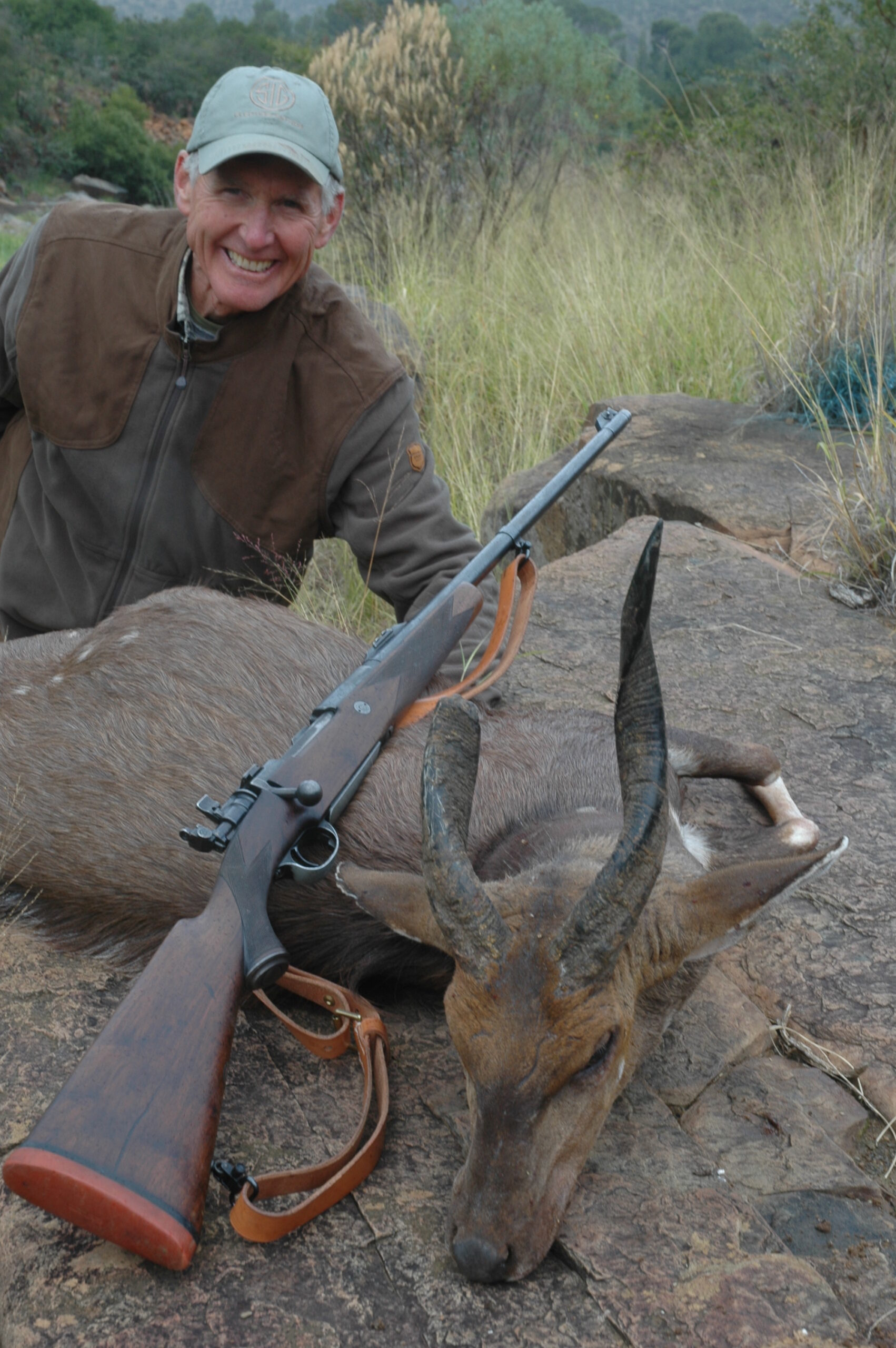
What better rifle for hunting bushbuck in thickets than an aging Mauser? (This one: a Holland in .375)

New loads have appeared for the versatile 9.3×62, long favored in Africa as a chambering in Mausers

Early in 1872 Prussia adopted Paul’s Model of 1871 as its infantry rifle. But the Prussian army paid just 15 percent of what he and his business-savvy brother Wilhelm had been led to expect for design rights. Also, the rifles would be built in government arsenals. To sustain their shop, the two men snatched a contract to make 3,000 sights for the rifle. Bavaria’s order for 100,000 sights funded a Mauser factory in Oberndorf. Then the Wuerttemberg War Ministry asked Paul and Wilhelm for 100,000 rifles. Partnering with the Wuerttemberg Vereinsbank of Stuttgart, the Mausers bought the Wuerttemberg Royal Armory. On February 5, 1874 it became Mauser Bros. and Co. After the last contracted 1871 rifles were delivered in 1878, China ordered 26,000 more.


Wilhelm died young in 1882, and Ludwig Loewe & Co. of Berlin bought controlling shares of the company. By then it was clear wars would soon be fought with repeating rifles, so Paul added a nine-shot tube magazine to the Model 1871. The 71/84 was a reliable arm; but its 11mm bullet still had a steep arc.

In 1889 Fabrique Nationale d’Armes de Guerre (FN) emerged in Liege to produce Mauser rifles for Belgium’s government. Paul’s Model of 1889, for smokeless loads, boasted a one-piece bolt with twin front-locking lugs. The magazine was charged by stripper clip. Turkish 1890 and Argentine 1891 Mausers were similar. All chambered the 7.65×53 Mauser cartridge. Notably, they shared a narrow, failure-prone extractor, and could fire with the bolt out of battery.


In his Model of 1892, Paul introduced the long, non-rotating extractor now widely considered the most reliable ever. Collared to the bolt body, its claw caught the rising case head before the bullet aligned with the barrel, controlling feed from follower to chamber. The ‘92’s bolt cleared the breech even when in the press of battle it was short-cycled. The broad claw tugged reluctant hulls from hot, fouled chambers.


The Model 1892’s single-stack magazine protruded, as had the 1889’s. But this was a fixed box. A guide rib in the left lug race smoothed bolt travel; a sear pin prevented firing if the bolt wasn’t locked; the bolt stop was independent of the magazine. 


In the beginning


Born into a family of gunsmiths, Peter Paul Mauser began his career trying to improve the Dreyse needle‑gun, which had armed Prussian troops in the Franco‑Prussian War. His work drew no interest from Wuerttemberg, Prussian or Austrian War Ministries. But it caught the eye of Samuel Norris, an American agent in Europe for E. Remington & Sons. Norris urged Paul and his older brother Wilhelm to convert the French Chassepot to a metallic‑cartridge rifle. In 1867 the Mausers moved to Liege, Belgium, and tooled up. But when the French government demurred, Norris pulled his support. (Norris then filed to patent the Mauser design in the U.S! On June 2, 1868, it became the first patented action bearing the Mauser name.) Meanwhile, Paul and Wilhelm returned to Paul’s birthplace in Oberndorf. Fortune smiled when the Royal Prussian Military Shooting School tested a Mauser rifle. The brothers made specified changes. Result: the single-shot Model of 1871. It fired an 11mm (43-caliber) black-powder round that sent 385-grain bullets at 1,400 fps.

A ‘98 Mauser’s beefy, non-rotating extractor prevents double loading; its ejector rides in a slotted lug

Magnum Mauser actions have the length and, here, bolt face to welcome rounds like the .416 Rigby

With these changes came a new cartridge: the 7×57 Mauser. Deadly during the Spanish-American War, it would influence the shape of U.S. infantry rounds. Among the first smokeless cartridges, the flat-shooting 7×57 (.275 Rigby, in British speak) soon became a favorite “smallbore” hunting round in Africa.  


The Mauser Model of 1892, with the 92/93 Spanish Navy rifle in 7.65×53, served barely a year in uniform before Paul gave it a flush, fixed box holding a staggered column. The resulting 1893 “Spanish Mauser” was an instant hit, and adopted by armies world-wide. Its flat-belly receiver, with integral recoil lug, was machined from a steel forging. A camming surface in the bridge engaged the bolt handle base to aid primary extraction. The flag safety pivoted atop the bolt sleeve. Thumbed to the right, it locked bolt and striker. Vertical, it held the striker off the sear but permitted cycling. Left was the “fire” position. The magazine was part of the trigger bow. Pressed with a pointed bullet, a latch allowed floor-plate removal.  Bolt handles on most 1893 and 1895 rifles were straight. Turned-down bolt handles appeared on carbines.


Mauser carbines bought by Sweden in 1894 inspired Carl Gustaf’s arsenal Stads Gevarsfaktori, in Eskiltuna, to produce more. These chambered the 6.5×55 Swedish cartridge. A checkered cocking piece permitted a soldier to ease the striker down without firing. The Model 1896 Swedish Mauser was similar, but with a straight bolt handle and three gas vents in the bolt.

Improvements on the 1893 Mauser resulted in the Model of 1898, adopted by the German Army April 5 that year. It cocked on opening. Generous gas vents and a third lug engaging a bridge slot added a measure of safety. Exported to many countries, the 1898 was produced in many more. The U.S., Great Britain, France and Russia designed their own battle rifles; but none functioned more reliably, shot more accurately or endured abuse more ably than the Gewehr 98. The Boxer Rebellion drew it into service. The short Karabine 98a began its 10-year production run months later.


Paul Mauser died in May, 1914, on the cusp of conflict that would muddy and bloody battlefields throughout Europe. His 1898 rifle would serve Germany’s armies in both world wars.


In the ashes of WW II, the Mauser Waffenfabrik (arms factory) was renamed Werke (works), and its marketing re-directed to hunters. Mauser engaged U.S. agent A.F. Stoeger, Inc. of New York, to sell the brand stateside. Stoeger assigned numbers to Mauser actions. By the late 1930s, the line comprised 20 configurations in four lengths: magnum, standard, intermediate and short, or kurz. The kurz, with a small receiver ring, was factory‑barreled for only three cartridges: 6.5×50, 8×51 and .250 Savage. 

Mausers in 9.3×62 have taken not only eland and other heavy plains game, but dangerous beasts, too.

Africa’s most celebrated hunters liked the 1898 action. W.D.M. Bell was said to have owned six barreled to .275, also a .22 Savage High-Power and a .416. Later, in the commercial-safari era, PH Harry Selby kept close company with his .416 Rigby. In India, the great hunter of man-eating cats, Jim Corbett, carried a Rigby Mauser in .275.


During its military life, the 1898 Mauser action was made of tough, low-carbon steel carburized, or case-hardened, for a hard finish. In the final, frantic years of WWII, receivers showed wide variations in hardness. War-weary Mauser infantry rifles sold cheap into the 1960s. Still, they were strong. An 1898 action barreled to .270 spared a pal who accidentally fed it a .308 cartridge. The lovely walnut stock was splintered, the extractor blown off. But the bolt, frozen by the enormous pressure, held.


Even pedestrian hunting rifles on commercial Mauser actions from Oberndorf came dear between world wars. Two years after the 1937 debut of Winchester’s brilliant Model 70 at $61.25, Mauser sporters cost two to three times as much! Affordable rifles with commercial ‘98 actions followed. The Whitworth and Browning High Power, both now discontinued, still show up on safari. They’re comely, well-stocked “working guns.” Building a top-rung custom sporter on an 1898 action is now a costly project. A favored, (read: scarce) military action drains cash in machine work on receiver and bolt. A ‘98 clone from the likes of Granite Mountain Arms emerges from CNC baths a finished gem. It begs equal investment.

W.D.M. Bell, here retired in Scotland, owned several Mausers, famously shot elephants with a 7×57

Jim Corbett favored an iron-sighted Rigby Mauser in .275 Rigby for hunting man-eating cats in India.

PH Harry Selby, who hosted author Robert Ruark on his storied safari, favored a Rigby Mauser in .416

Cartridges, in uniform and out


The first Mauser 1898 rifles were barreled to the 8mm smokeless round introduced with the 1888 Commission rifle, not a Mauser. Known as the 7.9×57 or 7.9x57I (J has been substituted for I), this round sent a 227-grain .318 bullet at 2,100 fps. Germany soon developed a more potent cartridge for the strong 1898. The 8×57, with 154-grain pointed .323 bullets at 2,870 fps, appeared in 1905. Officially, the 8×57 was designated 7.9x57IS and 8x57IS. It would see German infantry through WWII. A Lange Visier sight could be adjusted to put bullets from the 8x57IS on target to 2,000 yards. After the Treaty of Versailles prohibited use of military ammunition by Germans, the 8x60S replaced the 8x57IS afield. Re-chambering turned infantry rifles into legal hunting arms

In 1911, the debut of Rigby’s .416 cartridge in a new Magnum action gave hunters a repeater with the punch of big-bore doubles. Its 410-grain bullets sent 5,100 ft-lbs out the muzzle. John “Pondoro” Taylor hailed the .416. Rigby knew it had a good thing going and initially refused to sell Magnum Mauser actions to its competition. When Rigby’s monopoly on Mausers expired in 1912, other British gunmakers scrambled to build rifles on them. Westley Richards barreled Mausers to its .318 and .425 cartridges. W.J. Jeffery used them for its .333s and .404s. Holland & Holland found the Magnum Mauser ideally suited to its belted .300 and .375, a go-to action for the .505 Gibbs.


You’d be hard-pressed to find, in the great tide of bolt-action rifles since the Mauser of 1898, any that didn’t borrow from it. Or any that have proven superior afield.

Wayne used a commercial Mauser in 8×57 and a196-grain bullet to take this fine Namibian gemsbok

A softnose, then “make sure” solids from a Mauser in 9.3×62 downed this old “Dagga Boy” for Wayne

The .416 Rigby (R) gave Mausers double-rifle stopping power. Much later: the belted .416 Rem. Mag

L-R: .275 Rigby (7×57), .303 British, .450/400 NE, all popular in Africa since the 1890s, all still loaded

A better box


Paul Mauser designed his 1898 magazine for the 7×57. A host of measurements contribute to the original Mauser’s smooth, dead-certain feeding with that round, including, box dimensions, the follower’s step and taper, the angle between case heads in the staggered cartridge stack, the stack’s taper forward …. Even the loose fit of the follower spring to a Mauser floor-plate is purposeful; it squirms to keep the stack centered as cartridges strip from either side. Later Mauser magazines also function with cartridge families, a credit to the original design.

While many Mauser ‘98s were bored to 8×57, this cartridge first appeared in the ’88 Commission rifle

The 7×57 (.275 Rigby) stands taller than the much later 7mm-08, its ballistic equal. Both sell briskly

This old but elegant Holland & Holland in .375 has a Magnum Mauser action, a cocking-piece sight

Africa’s Forgotten Wilderness

Camp overlooking the Vovodo River

Hunting in the Central African Republic Today

By Andrew Gooden

“No, it’s not the Congo – it’s just a bit further north… no, rebel militia doesn’t jump out from behind every bush… yes, hunting is open there.”


I find that the questions I am often asked about the Central African Republic are, in fact, an accurate assumption of the times in this part of the Dark Continent.


In hunting and safari circles in the not-so-distant past, the CAR was a well-known destination with many safari outfitters in operation. It had a reputation for producing quality trophies, still evident in today’s SCI Record Book. Sadly, a combination of political instability, mismanagement, and bad press have made it a far less common hunting ground for the avid safari-goer than it once was. On the ground today, however, the reality is quite different from the media portrayal.


In 2012, a military coup-d’état concentrated on the capital, Bangui, led to somewhat of a ‘free-for-all’ for various groups of rebel militia looking for an opportunity to loot and gain power. So much pressure on Bangui, the only real access point to the rest of the country, made operating any business virtually impossible during this brief period. As such, the safari operators couldn’t reach their camps, and many of them lost complete control over their concessions – where looting was rife, and wildlife suffered.


As we know from history in Africa and abroad, when sustainable hunting activities cease to exist, the value of wildlife and the land on which it lives decrease proportionately. There is no income, so anti-poaching programs disappear, the animals are slaughtered en masse, communities suffer, natural habitat is squandered, and the list goes on. As a result, most of the safari outfits in the CAR folded. After this brief period however, the MINUSCA peacekeeping force of the United Nations stepped in and rapidly restored stability to Bangui, and they are now highly effective in most towns across the country.

Today in Bangui you can safely enjoy a cold beer and a first-class meal amongst people of many different nationalities at several good restaurants, including the Relais des Chasses – the traditional meeting place for hunters before and after their safaris. There are comfortable accommodations available for hunters too and, in general, you can expect the same experience as they would in any other African city, despite what the press wants the public to believe.


Fast-forward ten years and, outside of the capital, there is a glowing beacon of light that remains in an otherwise sad story. A two-and-a-half-hour charter flight due east of Bangui, over a seemingly never-ending sea of green, takes you to one of the last two operational hunting concessions in the country run by the renowned French outfitter Alain Lefol and his son Kewin. This area experienced far less trouble than in the northern parts of the country many miles away, where most of the other safari companies had their hunting areas.


The 2.4-million-acre (one-million-hectare) zone is bordered

on either side by the Vovodo and Chinko Rivers, which drain into the Mbomou and Ubangui Rivers respectively, before eventually joining the mighty Congo River further south. Henry Morton Stanley considered this area to be the ‘northern-most extension of the Congo River Basin’ – too remote to even fall under the vast governance of the Belgian King Leopold II, or the French, in the great scramble for Africa in the late 1800s.


Alain, who has been hunting in the CAR since 1978, arrived in the never-before hunted area for the first time in 2009, and the Lefols have been operating there ever since. Like the other safari outfitters in 2012, they were unable to access the zone for a brief period and as such, it was hit hard by poaching. By 2014, however, they had reconsolidated the area and were on safari once again, never having any issues with regard to security.


In 2015, African Parks founded the Chinko Project on the western border of the concession, bringing the total area under protection to roughly 13 million acres (5.5 million hectares), which is double the size of Hawaii. The area is totally isolated, inaccessible by road, and there is no economic interest in resources like diamonds or gold, hence it is devoid of villages, state roads, bicycles, and people in general. Together, the Lefols and Chinko have been working hard on anti-poaching programs, which are now paying dividends, with animal populations increasing steadily. You would be hard-pressed to find a wilderness area anywhere in the world which compares in terms of size and undisturbed by human presence. It is quite a humbling sensation to know that no European has ever set foot in much of the concession and that places as wild as this still exist in these modern times.

Right: Kewin Lefol and Author returning from a successful fishing trip at dusk

The landscape here is gallery forest; savanna woodland fragmented by tropical forest patches – colloquially known as ‘baco’. Somewhat of a transition zone between the Congo Rainforest in the south and the Sahelian savanna in the north, the area is of great interest to the biologist and sportsman alike, thanks to the sheer diversity of flora and fauna, with both savanna and forest species occurring here.


There are two seasons in equatorial Africa: the dry season, which runs between November and March, and the wet season between April and October. In fact, the seasons are so extreme that at the peak of the dry season, dust from the Sahara Desert blows southward through the zone, carried on the Harmattan winds, and late in the rainy season huge tropical thunderstorms move eastward from Equatorial Guinea and Gabon on the west coast. As much of an expedition as it is a hunt, the nature of the landscape and enormity of the area make hunting tough. Patience and perseverance are required, but rewards can be great – with a unique experience and quality animals the result of a truly wild hunt.


Hunting is done primarily through tracking with skilled Zande or Baka Pygmy trackers, or by waiting in machans (tree-stands) high up in the forest canopy over salines. A ‘saline’ is a kind of natural salt lick; a place where minerals are concentrated in rock or soil, attracting animals to replenish mineral reserves otherwise lacking in their diet. Many of these were carved out by elephants that once roamed the area in great numbers in times gone past, known in this part of Africa, particularly for their long, golden ivory. The salines which remain are now the only legacy left behind by these giant pachyderms.

Land Cruisers packed and en route to a fly camp

The area is most revered for its Bongo, with bulls over 32 inches and weighing 680 pounds not uncommon. The Bongo found in the gallery forest are generally larger than Bongo found in true forest, mainly because they have access to a more nutritious and varied diet offered to them by the savanna vegetation, in which they spend a lot of their time. Anyone who has hunted Bongo can attest to their cunning nature, mysteriously appearing and disappearing at will in habitat to which they are perfectly adapted. Every time you are gifted the rare opportunity to observe these enigmatic creatures – even if only for a few seconds – it is as if you are in the presence of royalty. It is quite uncanny to see animals of this size disappearing into seemingly impenetrable brush at full speed, with the surefootedness of a cat, and the grace of a Queen.

Left: A classic, old, heavy eastern CAR Bongo

The talismanic Giant Forest Hog, which are quite numerous in the area, is another prized animal from the east of the CAR. The biggest Hog hunted in the Vovodo concession thus far weighed an enormous 700 pounds and was taken by an 80-year-old bowhunter.


The Central African Savanna Buffalo found there are quite an anomaly. They are considered a ‘transition’ buffalo between the forest and savanna, coming in different shades of red and black with most bulls carrying forest-type horns. Although weighing in at 1,400 pounds, they are much bigger than the true dwarf buffalo of the big forest.

Young GFH boar proudly showing off his large nasal discs, a distinctive characteristic of the species, which are considered the largest wild member of the pig family

A typical young, inquisitive Central African Savanna Buffalo bull

Other huntable game in the area are lion and leopard, a variety of bigger antelope including the highly sought-after Lord Derby Eland, Red River Hog, warthog, and five species of duiker. In the Vovodo River, Tigerfish (occasionally the Goliath Tiger) and Nile Perch provide fantastic sport fishing.


Hunting in the CAR will test even the most experienced hunter and traveler. If you want to be pampered in a 5-star lodge, you won’t have a good time here. It is a place that heightens the senses, where you can truly live in the moment and forget about the rigors of everyday life in the western world. From the moment you touch down on the gravel airstrip until departure, the mind is lost to the bush.


The lack of interest in the country by tourists, big corporates, and foreign investors due to the publicity it has received in the last two decades can be seen as a positive thing by those longing for the Africa of old – the wild expanses remain, well, wild! And for the privileged few who are fortunate enough to venture into this unknown patch of green on the map in the dark heart of Africa, this forgotten wilderness will certainly not be forgotten.

Author with a 35 lb Nile Perch from the Vovodo River. These heavy brutes are quite common, engulfing lure, fly or bait with a force that will test any angler’s ability and tackle. Also – their big, buttery fillets provide excellent eating!

Author and trackers with a GFH after 3 hours of tracking through the Gallery Forest.

Andrew Gooden is a Professional Hunter based in South Africa. He has been hunting in the CAR for the last two years. For additional information or queries contact him at andrew@wildlandsoutfitters.com or +27 62 936 6790 (WhatsApp).

This will close in 2 seconds

Privacy Overview

This website uses cookies so that we can provide you with the best user experience possible. Cookie information is stored in your browser and performs functions such as recognising you when you return to our website and helping our team to understand which sections of the website you find most interesting and useful.